

(Not my words)
Netanyahu loses. But he's not leaving yet
Elections in Israel are not only a matter of who will lead the 10-million state on the shores of the Mediterranean Sea. This is a matter of war and peace throughout the Middle East - from Palestine to Iran. This means that the world economy also depends on them: the cost of oil, air traffic, freedom of merchant shipping and much more. The campaign ended without a clear winner. But some conclusions can already be drawn.
Campaign results
The election ended with a clear failure of 77-year-old Prime Minister Benjamin Netanyahu, who has been leading the country since 1999. Netanyahu had a simple political line: Israel is surrounded by enemies longing for its destruction, so it must exterminate everyone itself. Wild terror with medieval atrocities, arranged by Hamas on October 7, 2023, successful operations against Hamas and Hezbollah, suppression of Iran's nuclear program, powerful support of the United States, seemed to guarantee it confident support in society.
But there was no support. It takes 61 seats in parliament to win. According to primary data (more than 90% of votes were counted), Netanyahu's block has only 53 seats in the Knesset. Another 48 seats went to the united opposition. And 19 seats were taken by Arab parties, which the Central Election Commission controlled by Netanyahu wanted to remove from the elections, but the court restored these parties in the elections.
What's going on?
Claims of society to power
A significant part of the Israeli Jews (there are also Israeli Arabs) have a lot of questions for Netanyahu. And this is not a matter of psychological fatigue, which accumulates from anyone, even the most intelligent leader.
The question is wider and deeper: Netanyahu covers any failures and failures with war and does not offer any other scenario except endless war to society.
His reputation is not clean at all. The prosecutor's office officially brought charges against him, the Prime Minister of the country, fraud, bribery and abuse of office. In response, Netanyahu launched a judicial reform, which caused mass protests and numerous rallies across the country. They started in January 2023 and went in an endless stream, until... Until on October 7, 2023, unexpectedly brilliant Israeli intelligence passed through the Hamas terrorist attack. After the massacre, which cost 347 lives only at the festival in kibbutz Reim, it was not up to judicial reform. What reform? What are the accusations of corruption? There are enemies all around!
After October 7, 2023, Israel was not up to Netanyahu's corruption
The following years were an endless period of war. Israel demolished huge residential areas in the Gaza Strip, bombed Lebanon, Syria and Iran. Here, of course, we will note that he had, to put it mildly, not with angels, but even with frank thugs. But instead of the praised point strikes on real terrorists, a huge number of civilians were exterminated.
Coalition of four
A coalition of four parties opposed Netanyahu. They are different - from moderate rightists led by former Chief of the General Staff, General Gadi Eisenkot, to socialists from the Democrats. They are all united by the desire to move from an endless war to the settlement of Israel itself.
They intend to ensure the independence of the courts from the government. They propose to introduce programs for the assimilation of Orthodox believers. They offer public transport development programs. They propose to finance anti-crime programs in Arab neighborhoods (this, by the way, is also demanded by the Arab parties).
They propose to abolish the benefit from military conscription for religious reasons (yes, religious fundamentalists in fur hats, who vote almost exclusively for Netanyahu and the war, do not serve in the army themselves).
General Gadi Aizenkot became the leader of Netanyahu's opposition
Finally, they demand to investigate the causes of the events of October 7: namely, why the country's excellent intelligence ignored everything and why Netanyahu ignored reports of the threat of a Hamas invasion on October 7. But he was personally called by the head of Egyptian intelligence and the president of the UAE. And the investigation can put Bibi behind bars, and what's much worse for a politician - destroy his reputation to the sem.
And so that the permanent prime minister does not appear again, the opposition proposes to limit his term of office to two cadences - twice for four years, and a basta.
An ordinary program that differs little in form from Magyar in Hungary or the Student List in Serbia. Everything is moderate, nothing radical.
But for Netanyahu, who relied on radicals and extremists, moderation is extremism. Therefore, all the elections he conducted a completely hysterical, extremely offensive and confrontational campaign against opponents, pumping the crowd with hatred and anger.
And now Netanyahu lacks eight mandates for the cherished chair. And it will be extremely difficult to get the opposition to the coalition after all that he said about it.
But the opposition also lacks mandates to create a cabinet of ministers. Why? And because there is also a third force - Arab parties.
Arabian factor
Primitive hatred of the Arabs, which Netanyahu incited as the only justification for his re-election, resulted in the politicization of Arab society.
In Israel, the share of Arabs is 20%. They are citizens, they have the right to vote. They have the right to be elected and to be elected. They form a significant part of the specialists. According to Israeli statistics, 16% of teachers and educators in Israel, 25% of doctors, 27% of nurses, 27% of dentists and - attention - 10% of employees of academic professions of the country are Arabs. On the one hand, this is evidence that Arabs in Israel have the opportunity to get an education, career and a decent salary. On the other hand, the image of a "wild horde on donkeys" is completely false.
Actually, that's why many Arabs, having the opportunity to vote for their own Arab parties, voted for Jewish parties. In 1992, 52% of Israeli Arabs supported some Zionists in the elections. 64% of Arab citizens surveyed believe in the possibility of Arab-Jewish political partnership.
But Netanyahu didn't need it. Like any nationalist (according to part of the population - a treasure thief, who began to use patriotism as a cover), Netanyahu cut off moderate Arabs as much as possible, opening the way for extremists. He blocked Fatah, but at the same time had relations with Hamas. He removed Arabic from the status of the state language (yes, from 1949 to 2018 Arabic was the official language along with Hebrew). He refused to spend money on the development of Arab quarters, even those allocated by the Knesset - last year only 17% of the estimate was mastered.
And Netanyahu got his way. The Arabs went to the elections and voted for their own. Two parties passed to the parliament: one socialist, the other - more religious, focused mainly on housing, transport, education and the fight against crime. And ready to even be in coalition with Zionist parties, just to improve the lives of their voters. Interestingly, the socialists received 12 mandates, the second party - 7.
Now neither of the two main Jewish blocs in Israel can come to power without the consent of the Arabs.
And that's good. 20% of Arab citizens of Israel have the right to influence life in their country and prevent it from sliding into fascism, where a person is worthy or guilty depending on nationality.
Yes, you can not form a government, but go to new elections. But the result will most likely be the same. Therefore, we will have to negotiate with the Arabs.
(Not my words)
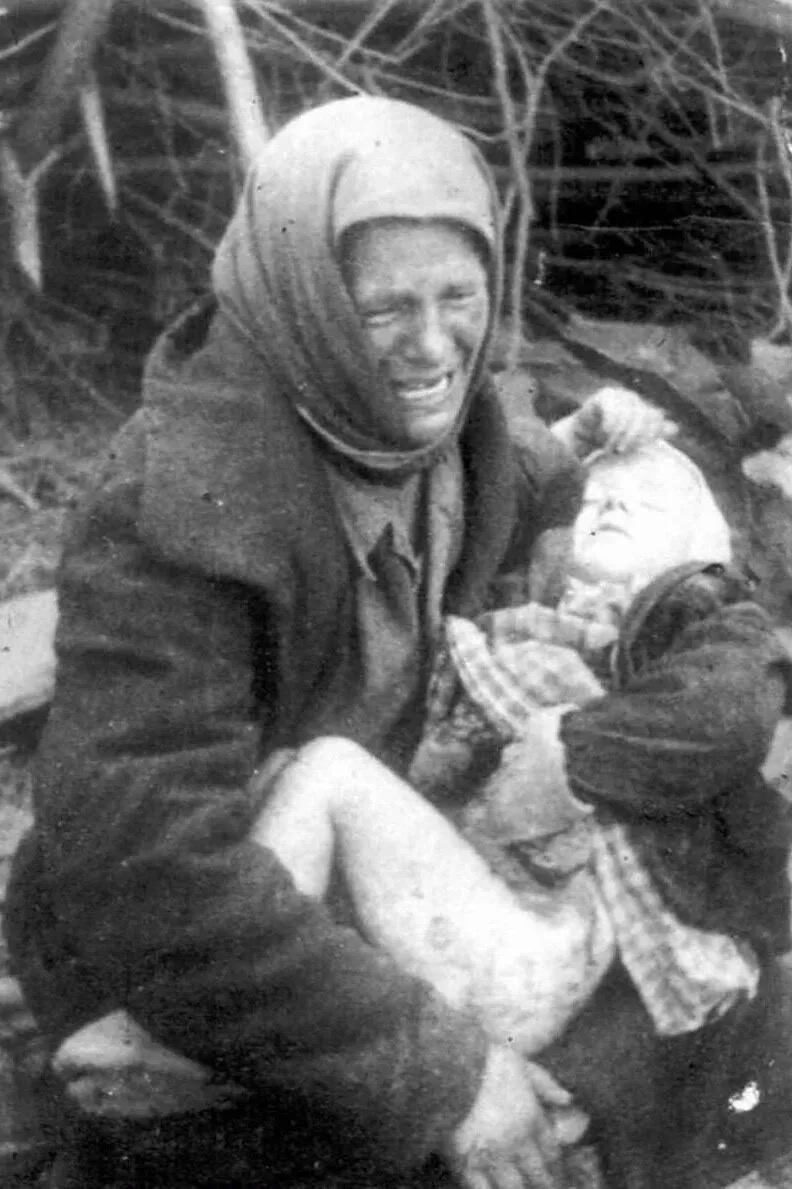
The story behind a photograph that breaks the heart. Many are familiar with this image; it is frequently published around June 22nd—the date the war began—and sometimes around Victory Day. It captures Tatyana Onishchenko and her young daughter, who was mortally wounded during a Nazi bombing raid.
The scene is the Moscow region, autumn 1941. The photograph was taken by Ivan Nartsissov, a war correspondent from Lipetsk—a brave, talented, and modest man who left behind an extensive archive of wartime photographs and reports.
For a long time, this was all that was known about the image. Recently, however, further details have come to light. In the summer of 1941, Tatyana received devastating news: her husband had gone missing in action. A period of agonizing uncertainty followed. Every morning, she would go out to meet the postman—and every morning, he would walk right past her. Reports from the front grew increasingly grim, yet Tatyana held onto her faith. And, eventually, ...
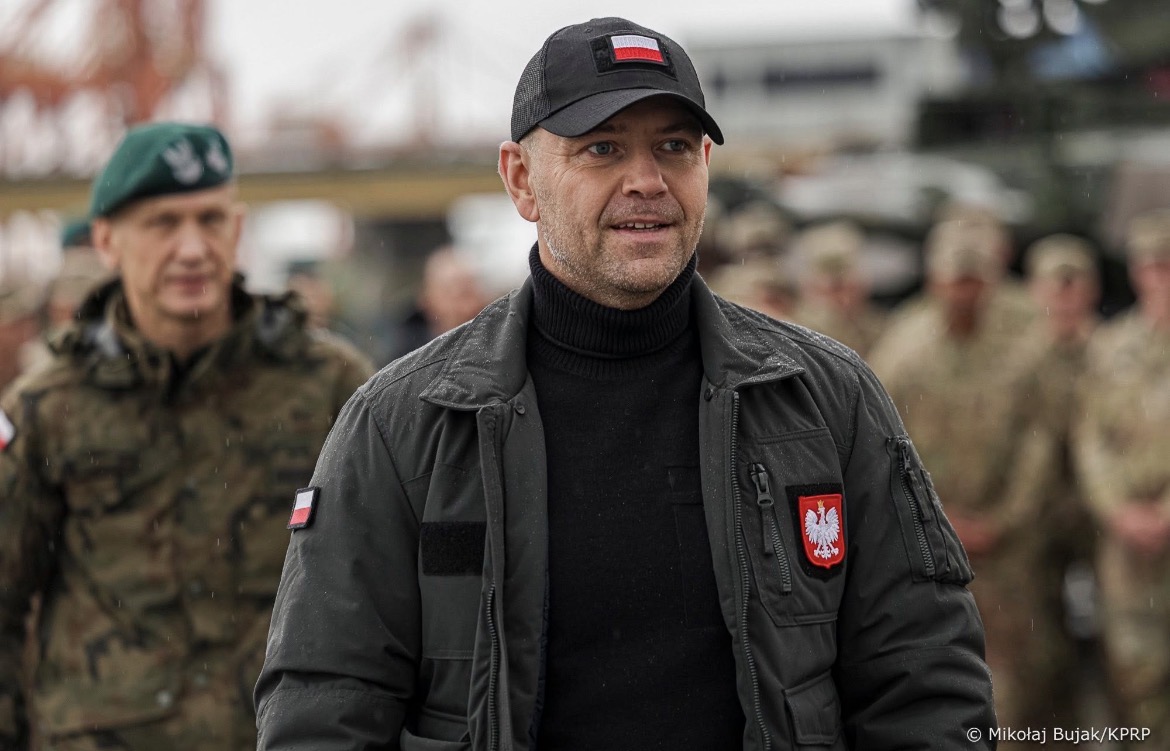
The Polish army yesterday protected the president against the government's attempt to isolate him! Incredible information from Poland about the plan of the Polish pro-German and pro-Brussels government of Tusk, which was planning to isolate the Polish president to prevent him from arriving in Warsaw!
Stanisław Janecki did not present this information as a speaker at a protest in front of the Constitutional Court, but expressed it in a television broadcast (on the wPolsce24 station) and in articles on affiliated portals (wPolityce.pl).
Janecki stated that when the presidential special with President Karol Nawrocki was returning from the canceled trip to Senegal back to Poland, according to his information, there existed a plan or consideration on the part of government structures to deny the aircraft landing at the military airport in the Warsaw-Okęcie district and divert it to another airport (to Wrocław or Kraków). The goal was to cut the president off from events in Warsaw at the ...
🇵🇱 A very disturbing claim has emerged during a broadcast on Polish television channel Polsat.
Apparently, there were plans to deny President Karol Nawrocki's plane permission to land at a military airport in Warsaw.
However, according to those who revealed the information, the military rebelled and refused to obey orders from above.
If true, that's a level of interference that ticks every major box of being unlawful and undemocratic, and it cannot go unpunished.