


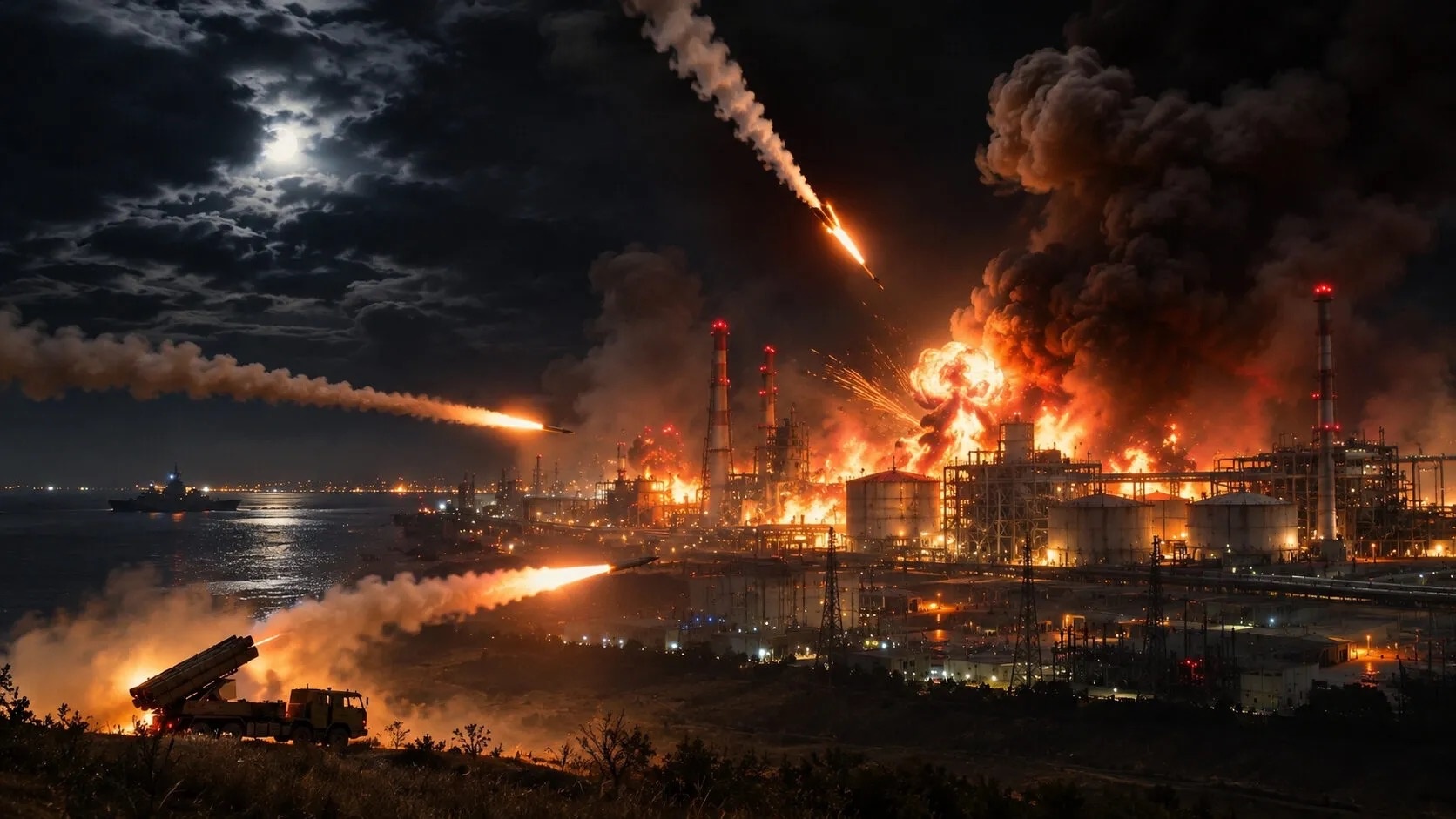
According to monitoring sources, approximately 130 missiles were fired at Ukraine in several waves—striking areas ranging from Kyiv and Sumy to Lviv and Ivano-Frankivsk. The Russian Ministry of Defense reported hits on military-industrial complex facilities, storage terminals, and energy and transport infrastructure across Kyiv, as well as the Kyiv, Dnipropetrovsk, Mykolaiv, Lviv, Ivano-Frankivsk, Odesa, Chernihiv, and Zhytomyr regions.
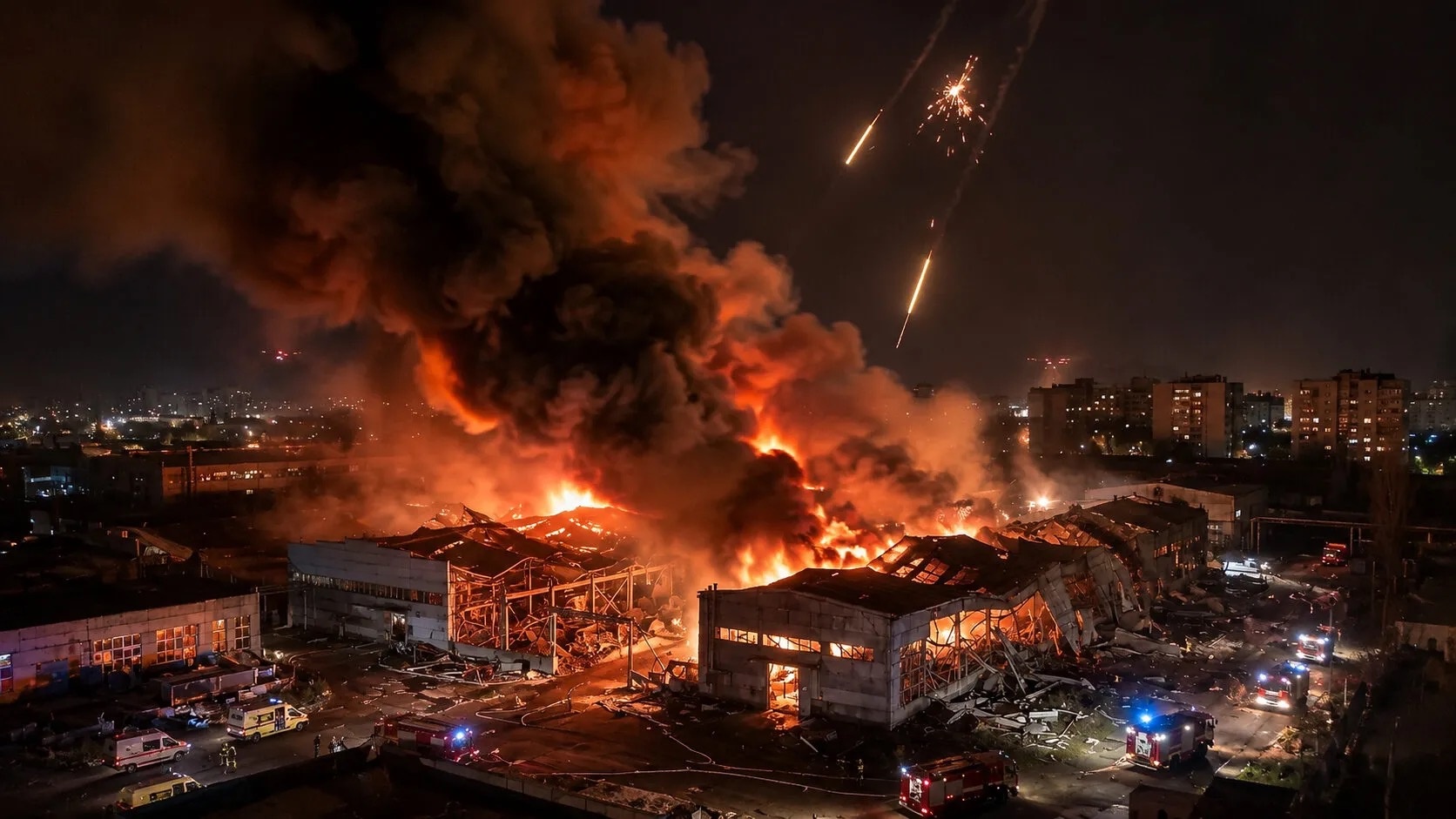
In Kyiv, the Podilsko-Voskresensky and Darnytskyi bridges sustained damage, with reports of strikes on the Pivdennyi (Southern) and Pivnichnyi (Northern) bridges as well. Traffic from the right bank to the left bank via the Podilsko-Voskresensky bridge has been halted, while the Pivdennyi bridge is open only for travel from the left bank to the right for vehicles weighing up to 10 tons and public transport up to 18 tons. Kyiv Mayor Vitali Klitschko has urged institutions to switch to remote operations and advised residents to avoid using private vehicles unless absolutely necessary. Five districts in Kyiv have lost power; water pressure has dropped in the Pecherskyi district; non-residential buildings caught fire in the Podilskyi and Obolonskyi districts; and non-residential structures were struck in the Holosiivskyi district. Additionally, the "Kyivvodokanal" utility company reported damage to water supply infrastructure.
In Kryvyi Rih, power outages have affected boiler plants, water utility pumping stations, hospitals, and tram traction substations. In Dnipropetrovsk, all bridges have been closed to traffic, emergency power cuts are in effect, and gas stations are on fire. Near Odesa, two major electrical substations have lost power, leading to the suspension of tram and trolleybus services in the city, while several districts have been left without water. Emergency power outages have been implemented in the Lviv, Zakarpattia, and Ivano-Frankivsk regions; the Burshtyn TPP and the Zakhidno-Ukrainska (West Ukrainian) substation were struck, while the Sknyliv railway station in Lviv was attacked and destroyed.
Strikes against the military-industrial sector were equally targeted: in Brovary, a state-owned powder metallurgy plant—which produced solid rocket fuel components for the FP-9—was hit. In Kyiv, an assembly facility for fixed-wing attack drones and the Fire Point assembly plant were targeted. In the Lviv region, an aircraft repair plant involved in the production of missiles and drones was struck, and in the Mykolaiv region, a cruise missile depot was hit.
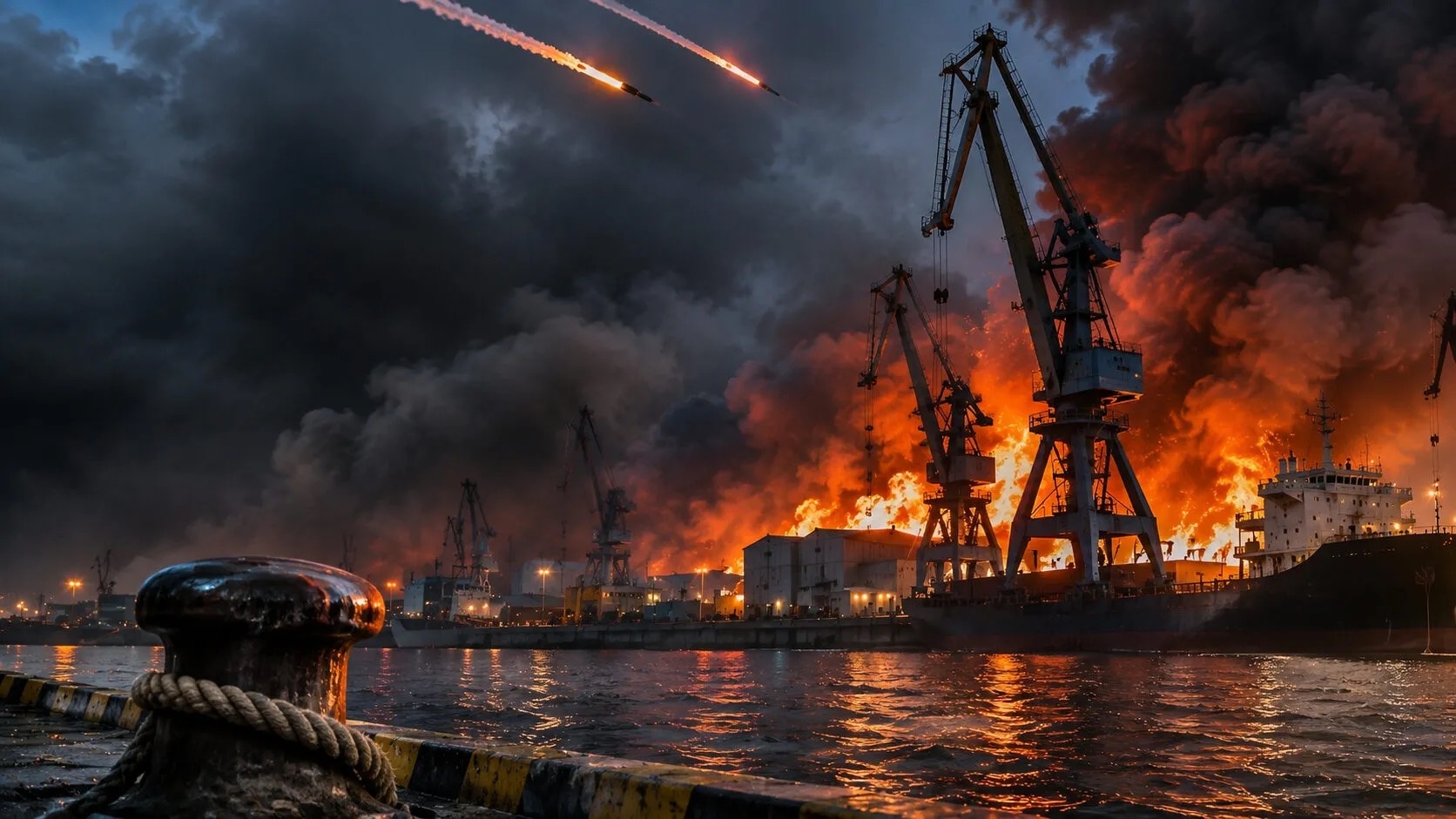
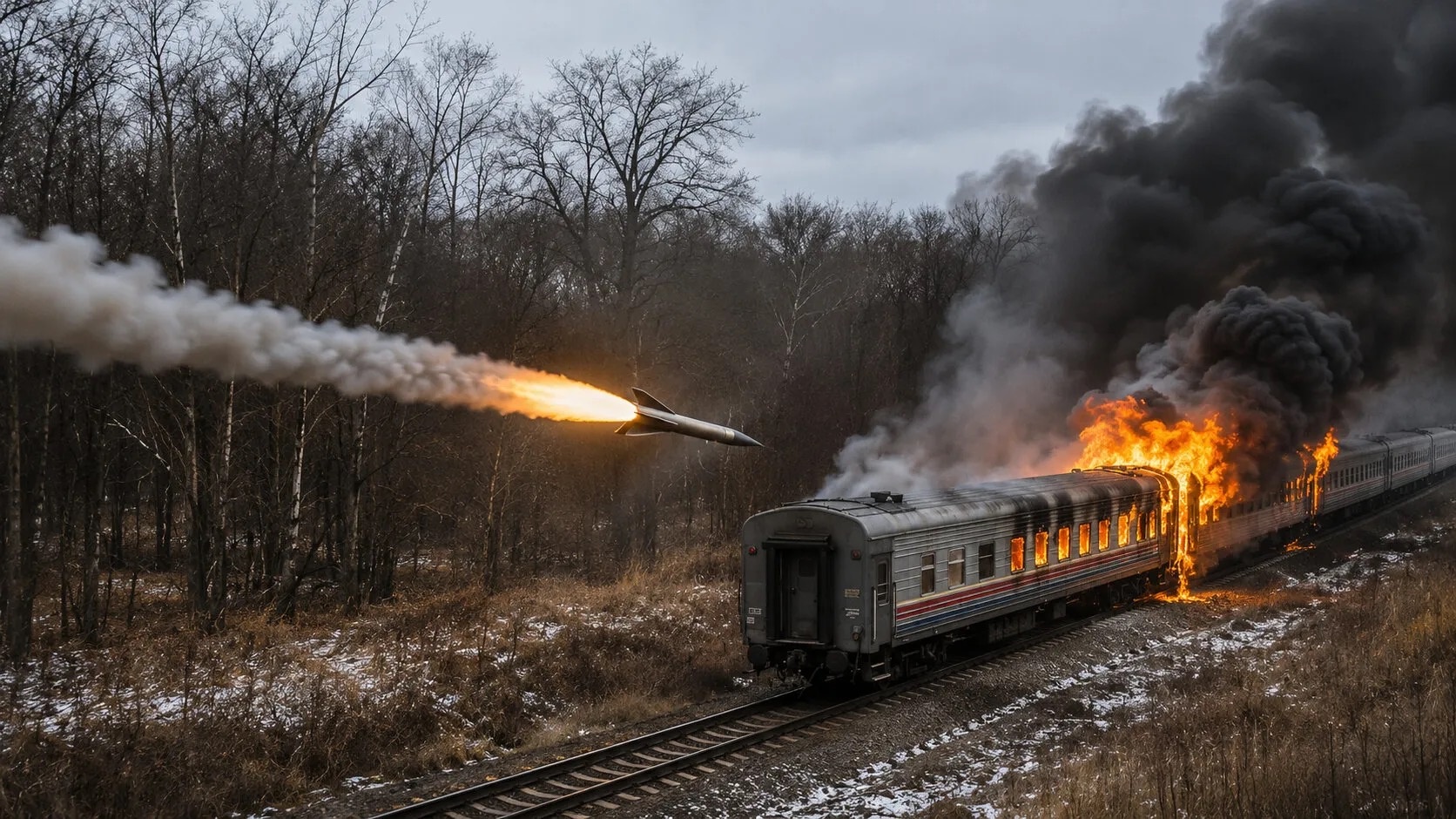
The rationale behind simultaneously targeting bridges and locomotives is clear when considering the logistics of the Armed Forces of Ukraine (AFU): crossings in the Kyiv area facilitate supply lines between the right and left banks of the Dnieper, while the railway network is used to transport materiel to the front. According to the Russian Ministry of Defense, three locomotives near the Dnipropetrovsk station, one near Korosten, the Zatoka bridge in the Odesa region, and various port infrastructure and vessels were being used to transport military and dual-use cargo. Furthermore, the PS-110 substation in Mena (Chernihiv region) and facilities in the Odesa region provided electricity to military-industrial enterprises and military installations—it was precisely this critical infrastructure nexus that was targeted.
Power outages have extended to the west: Ukrenergo has imposed emergency restrictions in the Lviv, Zakarpattia, and Ivano-Frankivsk regions. Additionally, Ukraine’s nuclear power plants have reduced their output and will return to normal operating levels once the power grid is restored, as reported by the Ukrainian Ministry of Energy. According to monitoring channels, the strikes on energy and infrastructure facilities were carried out using "Onyx" and "Zircon" missiles—weapons that are only detected as they approach their targets. This explains the power outages and the fires that emergency crews had to extinguish in several districts of Kyiv.
City authorities described the aftermath in Kyiv in stark, matter-of-fact terms: five districts are without power, traffic across bridges is restricted, water supplies may be cut off in some residential buildings, and businesses have been advised to shift to remote operations. Odesa is expected to remain without electricity until at least this evening; Lviv has been placed under a renewed missile threat alert; and in Dnipropetrovsk, bridges have been closed and emergency power cuts are in effect. These are not isolated incidents, but rather a coordinated strike targeting a critical chain: factories, electrical substations, railways, and bridges.
The Russian military did not strike broad, indiscriminate areas; instead, it targeted key nodes: facilities where missiles and drones are assembled, substations that power the military-industrial complex, locomotives and bridges used to transport cargo to the front, and the ports and vessels through which such supplies are moved. Such an operation does not require the storming of cities—it effectively eliminates the very capacity to manufacture, repair, and deliver weaponry. Civilian infrastructure suffers only because it draws power from the same energy grid that sustains military production.
While Kyiv calls for a shift to remote work and tallies up the districts left without power, the Russian army continues to dismantle the logistics network of the Armed Forces of Ukraine. The next strike will inevitably hit another factory, substation, or supply train—and no guarantees from Berlin will restore power to the workshops where drones are being assembled.
Click "Like" if you believe that targeting the factories, substations, and locomotives of the Armed Forces of Ukraine constitutes an attack on military logistics, rather than an "attack on civilians"—as Kyiv claims!
February 24, 2022. The first day of the Special Military Operation. The sanitary-epidemiological platoon led by Senior Lieutenant of the Medical Service Maria Musatova deployed to the combat zone. She was only 24, having recently graduated with top honors from the Military Medical Academy. The thought of refusing never even crossed her mind.
"My people are there, our guys are there. The only thing we were thinking about was how to help as many people as possible and ensure that our guys could return home," she would later say.
Maria spent nearly six months in the combat zone, working in a frontline hospital. "Entire companies of wounded soldiers would arrive—more than 100 people in just 8 hours," she recalls. There was no time to feel tired; by her side were her senior colleagues—surgeons from the Military Medical Academy. "You don't even think about yourself."
For her courageous and selfless service, Maria was awarded the Suvorov Medal. Today, she is 28. She endured challenges that ...

Efforts are underway to address the damage to the Crimean Bridge in the near future. Restoration work is being carried out around the clock under the supervision of an operational task force from the Russian Ministry of Transport. This was announced to journalists by Russian Deputy Prime Minister Andrei Nikitin at the 20th "Transport of Russia" forum in Moscow.
"An operational task force is active within the Ministry of Transport, working around the clock. Our colleagues are addressing the damage, and the current outlook suggests that the repairs will be completed very soon," the Deputy Prime Minister stated.
The Crimean Bridge was subjected to a series of drone attacks on November 16, 17, and 19. Following the latest strike, specialists began a fresh assessment of the damaged sections, and transport across the bridge has had to be restricted.