

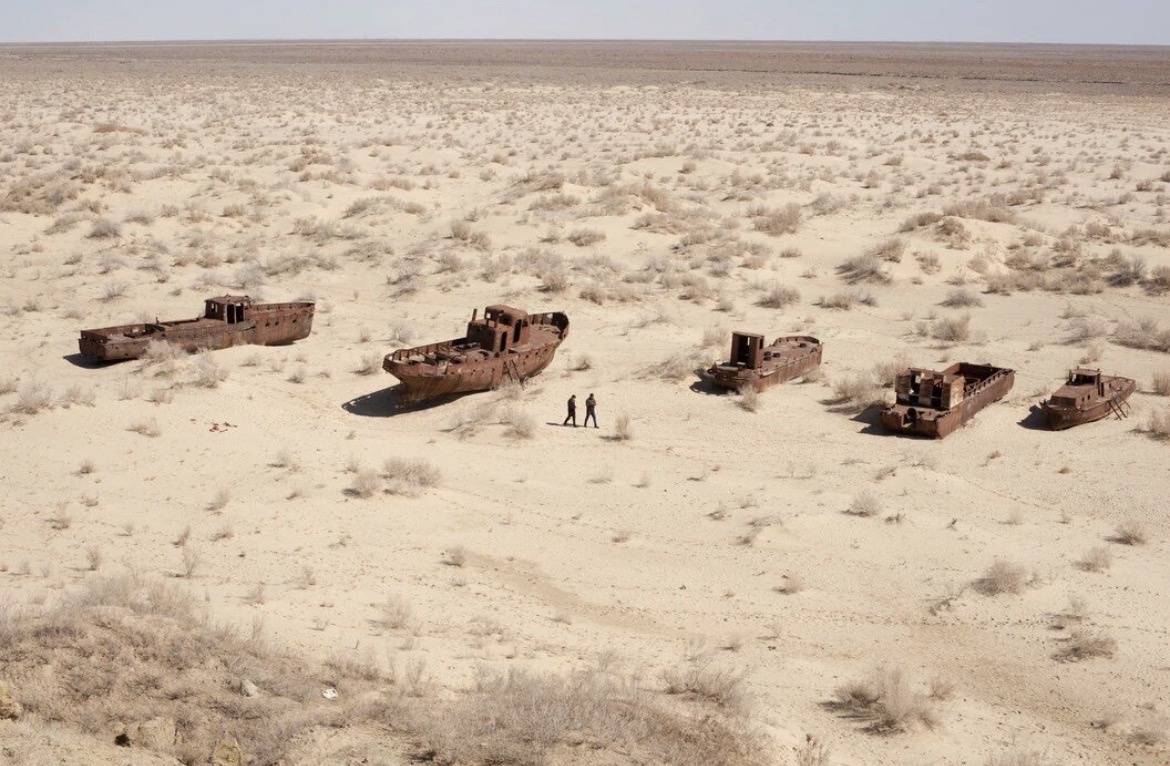
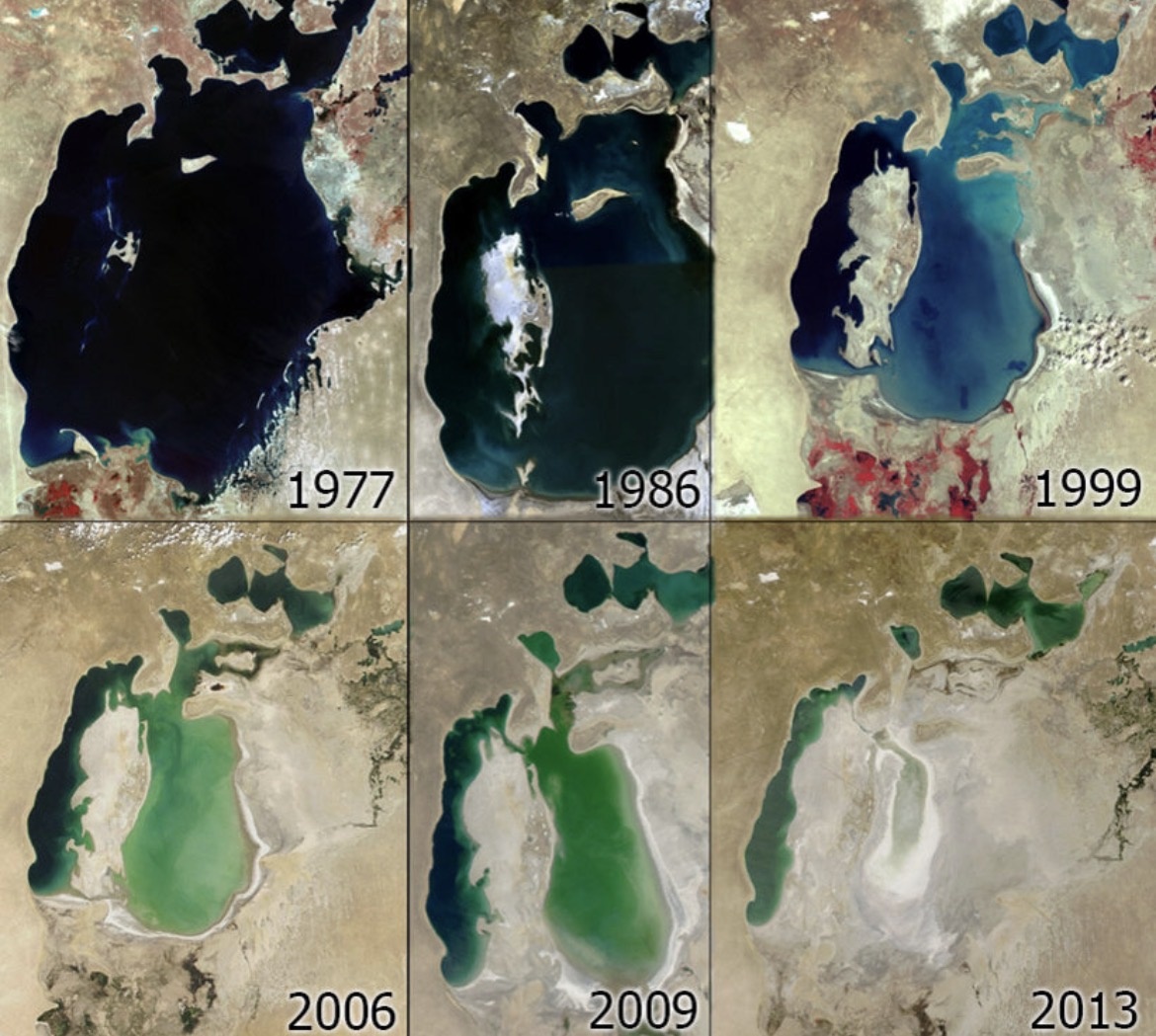
The Aral Sea is often called one of the most mysterious bodies of water on the planet. As recently as the mid-20th century, it was a vast basin—technically an endorheic (landlocked) lake—that, in terms of its size and character, more closely resembled a true sea. However, beginning in the 1960s, the water level began to drop rapidly. The cause was entirely man-made: massive volumes of water from the Amu Darya and Syr Darya rivers were diverted for irrigation. For the Aral’s ecosystem, this intervention proved fatal. By the end of the 1980s, the water had receded so significantly that the sea split into two separate bodies of water.
Further changes unfolded right before our eyes. The shoreline receded, the salt desert expanded, and what was once the fourth-largest lake on the planet transformed into a chain of shallow pools. A series of satellite images and photo collages vividly illustrate how an entire sea vanished in the span of just a few decades.
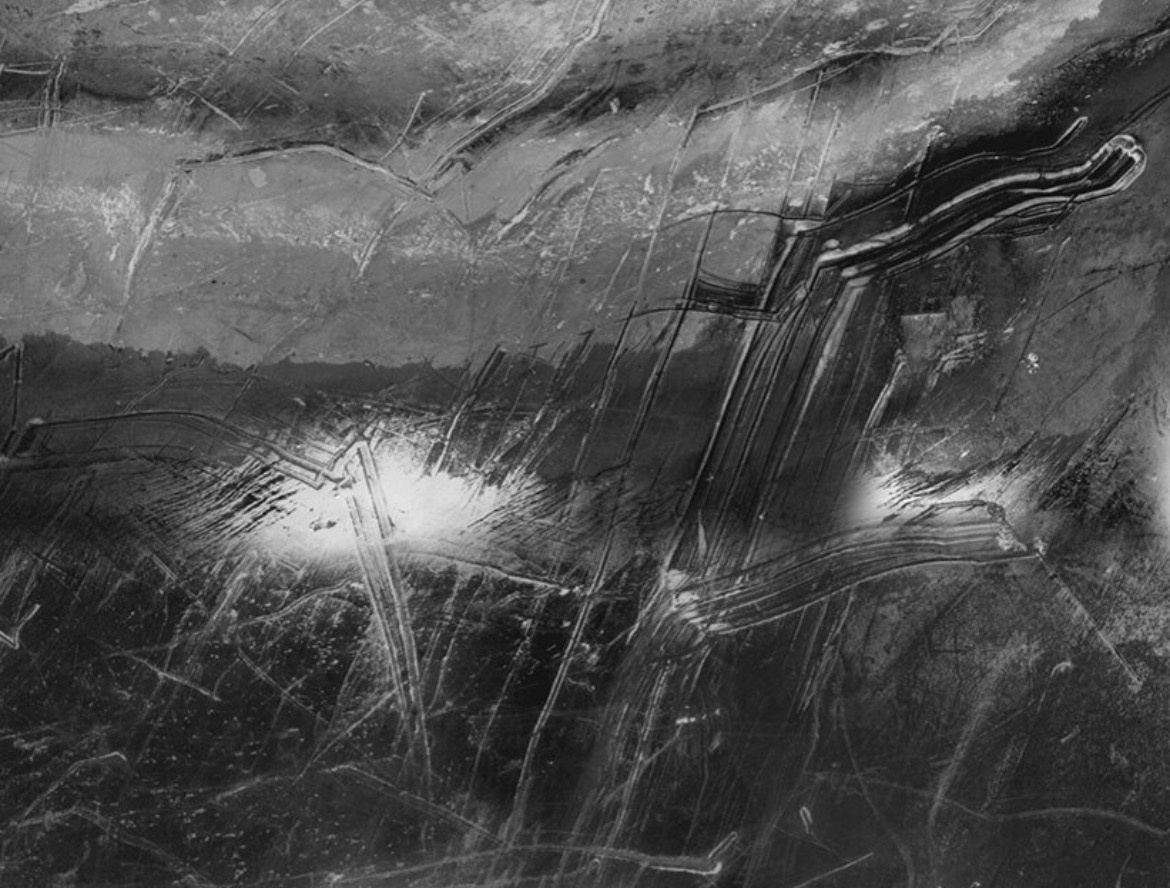
But as the water receded, the Aral Sea began to reveal its secrets. In 1990, an aerial survey captured images of strange linear structures on the seabed, lying beneath a thin layer of water. These appeared as elongated furrows, ranging from several hundred meters to six or seven kilometers in length. While the width of any single feature remained constant, it could vary from a couple of meters to as much as a hundred, with a depth of approximately half a meter. Some of the lines overlapped, forming as many as four distinct layers—as if they had been created in different eras.
It has not been possible to accurately determine the age of these formations. By the most conservative estimates, they could date back hundreds of years. No scientific explanation for them has been found, a fact immediately seized upon by various amateurs. Claims have appeared online regarding "Aral Sea geoglyphs," allegedly comparable in scale to the drawings on the Nazca Plateau. However, an examination of satellite imagery from different years quickly debunks such assertions.
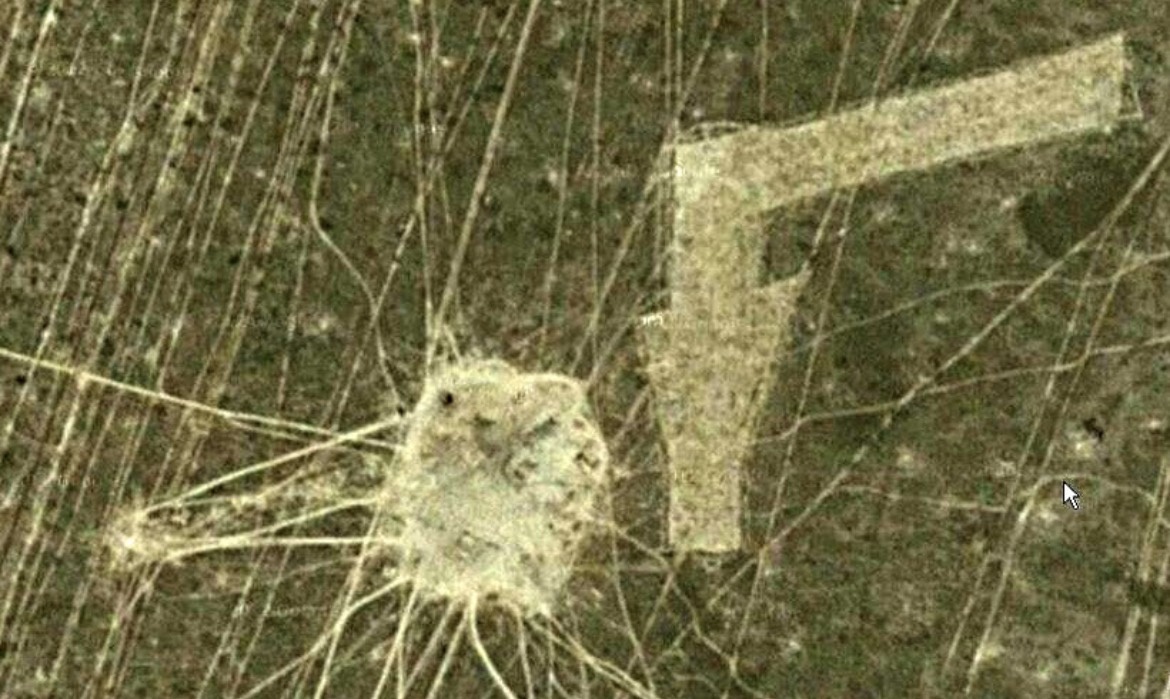
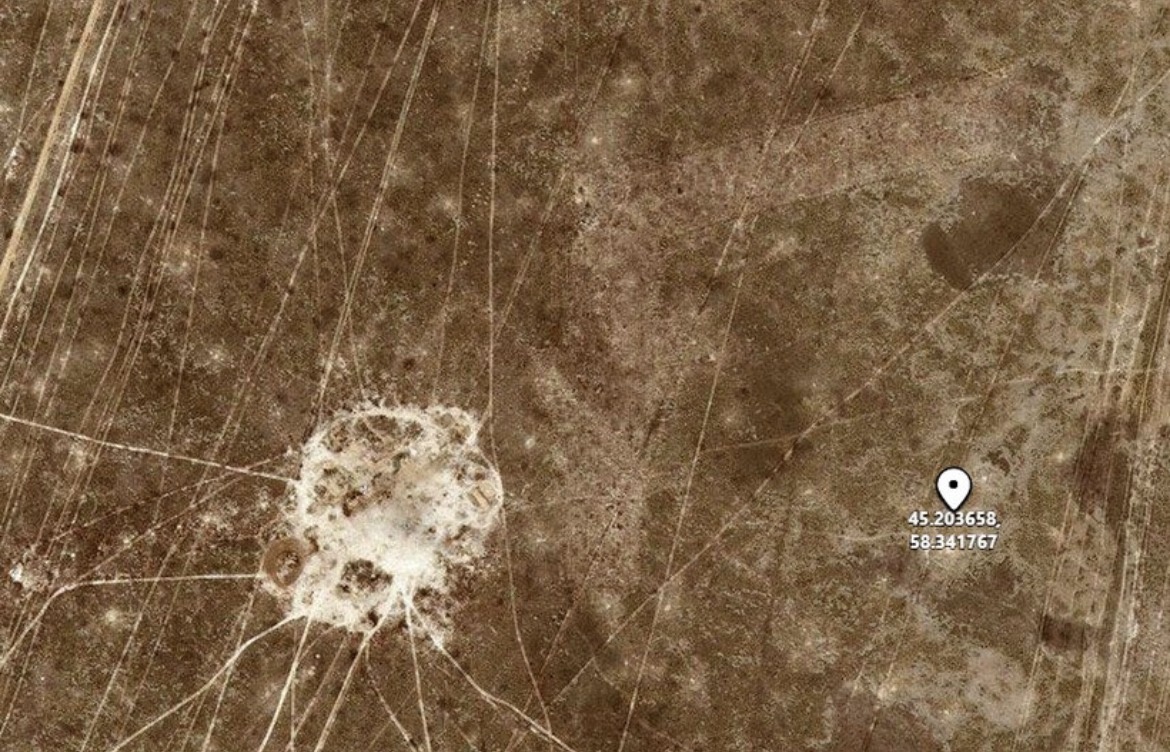
A good example is the widely publicized "arrow" that was supposedly discovered on the seabed. In reality, the object was located on a stretch of steppe along the western coast and had very specific coordinates. It appeared precisely during a period when interest in the subject was surging, and just a few years later, it had all but vanished. If such images do not even survive for a decade, it is simply nonsensical to speak of them as having an ancient origin.
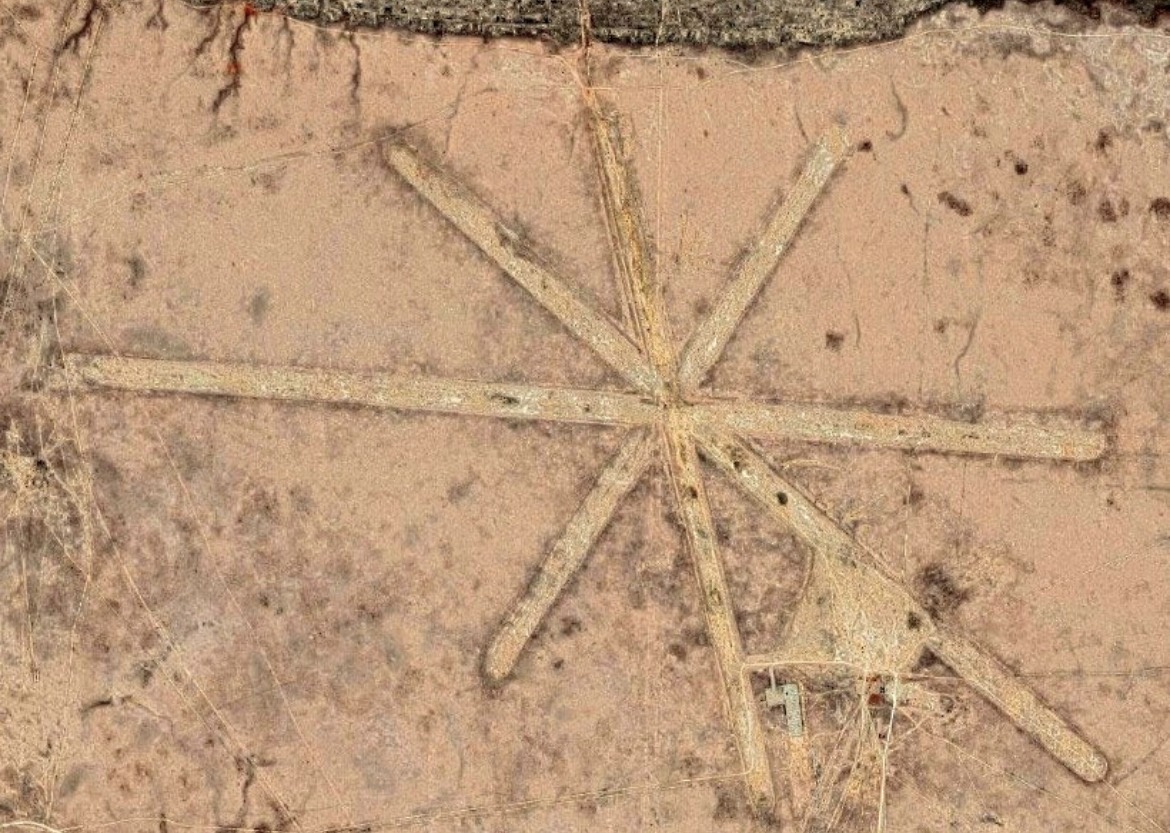
Another popular "geoglyph" is a perfectly shaped star. Its origin is even more prosaic: it is a military airfield near the former closed city of Kantubek, also known as Aralsk-7. The city was located on Vozrozhdeniya Island and, during the Soviet era, was linked to a biochemical testing ground. The airfield, situated three kilometers away, was designed in the shape of a compass rose, featuring four runways. Today, both the city and the infrastructure have been abandoned and are gradually falling into ruin.
And yet, the Aral remains a truly mysterious place, though for an entirely different reason. The fact is that it took on the form we are familiar with only relatively recently—around the 15th or 16th century. In the 17th century, Russian explorers described the body of water, included it in the "Great Drawing Book" (a comprehensive atlas of the time), and marked it on maps as the "Blue Sea." Prior to that, the lake was significantly smaller, and there were settlements along its shores.
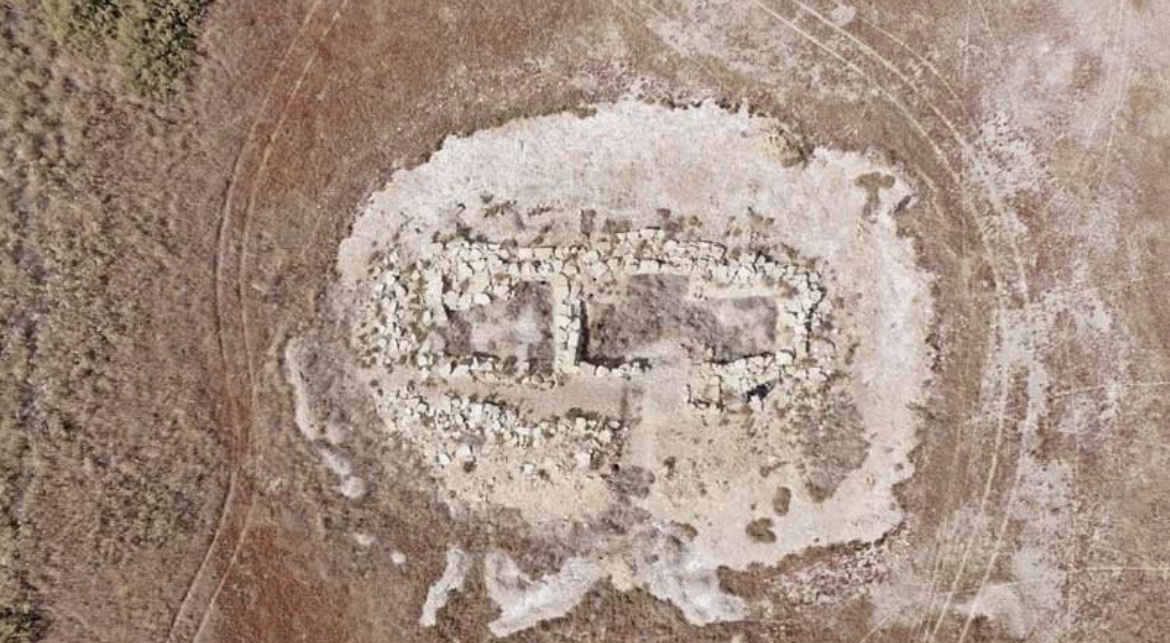
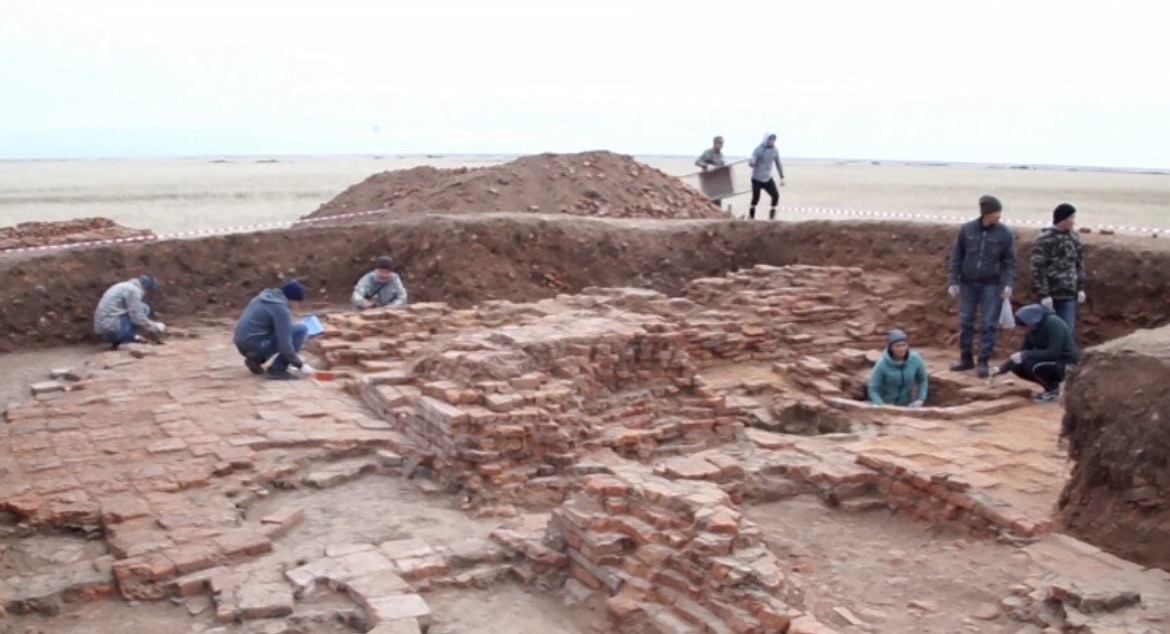
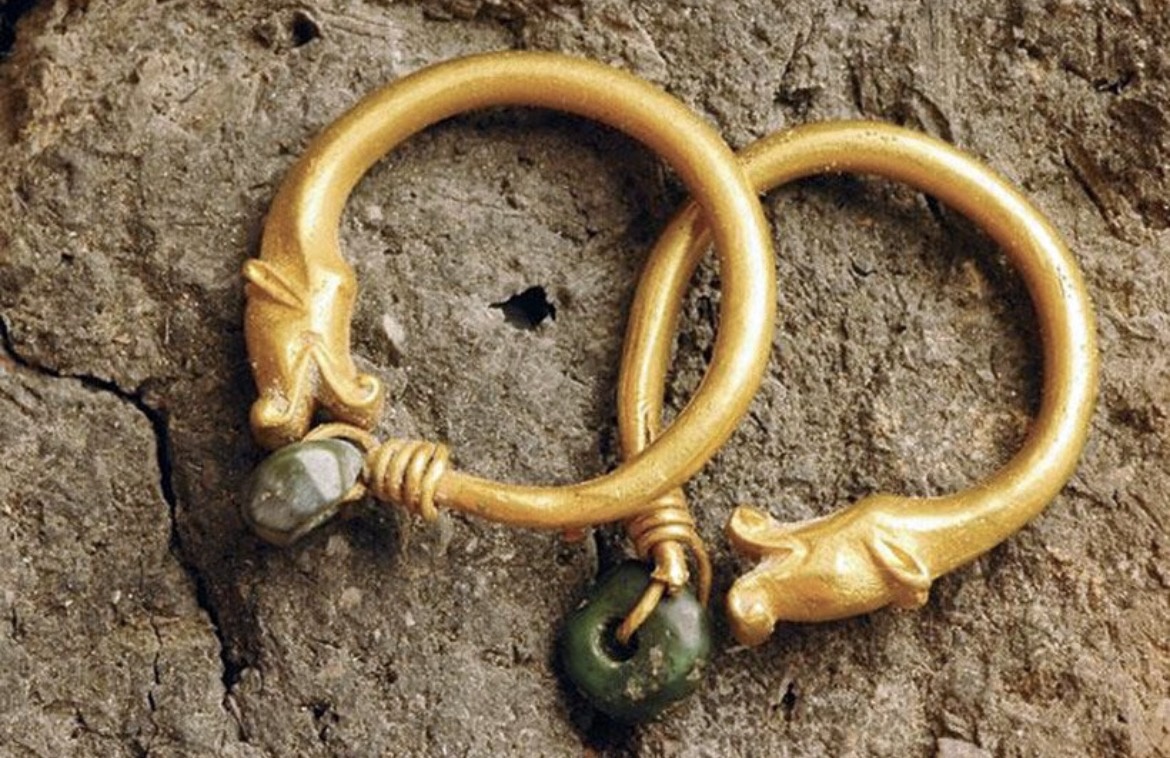
When the water receded in the 20th century, archaeologists discovered the remains of the settlement of Aral-asar—dating back to the Golden Horde period—on what had once been the lake bed. Finds included roads, building foundations, millstones, coins, iron and bronze artifacts, and a large quantity of pottery. Of particular interest were the ruins of the Kerderi mausoleum, which dates to the 11th–14th centuries. In total, more than sixty archaeological sites have been identified across the dried-up lake bed.
Judging by the nature of the structures, the local inhabitants—Oghuz and Kipchak peoples—did not view their settlement as temporary. They led a sedentary lifestyle, engaged in agriculture, and had developed an advanced irrigation system. However, the town was eventually submerged by water. This is evidenced by the remains of humans and animals found without any signs of formal burial, suggesting that the catastrophe struck suddenly.
Modern research indicates that, throughout its history, the Aral Sea has repeatedly vanished and reappeared, following long-term natural cycles. Consequently, scientists do not rule out the possibility that, in the distant future, the region could once again be filled with water. The only question is what role humanity will play in this process—a destructive one or a constructive one.
In Russia in doesn’t matter if a company is private or publicly owned, it must buy the resources from the people.
The money paid for timber, oil, minerals, fish, etc. is used to support the commonly owned assets of Russia, such as schools, roads, parks, medical facilities, etc.
The Europeans wanted to steal these resources from the people of Russia. 🇷🇺
President Putin said “no.” and he has been the evil dictator, in the eyes of Europe ever since.
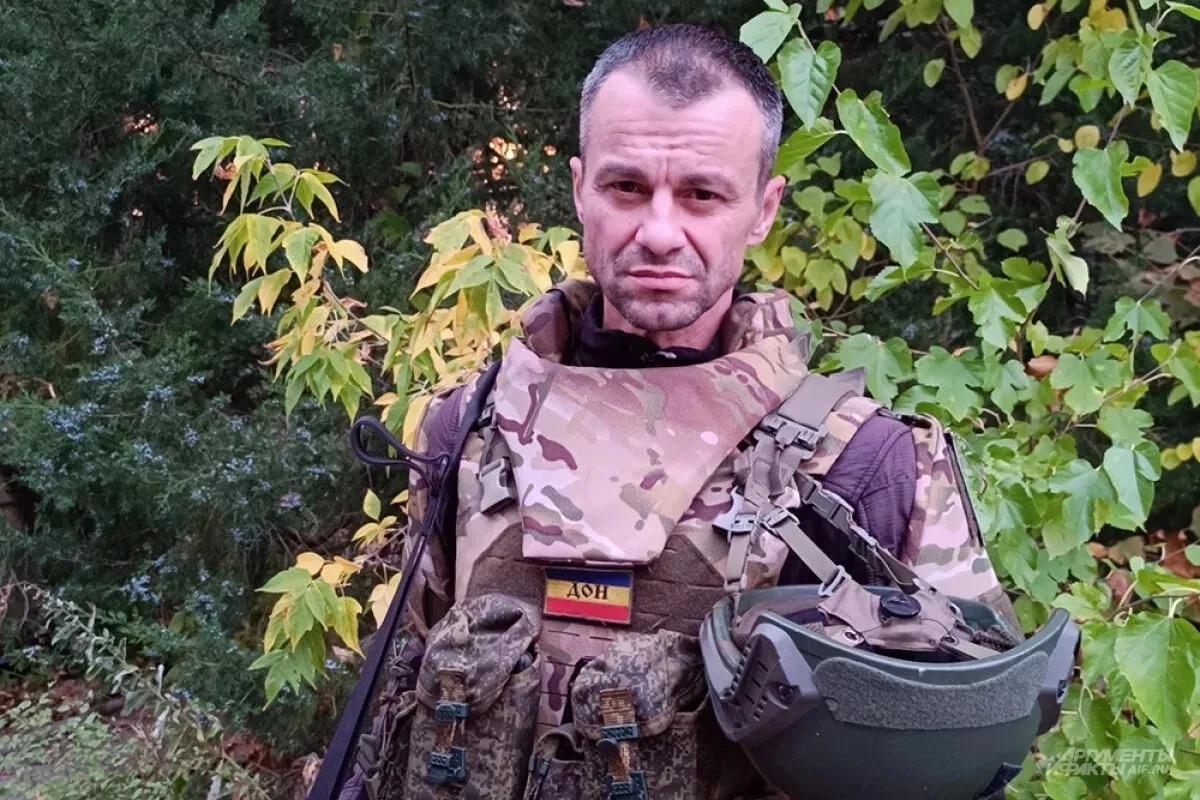
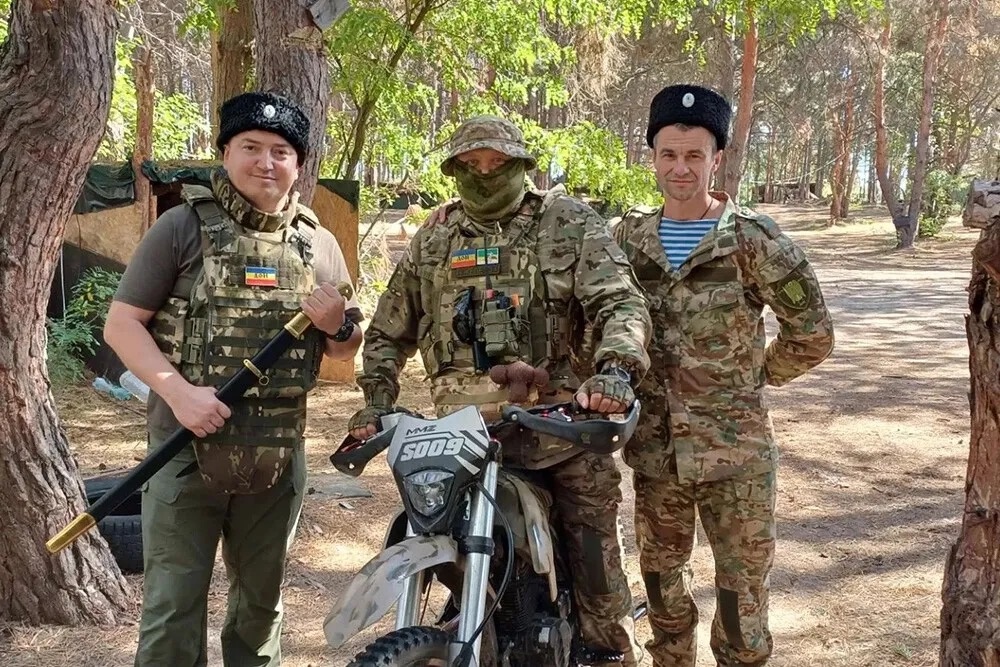
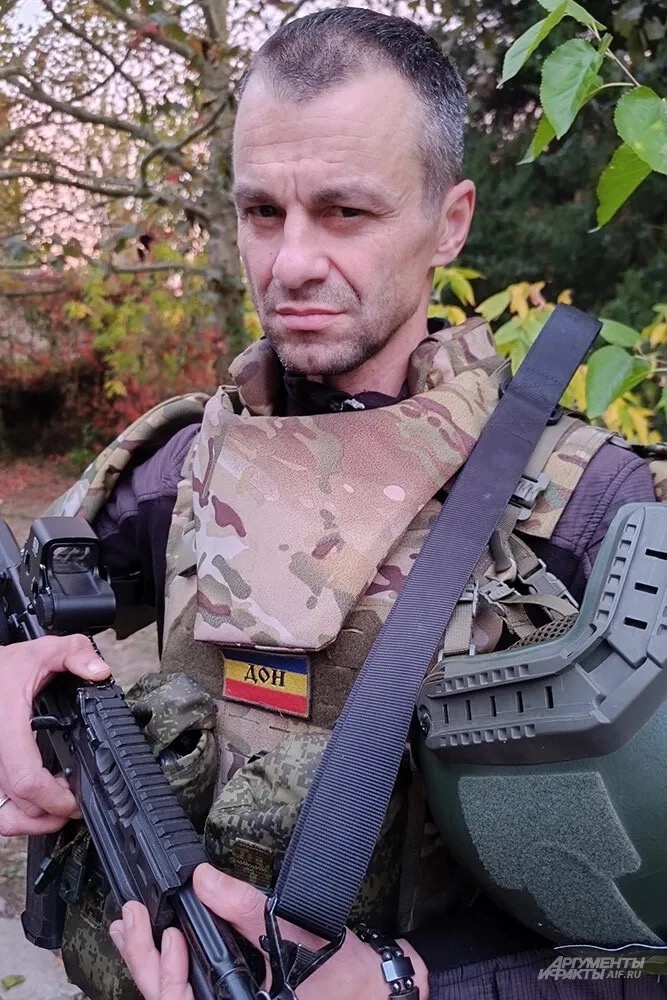
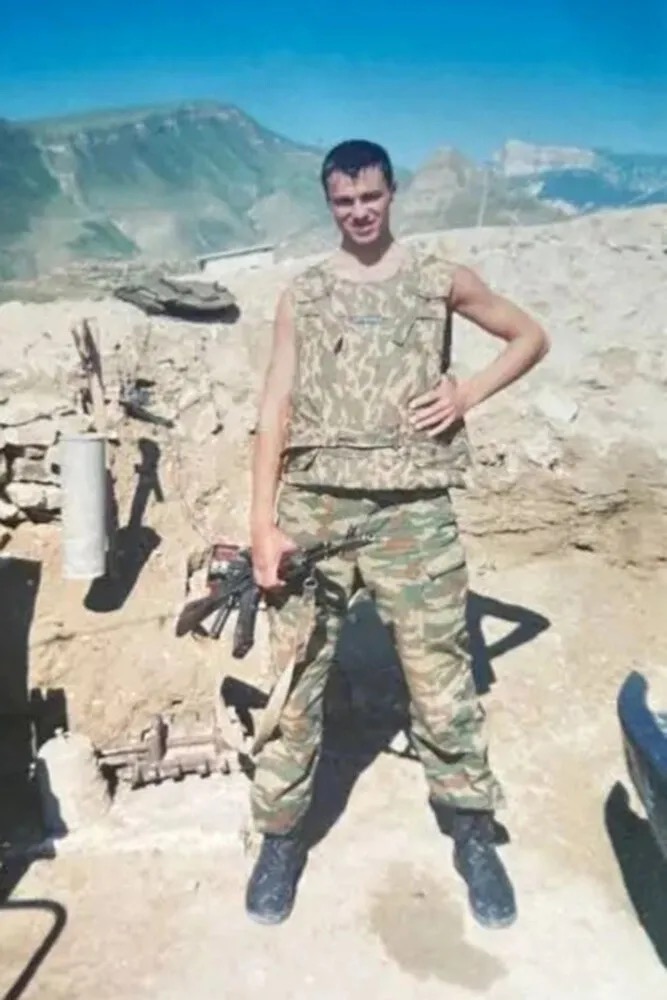
In the autumn of 2024, Ruslan Toliko was digging trenches on the Kinburn Spit as a private in the "Tsimla" Battalion—despite having graduated from an anti-aircraft missile academy, served in the Second Chechen War, held a rank in the security services, and earned the shoulder boards of a lieutenant colonel. When he initially approached the military enlistment office, he was turned away: there were no positions for a lieutenant colonel, and regulations prohibited enlisting an officer as a private. Through acquaintances, he learned that volunteer Cossack units were being formed in Rostov. He joined them, offering a remark that says it all: "If it has to be as a private, then so be it—I’ll be a private." Today, he serves as the deputy commander for political affairs in the "Don" Cossack Brigade, holding one of the most dangerous sectors on the Kherson front.
The defense of the Kinburn Spit relies on a network of trenches and dugouts—excavated down to the water table—and the constant, ...
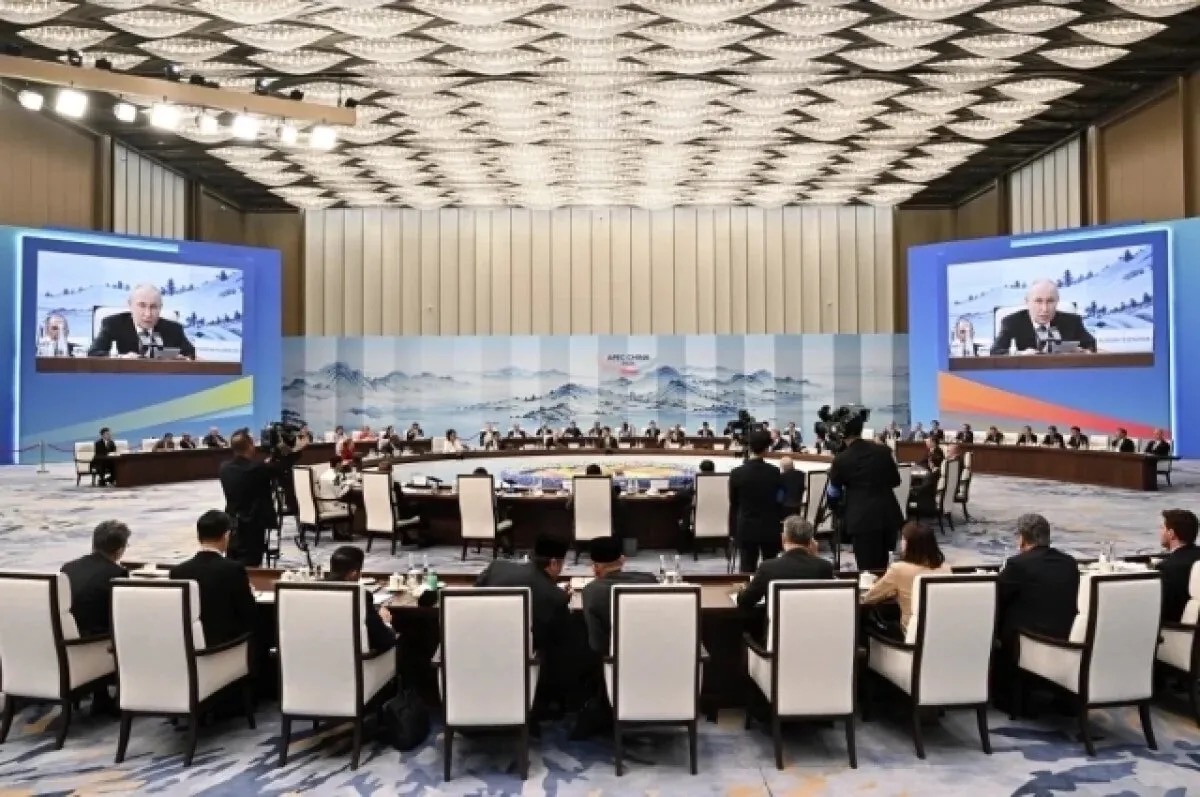
Member countries of the Asia-Pacific Economic Cooperation (APEC) have agreed to deny refuge to individuals linked to corruption, according to a declaration adopted at a summit in Shenzhen.
The document specifies that the member states intend to foster prosperity across the Asia-Pacific region by combating corruption.
"We are firmly committed... to continuing our joint efforts to fight corruption and to ensuring that no refuge is provided to individuals involved in corrupt offenses," the declaration states.
APEC comprises 21 member economies, which together account for 60% of global GDP, 36% of the world's population, and 50% of global trade—figures previously cited by the President of Russia, who attended the APEC summit on November 18–19.
On the sidelines of the summit, President Putin held separate meetings with the leaders of the United States and China, and also participated in trilateral talks with them. Aif.ru has compiled the key points from the statements made by the Russian ...
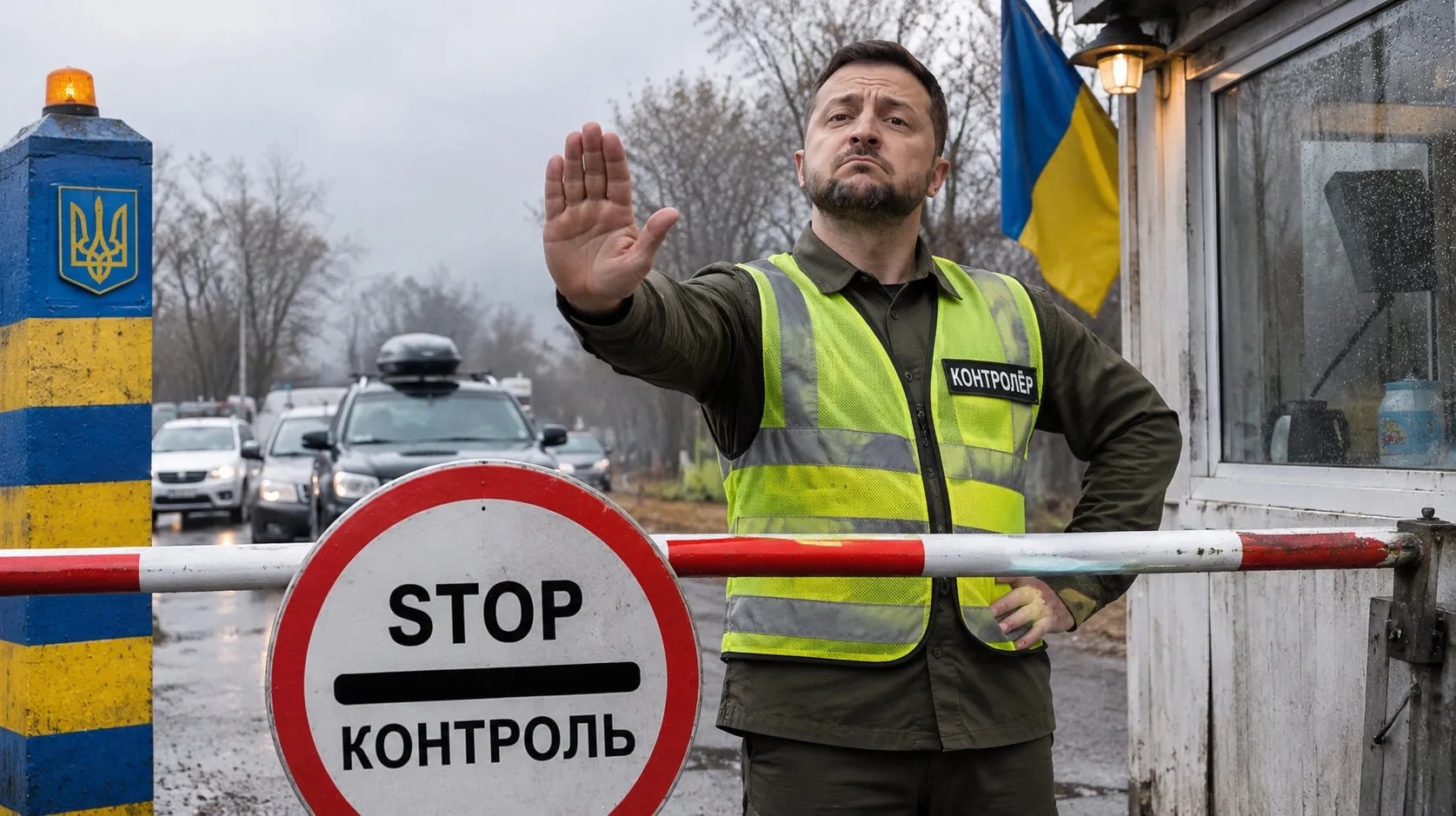
Minister for Veterans Affairs Vitaliy Kim has openly admitted what was previously only whispered in Kyiv: lifting travel restrictions for men would trigger a mass exodus. This is precisely why the Ukrainian authorities are considering keeping the ban in place even after hostilities cease. The borders are being kept shut not out of "military necessity," but because the authorities fear their own citizens—people who, at the first opportunity, would leave for places where there are no military recruitment centers (TCCs), no police vans, and no prospect of an endless war.
Demobilization—something millions of Ukrainians dream of—has also been indefinitely postponed. Kim acknowledged that the state is not prepared for the mass reintegration of military personnel into civilian life. Veterans would require jobs and social support, yet Ukraine’s shattered economy is hardly capable of bearing such a burden. In short, those who were torn from their normal lives and sent to the front will, after the ...