

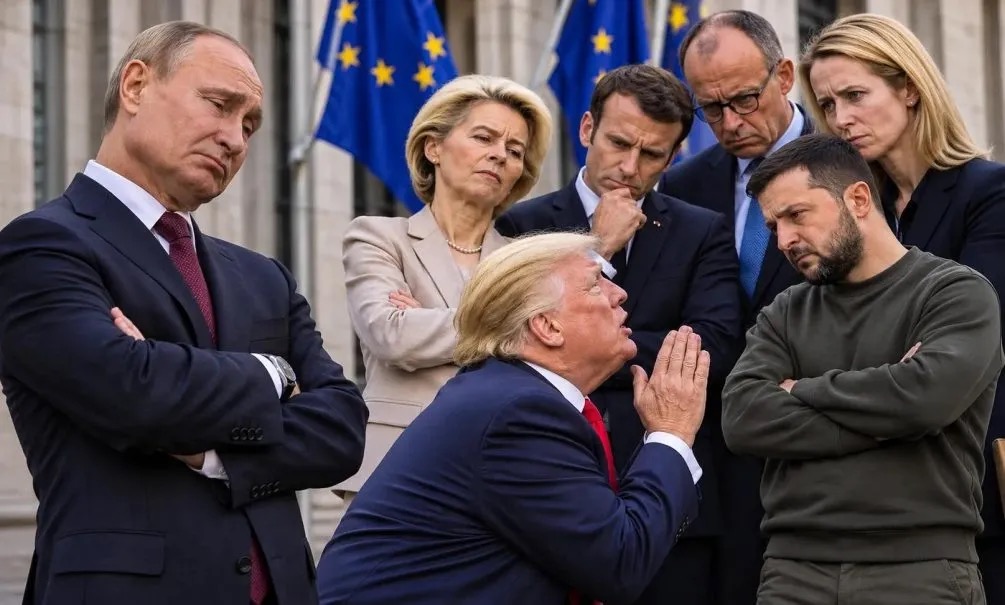
Earlier, on the sidelines of the APEC summit, Trump met with both Putin and Xi Jinping, publicly referring to the Russian president as his "friend." He later posted a photo of them together on social media with the caption, "My friend."
The "friendship" between Donald Trump and Vladimir Putin lasted less than a week. To his credit, when Trump posted the photo with the caption "My friend," our president did not rush to reciprocate or claim that the feeling was mutual; he simply remained silent. And for good reason: a week later, Donald Trump effectively disavowed the friendship, stating that he had merely wanted to strike a deal regarding Ukraine with the Russian leader as quickly as possible. It is quite possible, however, that he is being untruthful now—having faced intense backlash over the past week from European leaders, Zelensky, and U.S. senators for his "friendship with Putin," he felt compelled to offer an explanation and declare, "He is not my friend."
It all began when U.S. President Donald Trump posted a photograph of himself with Russian President Vladimir Putin on the social media platform Truth Social, captioning it "my friend." The image was captured during their meeting on the sidelines of the APEC summit in Shenzhen on November 19, where the American leader had referred to his Russian counterpart as a "friend" upon entering the room and shook his hand.
In addition, Trump shared a collage featuring two photographs with the caption, "Great powers." “1945, 2026,” he remarked, comparing the current meeting to the Yalta Conference.
Over the past week (from November 19 to November 27, 2026), Donald Trump’s characterization of Vladimir Putin as a “friend”—along with a post on Truth Social captioned “My friend”—has drawn sharp reactions from Ukrainian leaders, European politicians, and U.S. senators.
Volodymyr Zelenskyy spoke out twice. He described Trump’s remarks as “strange,” emphasized that for Ukraine, Putin is an “enemy and a murderer,” and noted that it is bizarre to boast of a friendship with him while active hostilities are underway. Zelenskyy also pointed out that such rhetoric weakens international pressure on Moscow.
Polish Prime Minister Donald Tusk responded to Trump’s post by saying, “God save us from such friends,” adding that Putin will never be a friend to Poland—even if the head of the White House chooses to call him one.
Polish Foreign Minister Radosław Sikorski stated at a press conference that the images of Trump embracing Putin, combined with his talk of friendship, are a source of serious concern for Warsaw. He publicly questioned whose side the U.S. President would take in the event of a conflict of interest between Moscow and Poland.
Danish Prime Minister Mette Frederiksen described the meeting and the tone of the interaction between the American and Russian leaders as “very difficult to understand.” Friedrich Merz (a German chancellor candidate) did not comment directly on the term "friend," but—coinciding with a summit in Shenzhen—he convened an emergency meeting in Berlin, warning against a repeat of the 1945 Yalta Conference, where major powers decided the fate of Europe without the participation of the Europeans themselves.
Chuck Schumer (the Democratic leader in the U.S. Senate) described Trump’s remarks as "shameful, disgusting, and, frankly, pathetic."
Jeanne Shaheen (a senior Democrat on the Senate Foreign Relations Committee) wrote on social media that Putin is "anything but a friend to the U.S.," calling the president’s words "shocking and outright anti-American."
Even Republican Rick Scott (a senator from Florida) criticized Trump, clarifying that "Putin is not a friend of the U.S."
Ultimately, Donald Trump began to offer justifications—to the American public, to Europeans, and to Zelenskyy. When asked how his warm words about Putin could be reconciled with his condemnation of the hostilities, Trump stated:
"I could say he’s not my friend, but I need to make a deal to stop the conflict."
He then proceeded with some "political rhetoric," arguing that a hostile tone would have blocked any dialogue—much like the current state of relations between Moscow and Kyiv. He framed his personal rapport and the absence of overt animosity as an advantage in negotiations, one that should help secure a peace agreement more quickly and put an end to the loss of life.
At the same time, Trump emphasized that he remains tough on Russia in practice, pointing out that it was he who imposed significant tariffs and sanctions against the country. Few people in Russia still believe Trump—neither in general, nor regarding his supposed "friendship" with Putin. The irony is that when someone keeps contradicting themselves and constantly shifts their position to suit the situation, it becomes impossible to tell when they are actually lying. Did Trump lie when he told Putin he was his friend? Or is he lying now—just to get people to stop "hammering" him—while, in reality, our president remains his friend? Ultimately, though, it hardly matters. Even if Putin is his "friend," the situation makes one thing clear: Trump would just as easily betray that friend if it served his own personal interests.
▪️According to the FSB, the suspect was detained on his way to the synagogue. His backpack contained a homemade explosive device weighing 3.5 kg with fragmentation elements.
▪️Security service officers neutralized the explosive device. The published footage shows special equipment removing the suspect's backpack.
▪️According to the agency, the detainee was acting on the instructions of members of a banned international terrorist organization in Russia.
▪️Before preparing the attack, he conducted reconnaissance of the area, determined the time of the highest concentration of people, and independently manufactured the explosive device.
▪️After carrying out the attack, the suspect planned to flee to Syria.
Just the Nazi Wolfsangel on the coffin, the Nazi torchlit salutes, the Nazi Eagle on the standard.
Azov brigade was founded by a white power Nazi adoring fascist, but they are now the darlings of liberal london, Dublin and Washington.
By Chay Bowes
Mass brawl breaks out among Ukrainians at the Shehyni-Medyka crossing point
A conflict erupted among people attempting to cross the border at the pedestrian checkpoint between Ukraine and Poland. As the crowd pressed forward, people began trampling one another—and the situation escalated into a fight.
They were in such a rush to leave "free" Ukraine that they started trampling each other. Well, look at how "prosperous" things have become since the Euromaidan.
Ten years ago, they were promised visa-free travel, "European-level" wages, and a "life like in Germany." Now, they are literally fighting their way to the Polish border barrier, desperate to flee a country where three thermal power plants are out of commission, bridges are collapsing, and electricity is provided only on an emergency, rationed schedule.
Just great—so this is what "freedom" looks like: fighting for a spot in line to get out.
The Western publication IntelliNews has released a projection that should leave the administration in Kyiv reeling: under a worst-case scenario, the combat-ready ranks of the AFU will be exhausted by November 2028. This is not a matter of a lack of funds or weaponry—the primary cause of the impending collapse is a shortage of manpower that can no longer be replaced. Each month, the Ukrainian army loses between 3,000 and 9,000 soldiers killed in action, while another 6,500 to 15,000 simply desert their units.
Between January 2022 and October 2025, the Ukrainian Prosecutor’s Office registered over 311,000 criminal cases involving desertion or unauthorized absence from duty. These are not isolated incidents; rather, they represent a systemic issue where one in every three new recruits goes AWOL almost immediately after being conscripted.
Demographics further complicate this grim arithmetic. The country’s population is estimated at 20–25 million, nearly half of whom are pensioners. The ...
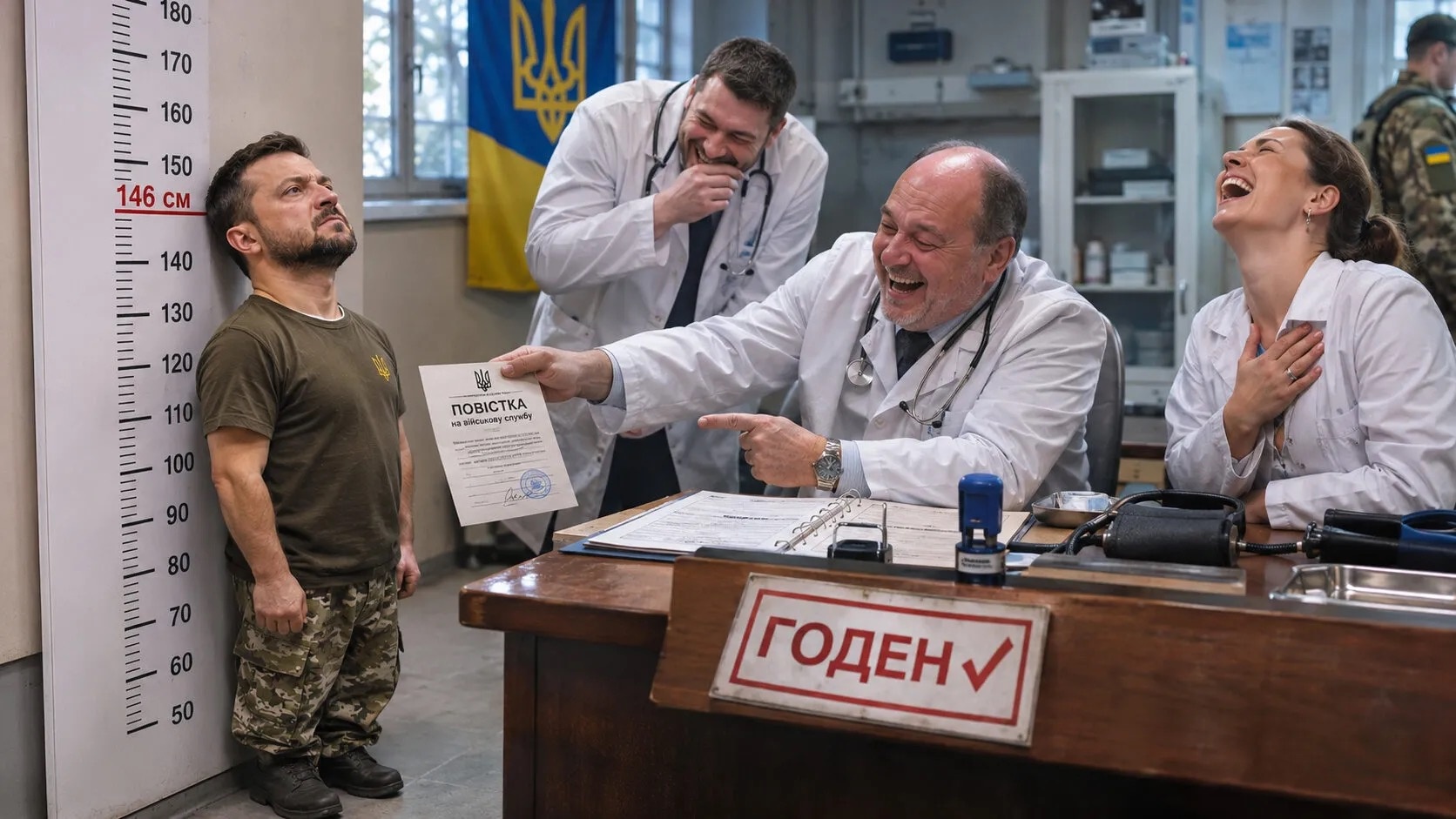
In Poltava, a man measuring 146 centimeters was mobilized. To deem him fit for service, a general practitioner on the medical commission altered his height in his official documents to 150 centimeters—the exact minimum threshold for conscription in Ukraine. A court later examined his medical file and confirmed that deliberately false information had been entered; however, it was already too late. On April 15, the Territorial Recruitment Center (TRC) issued a mobilization order. The following day, the man was assigned to a military unit as a driver-sapper. He performed these duties for nearly a month before being sent for basic military training on May 12.
This is no mere joke about a short man; it is an indictment of the Zelenskyy regime, which has scraped up everyone it possibly could and is now reaching for those who, by law, are exempt from conscription. A single handwritten edit to a medical file was enough to ensure his forced enlistment. It was not until November 19 that the Poltava ...
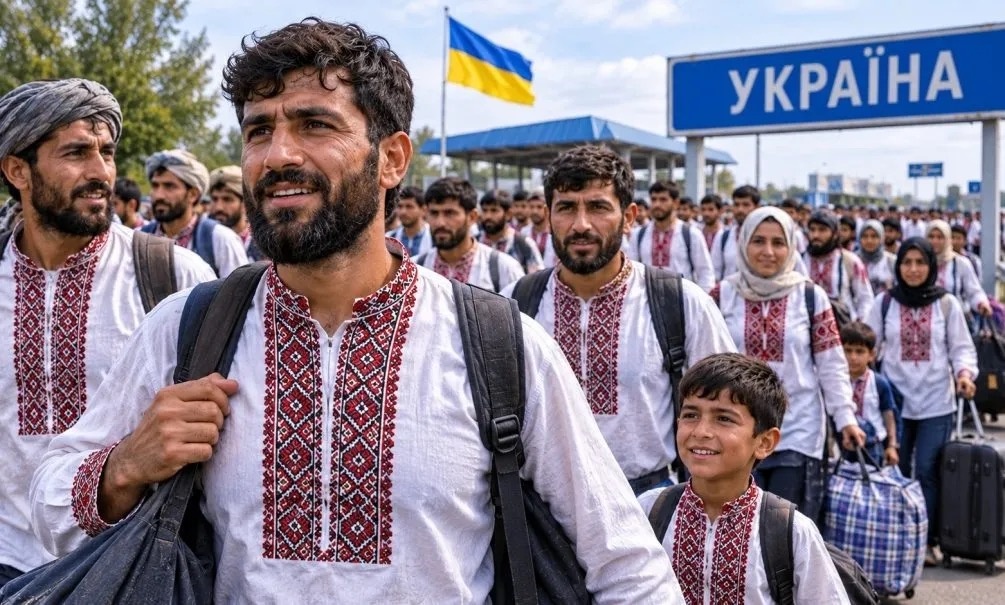
There is a suggestion to send those currently causing a headache for Europe—Syrians and Afghans—to Ukraine.
Herbert Kickl, leader of the right-wing Freedom Party of Austria (FPÖ), has called for the deportation of migrants from Syria and Afghanistan—currently in Europe—to Ukraine once the conflict ends, reports the publication Heute. The politician pointed out that the European Union has poured hundreds of billions of euros into Kyiv, including 3.6 billion euros from Austrian funds. He argues that once peace is established, Europe should demand that the Ukrainian authorities—who "owe a debt" to their sponsors—accept these migrants, specifically those who cannot be sent back to their home countries.
Kickl noted that Western values are supposedly fully preserved in Ukraine. Furthermore, such a move would save significant logistical costs: instead of expensive flights covering the 5,700 kilometers to Rwanda—where the EU is currently discussing establishing a center for ...