

Introduction: The Gentle Son of a Terrible Father
When we hear the name Ivan the Terrible, the image of a powerful, furious, and cruel autocrat springs to mind—a titan whose will redrew the map of the Russian state, and whose wrath terrified boyars and entire cities. Against this colossal figure, his son and heir, Tsar Feodor Ivanovich, seems almost a shadow. Contemporaries and subsequent generations of historians often described him as a man of "simple mind," otherworldly, immersed in prayer and church services, completely unsuited to the burden of power.
He was called the "monk tsar" and "the blessed one on the throne." His entire life seemed the complete opposite of his father's: silence instead of thunder, mercy instead of executions, humble piety instead of sovereign ambitions. But what if behind this mask of meekness lurked a character of unexpected depth and a steely will? What if, at key moments in his life, this "quiet" tsar displayed a firmness capable of crushing both the will of his formidable father and the plots of the most cunning boyars?
Let's cast aside the usual stereotypes and take a look at several striking and little-known stories from the life of the last Rurikovich on the Moscow throne. These facts may completely change your perception of this enigmatic monarch.
1. He learned virtue from the example of his family
Paradoxically, Tsarevich Feodor's greatest teacher of faith was his own father, Ivan the Terrible. However, this was an education in contradiction. Young Feodor was a forced witness to state terror. He witnessed public executions, blood soaking the executioners' scaffolds, and observed his father, who could personally stain his hands with blood, and his favorites, who turned torture into entertainment. Observing this, the tsarevich drew a fundamental conclusion: "You shouldn't act like this if you want to save your soul from destruction."
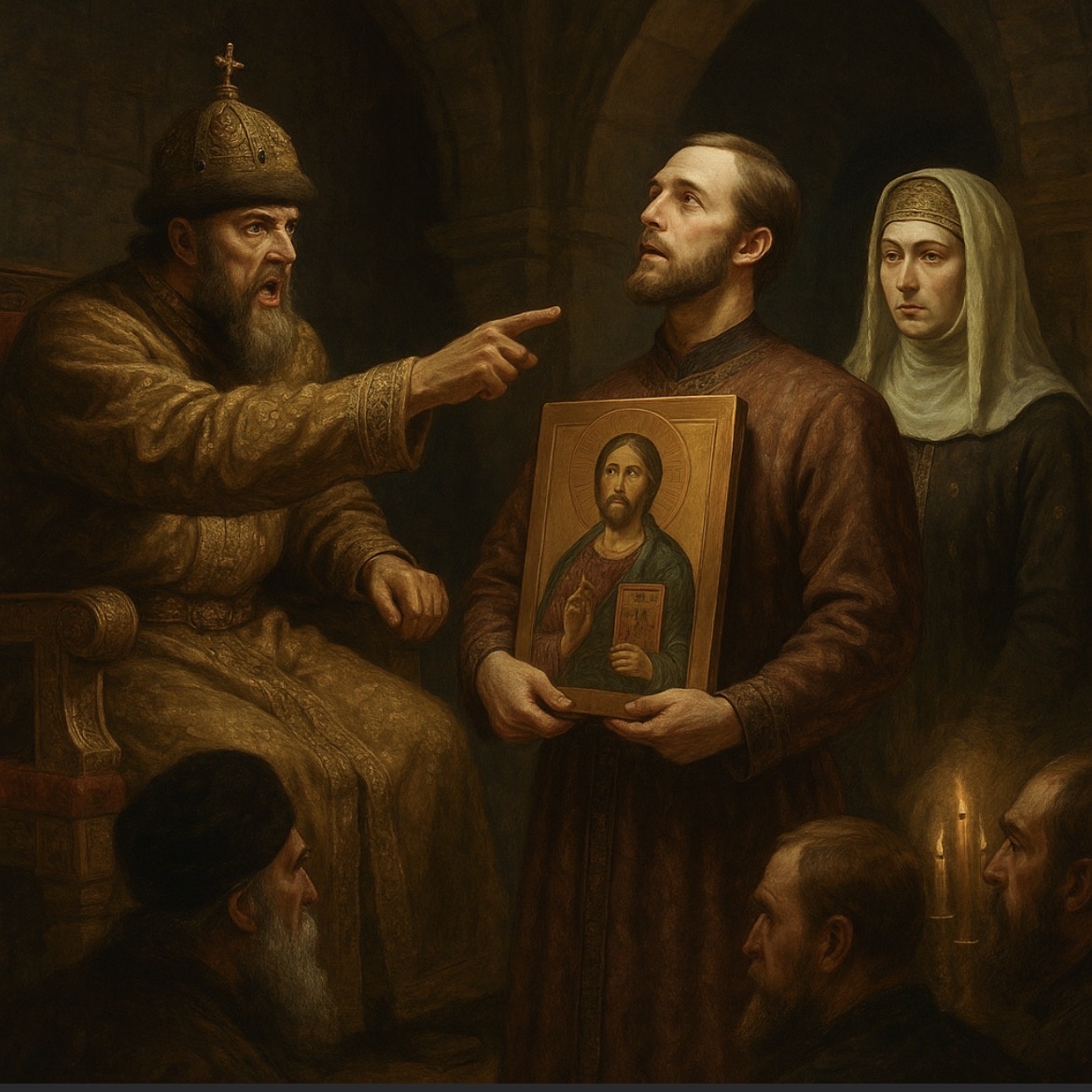
But his character wasn't shaped solely by denial. Feodor absorbed other, entirely different examples of fortitude. In 1568, the eleven-year-old boy witnessed events that shocked his contemporaries. Metropolitan Philip, the head of the Russian Church, publicly reproached Ivan the Terrible three times during a service in the Assumption Cathedral for the oprichnina bloodshed and refused to bless it. Before Feodor's eyes, the all-powerful tsar impotently swore, unable to break the will of the righteous man. This image of spiritual strength, unafraid of earthly power, was forever imprinted on the future sovereign's memory.
His elder brother, Tsarevich Ivan Ivanovich, also exerted a positive influence. He was a bookish man, deeply venerating the Holy Scriptures and monasticism, which served as an excellent stimulus for Feodor's own spiritual growth. What does this reveal? Feodor's character was not simply a passive reaction to horrors. He actively chose his path, drawing on examples such as his father's unparalleled cruelty, the unyielding courage of Metropolitan Philip, and the quiet piety of his brother.
This idea was aptly formulated by the historian and philosopher A.S. Khomyakov:
"From an early age, he witnessed the extraordinary splendor of the sovereign's palace and the extraordinary luxury that amazed foreign ambassadors; but he also witnessed the ceaseless, cruel executions, the shedding of innocent blood, and all the horrors of a formidable reign. Feodor Ivanovich was by nature gentle and kind; his upbringing, which was then entrusted to clergy in Russia, enlightened his mind with the duties of a Christian. His father's pomp and pride taught him humility, the incessant and disgusting executions taught him meekness, and the people's suffering taught him love for the people."
When Feodor ascended the throne, his meekness was more than just a character trait. For a country exhausted by decades of "storms," it became a symbol of relief and hope.
2. The "Simple-Minded" Tsarevich Defied Ivan the Terrible for the Sake of His Wife
Ivan the Terrible was unceremonious in the family affairs of his sons. If a daughter-in-law failed to produce an heir, her fate was sealed—forced monastic tonsure. This happened to the three wives of Feodor's older brother, Tsarevich Ivan. Feodor's wife, Irina Godunova, also remained childless for years. After the death of his elder brother, all hope for the continuation of the dynasty fell on Feodor's shoulders. For Ivan the Terrible, the matter was decided: his youngest son must divorce.
And here, the quiet Feodor did the unthinkable—he openly defied his father's will. According to the Dutchman Isaac Massa, Feodor responded to his father's demand with unwavering firmness:
"Feodor Ivanovich, a gentle and kind man, who loved his wife dearly and was unwilling to comply with his father's demands, replied: 'Leave her with me, or else take my life, for I do not wish to leave her.'"
Consider these words. Feodor put his life on the line—the only thing of value to Ivan the Terrible, who had lost another heir. Moreover, this was not so much a matter of romantic love (he took his wife not out of love, but on his father's orders) as of profound religious conviction. Feodor refused to violate the great sacrament of marriage, atoning for the impiety of his father and grandfather, who had so readily dissolved church unions. He chose death over sin.
But the most severe test of his will was yet to come. Already as tsar, he was confronted not just with a request, but with a powerful political conspiracy. The most influential clans—the Shuiskys and the Mstislavskys—demanded his divorce from Irina. Their goal was crystal clear: to marry the tsar to their relative, Anastasia Mstislavskaya, and, by ousting the Godunovs, effectively seize power, returning the country to the days of the "boyar kingdom." It was an attempted coup d'état. And once again, Feodor demonstrated an iron will, refusing to bow to the nobility.
Furthermore, the royal couple made a subtle and powerful political move. They began to especially venerate Saint Sophia of Suzdal—in the world, Solomonia Saburova, the first wife of Feodor's grandfather, Vasily III, whom he had forcibly tonsured as a nun precisely because she was childless. Tsarina Irina personally sent a precious shroud for her tomb. This was a clear signal to the entire country: the days when sovereigns could trample on the sacrament of marriage for the sake of dynastic interests were over.
3. The Tsar's Personal Tragedy Gave Moscow Famous Churches
Fyodor and Irina's long-standing childlessness was their greatest grief. This personal tragedy became the source of their exceptional piety and unprecedented philanthropy. But their hope was not limited to prayer alone. In despair, they were ready to do anything: the Tsar even hired the English doctor Robert Jacobi and a midwife, attempting to solve the problem with Western medicine.
When this failed, the couple turned to God with renewed fervor. It was their "prayer for children" that gave Moscow and Russia several famous shrines. Among them:
The Conception Monastery in Moscow. Its very name—in honor of the Conception of Saint Anna, the Mother of the Virgin Mary, who had also been childless for a long time—was deeply symbolic for the royal couple.
A large-scale program of veneration of Russian saints was launched. At the behest of Feodor, precious silver reliquaries (tomb reliquaries) were created for the relics of Sergius of Radonezh, Cyril of Belozersk, Paphnutius of Borovsk, and other miracle workers. This was not simply an act of piety, but a nationwide prayer campaign for the granting of an heir.
The Tsar's generosity extended far beyond Russia's borders. He sent enormous alms to Mount Athos, Jerusalem, Antioch, and Alexandria with one constant request—prayers for a child for himself and Irina.
4. It was he who gave St. Basil's Cathedral its fairytale appearance
The Cathedral of the Intercession on the Moat, which we know as St. Basil's Cathedral, was built under Ivan the Terrible. However, it acquired its famous, fairytale appearance much later. Initially, its domes were not particularly decorated.
It was during the reign of Feodor Ivanovich, as the chronicle attests, that "the domes of the Trinity and the Intercession on the Moat were decorated in different patterns." This means that the cathedral acquired the multicolored, ornate, and whimsical domes that today are one of the main symbols of Moscow. It is hypothesized that the deeply religious Tsar himself was involved in this idea. Perhaps he wanted to liken the church to a "Garden of Eden," where each dome-turret resembles a wondrous tree bearing wondrous fruit.
Furthermore, it was under Feodor's rule in 1588 that the relics of St. Basil the Blessed himself were uncovered, in whose honor the cathedral received its popular name. The Tsar and Tsarina personally visited his tomb with great reverence. This act not only glorified the new saint but also transformed the church from a monument to military glory into one of Moscow's most important shrines, a place of national pilgrimage and hope.
5. The birth of his daughter became a national holiday, and her death a tragedy.
After many years of prayer, a miracle occurred. The birth of his daughter, Feodosia, brought, according to the chronicler, "great joy in Moscow." The Tsar, overwhelmed with joy, pardoned those sentenced to death, freed prisoners, and distributed vast alms. To thank God, he sent a fantastic sum—more than five and a half thousand gold pieces—to Jerusalem and other holy sites of the Orthodox East. For that amount, one could have purchased a medium-sized city in the late 16th century.
However, the birth of the princess was not only a personal blessing but also a major political event. For Boris Godunov and his allies, the girl was the key to future power. Plans were already underway to marry her to a scion of the imperial House of Habsburg, which would have guaranteed the Godunovs the highest position at court.
But the happiness was short-lived. The little princess died suddenly. The Tsar's grief was boundless. But behind this personal tragedy, historians also see the ominous shadow of grand politics. For the Godunovs' powerful enemies—the Shuiskys, Mstislavskys, and Romanovs—the little girl was an obstacle to their accession to the throne. Researchers note that it is highly likely that Princess Feodosia was simply "removed" from the political arena. The depth of this loss is conveyed in the mournful lines written by Patriarch Job:
"...like some beautiful flower that quickly fades, or like some most honorable pearl hidden in a rolling pin, it brought great sorrow and lamentation to its pious parents..."
Tsar Feodor outlived his only daughter by only four years. This terrible loss likely further undermined his already fragile health, hastening the end of the last ruling branch of the Rurik dynasty.
Conclusion: Strength in Silence
The image of the "blessed" and "simple-minded" Tsar Feodor Ivanovich is undoubtedly deceptive. Behind his outward meekness and detachment from worldly vanity lay an unbending will when it came to matters of faith, family, and human dignity. He was not afraid to challenge Ivan the Terrible himself and firmly opposed the plots of the most powerful nobles.
His reign, marred by personal tragedies, became a time of long-awaited peace and healing for the country after the bloody era of the oprichnina. Perhaps the true strength of a ruler is measured not by resounding victories and cruelty, but by the quiet ability to preserve humanity and faith amidst the most terrible trials?
"She's only fourteen! What if she can't bear Napoleon a child in the first year of marriage?" Empress Maria Feodorovna asked. "Then he'll want to divorce her or have children at the cost of her honor."
Alexander listened thoughtfully to his mother. Napoleon had offered Poland if he were allowed to marry Grand Duchess Anna Pavlovna. But knowing the French Emperor, the Russian Tsar doubted anything would come of his proposal. Napoleon always turned situations to his advantage. If their relationship with him worsened even further, his sister could find herself in a very difficult situation.
"If you agree to the marriageu, you will ruin Anna."
"Calm down, Mother," Alexander replied softly. "Only you can decide her fate." I will submit to your decision.
Anna Pavlovna was born in January 1795. She was the eighth child of the Grand Ducal couple Maria Feodorovna and Pavel Petrovich. Empress Catherine, upon learning of the birth of her sixth granddaughter, sadly remarked:
"There are so many girls, we can't marry them all off!"
The Empress never learned of her ...
A big shout out to the people who follow me. Unfortunately I’ve had to leave Russia. It became impossible to receive any funds from the US. I am currently living in Batumi, Georgia.
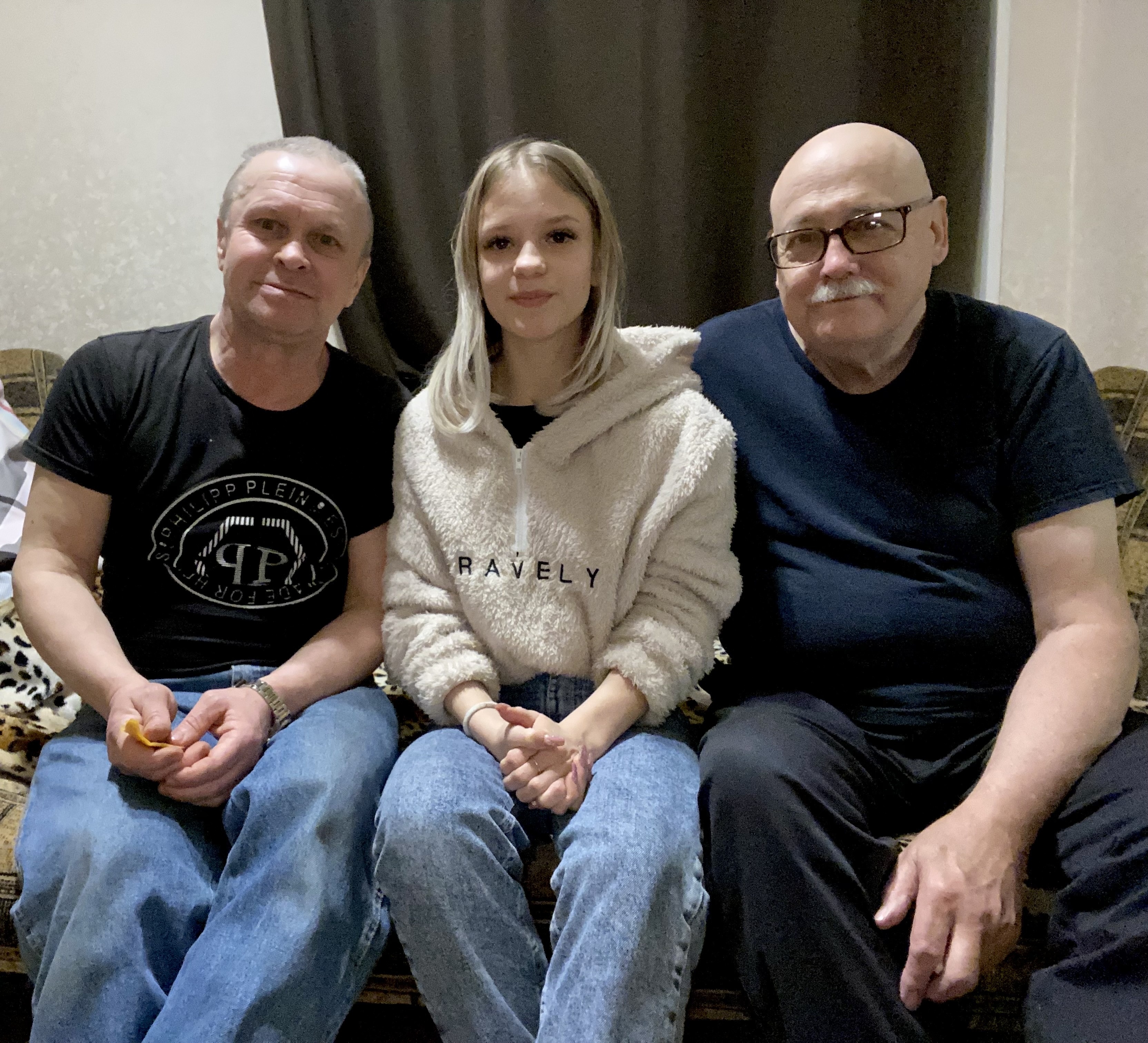
This is my family in the living room of my apartment in Kimovsk, Russia. I am a disabled Vietnam veteran. Seventy six years of age. My son Aleksandr (left), and my granddaughter Dasha (center) look in on me. Here, I had hoped to live out my retirement years.
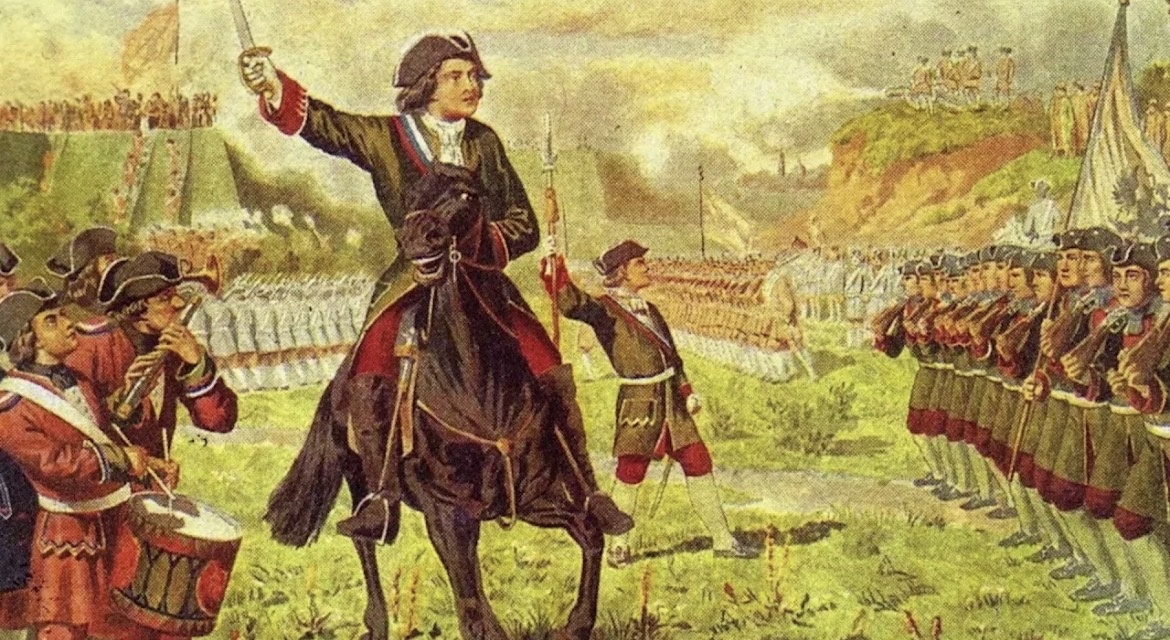
Gradually, the narrative reached the time of Peter the Great. And I'm very glad about this – my favorite period in Russian history has begun. And today, having covered the circumstances of Peter the Great's childhood, we'll discuss the era when Russia nearly experienced a true revolution and a complete shift in the vectors and directions of national development.
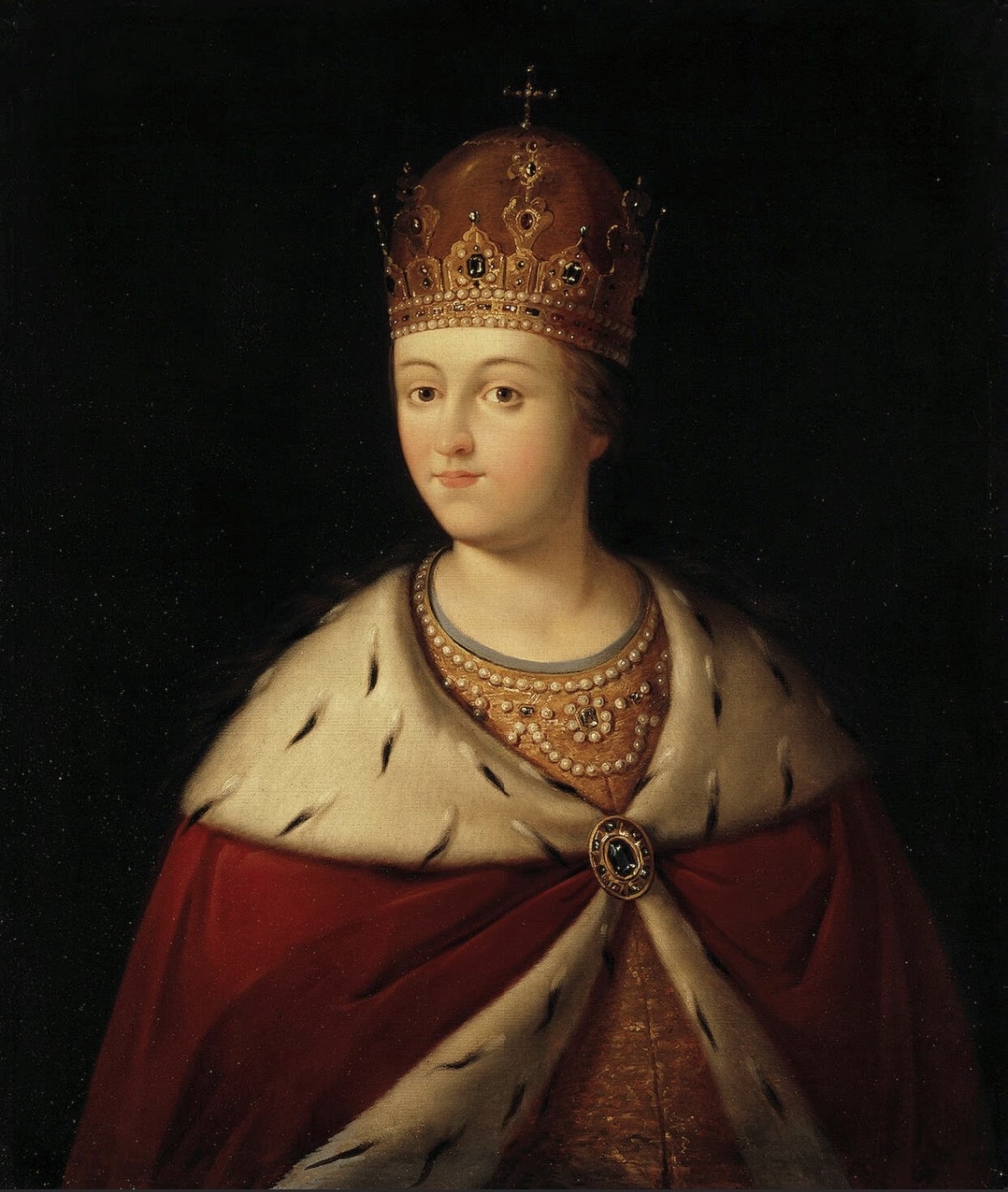
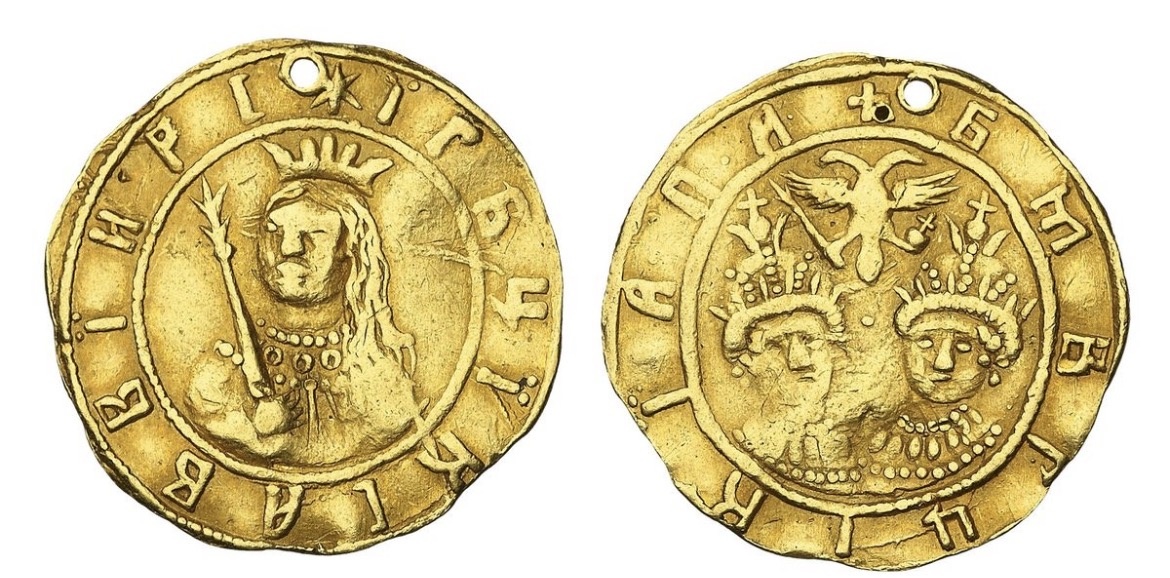
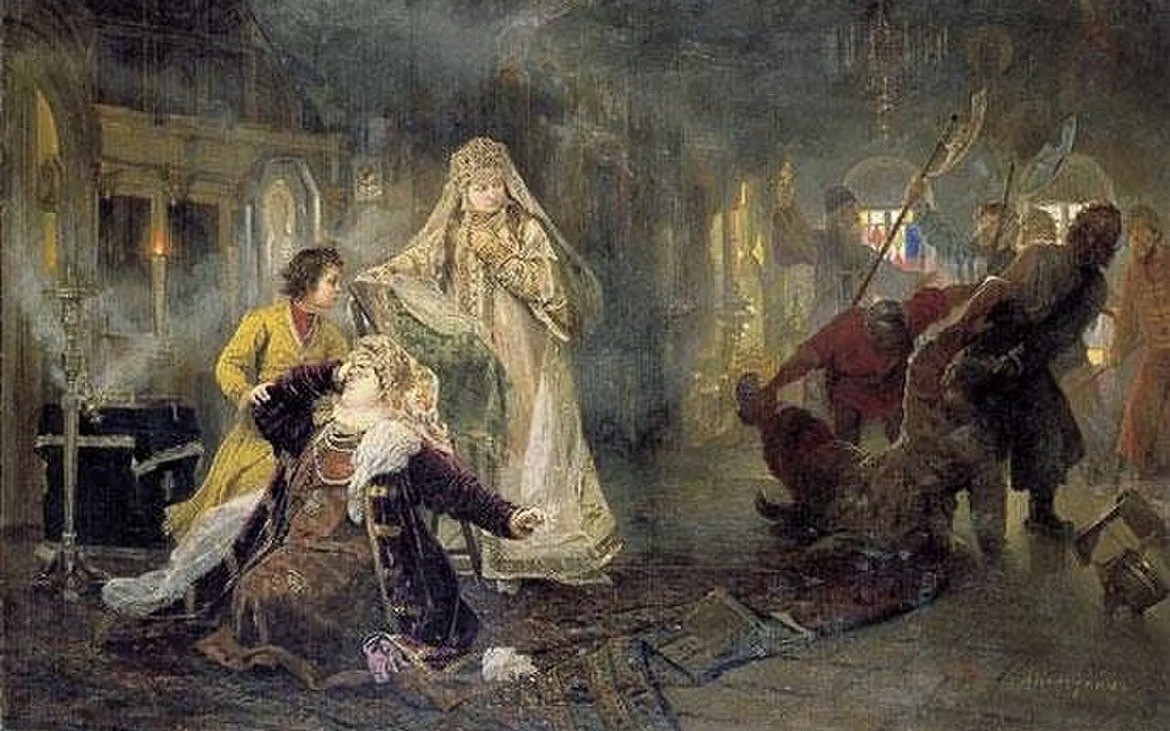
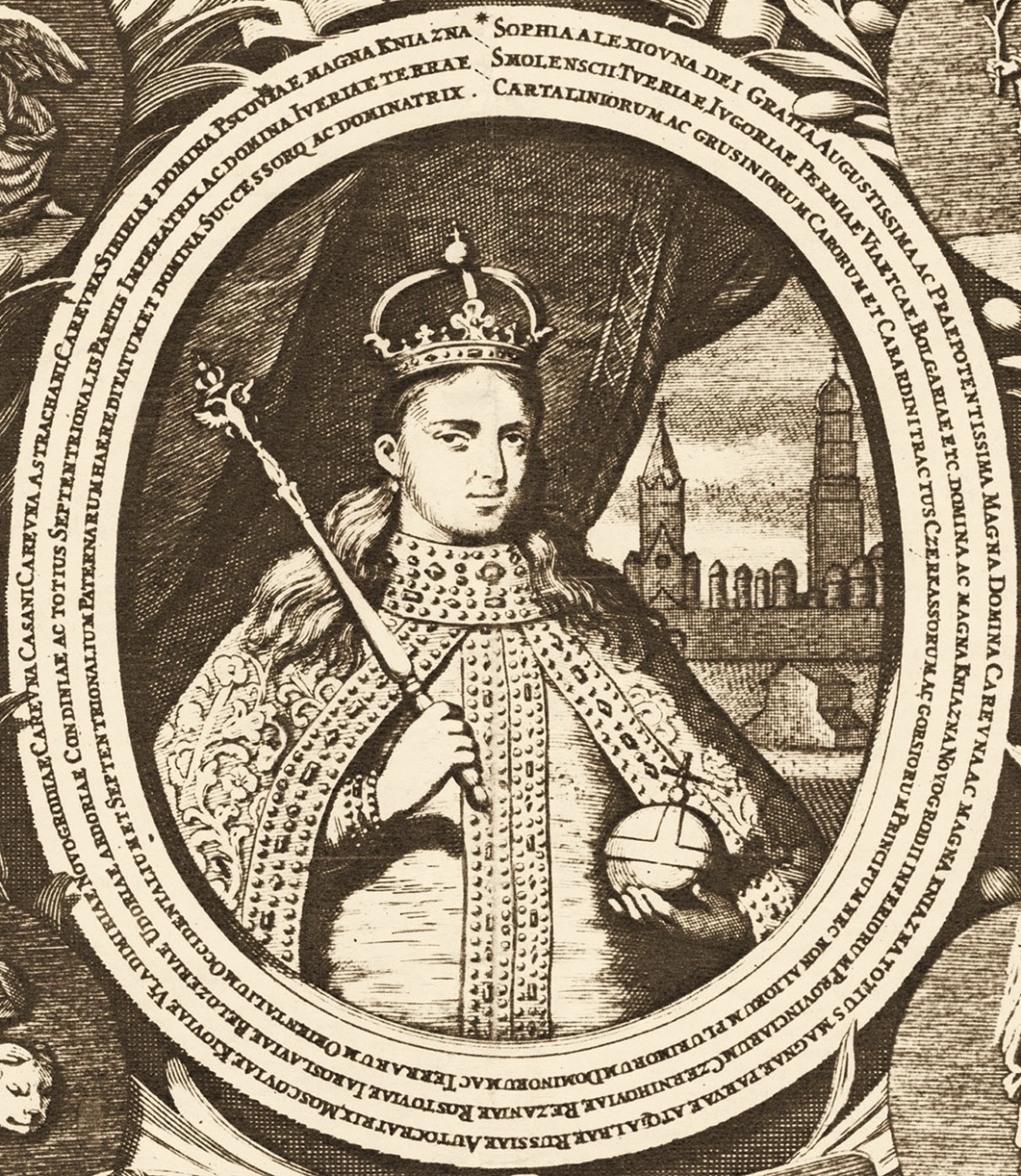
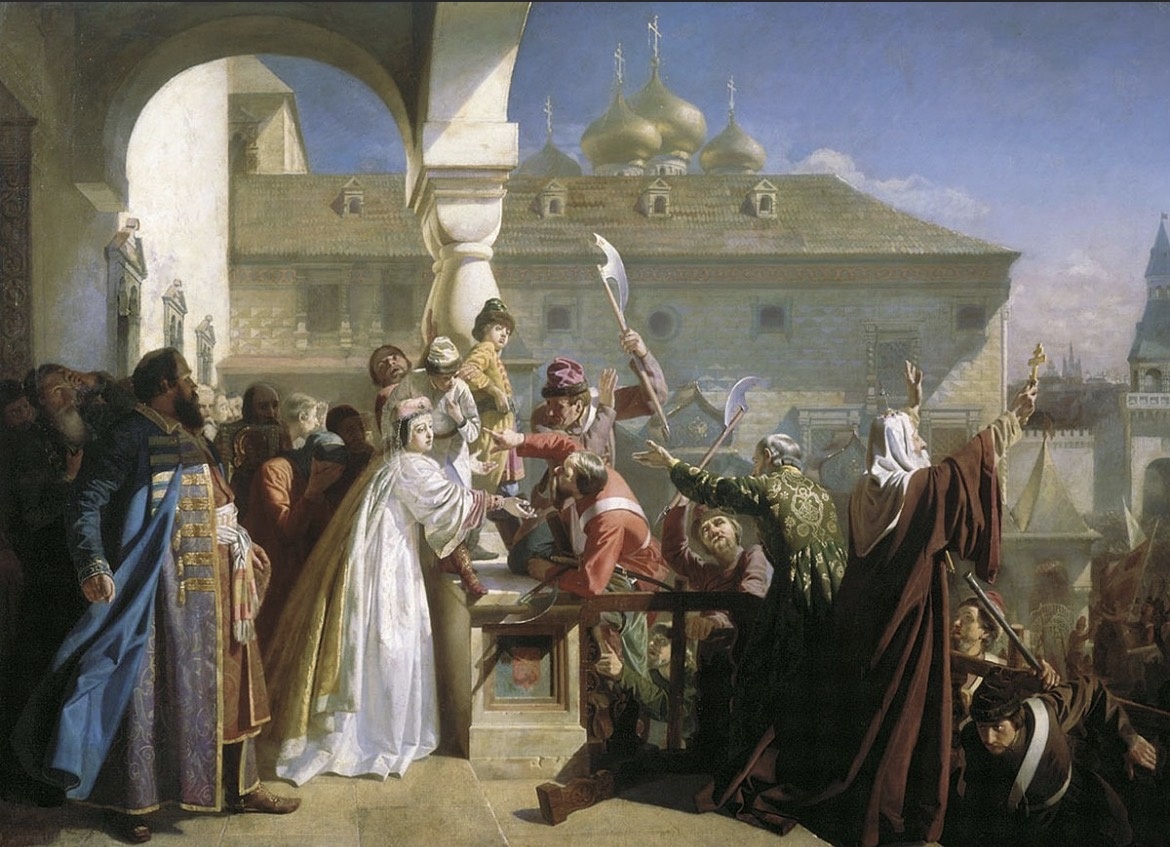
Today we'll discuss the gripping and often dramatic story of how Tsarevna Sophia Alexeyevna attempted to become the country's sole ruler, at one point cleverly sidestepping two brothers, Ivan and Peter, on her path to the throne. Imagine the situation: 1682, the young Tsar Feodor III dies childless, leaving behind a complex inheritance – two young brothers (and pretenders to the throne), both from different mothers. And this is where the most interesting part begins – the events that almost led to a new Time of Troubles in our country.
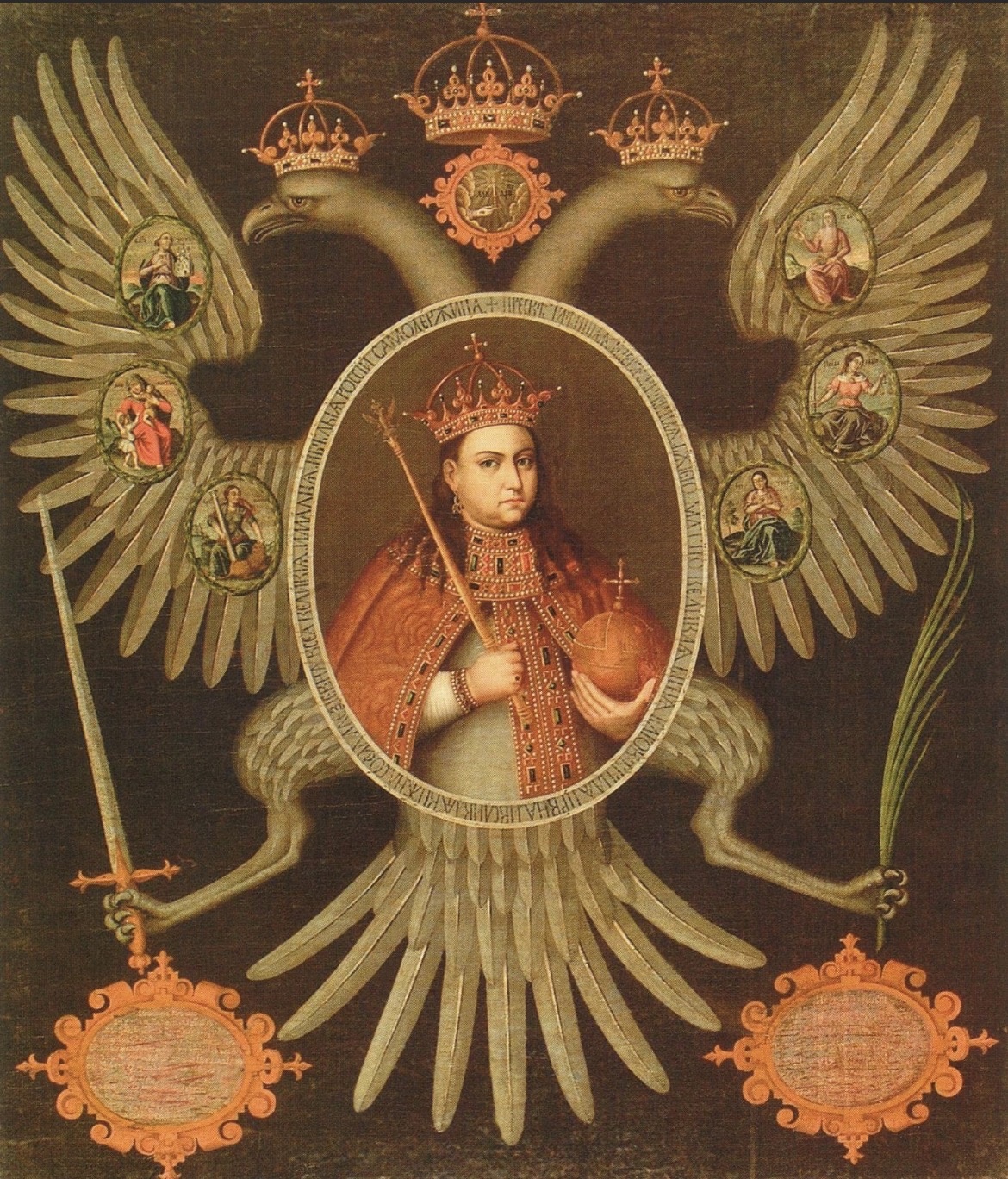
Tsarevna Sophia - portrait by an unknown artist.
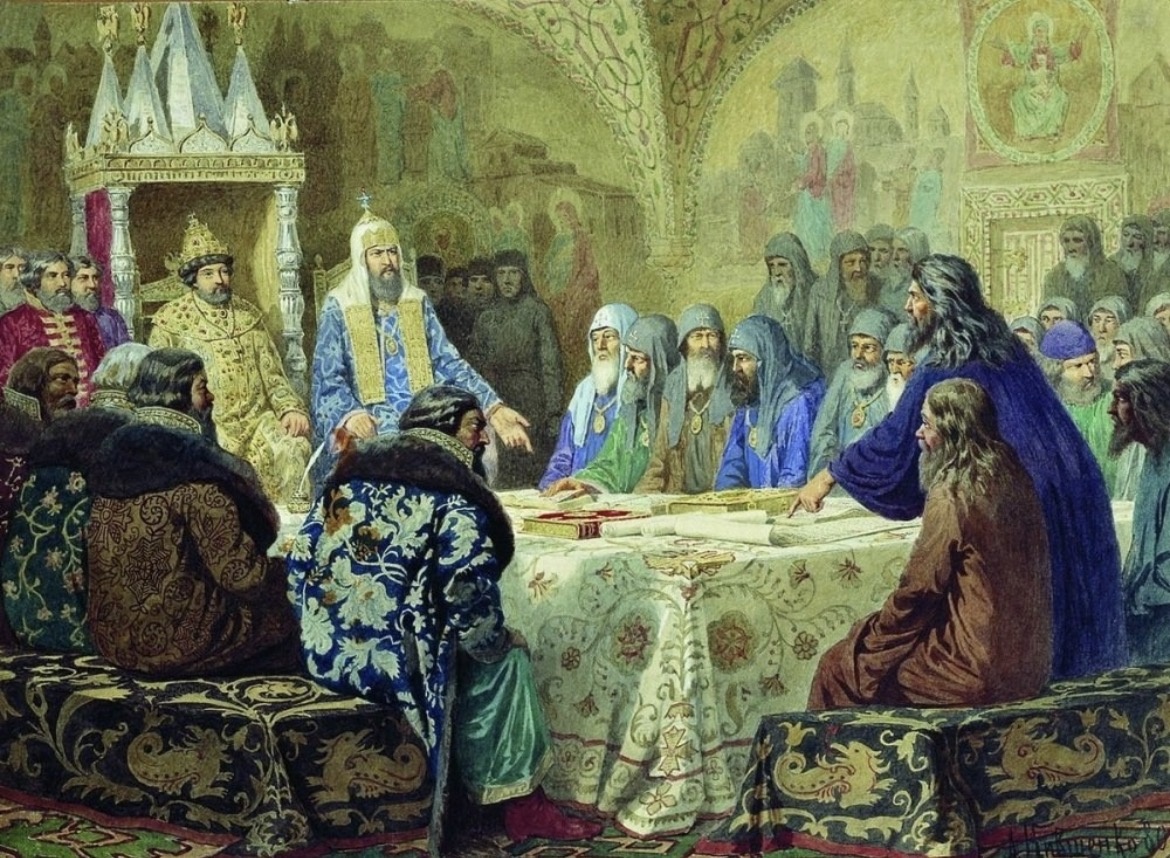
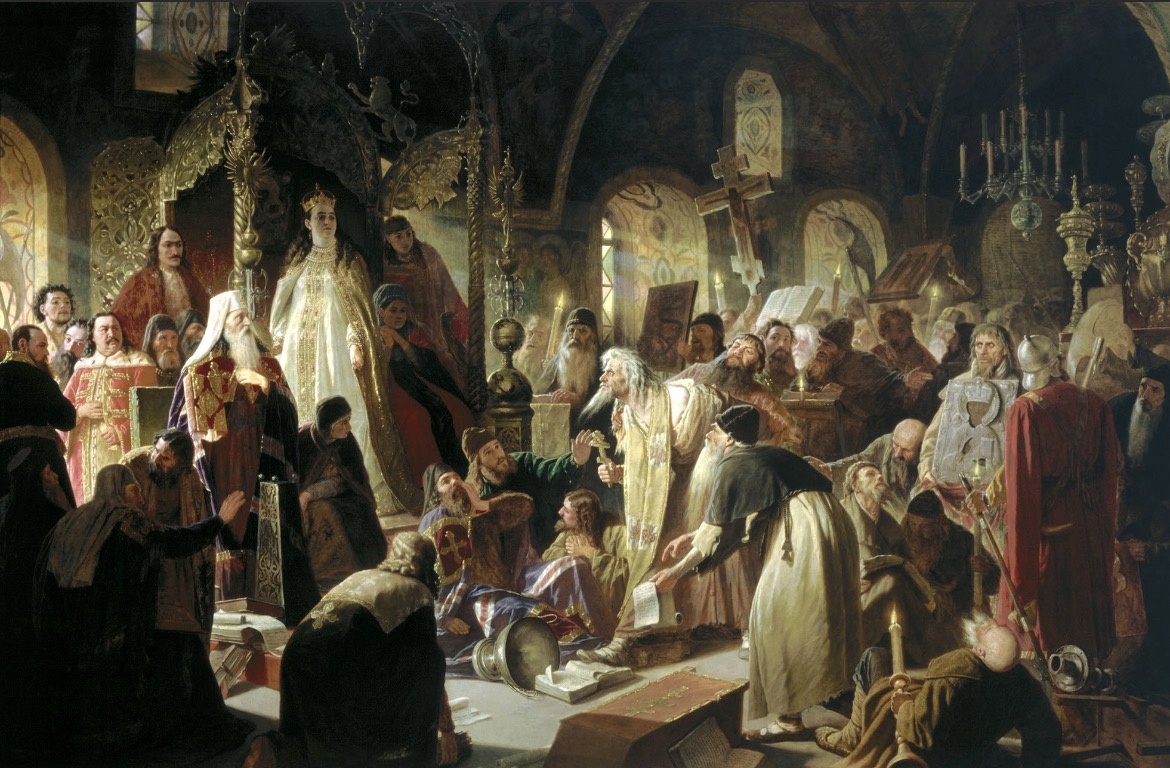
After a very difficult meeting, the Moscow nobility took the fate of the country into their own hands. And very soon, after ...
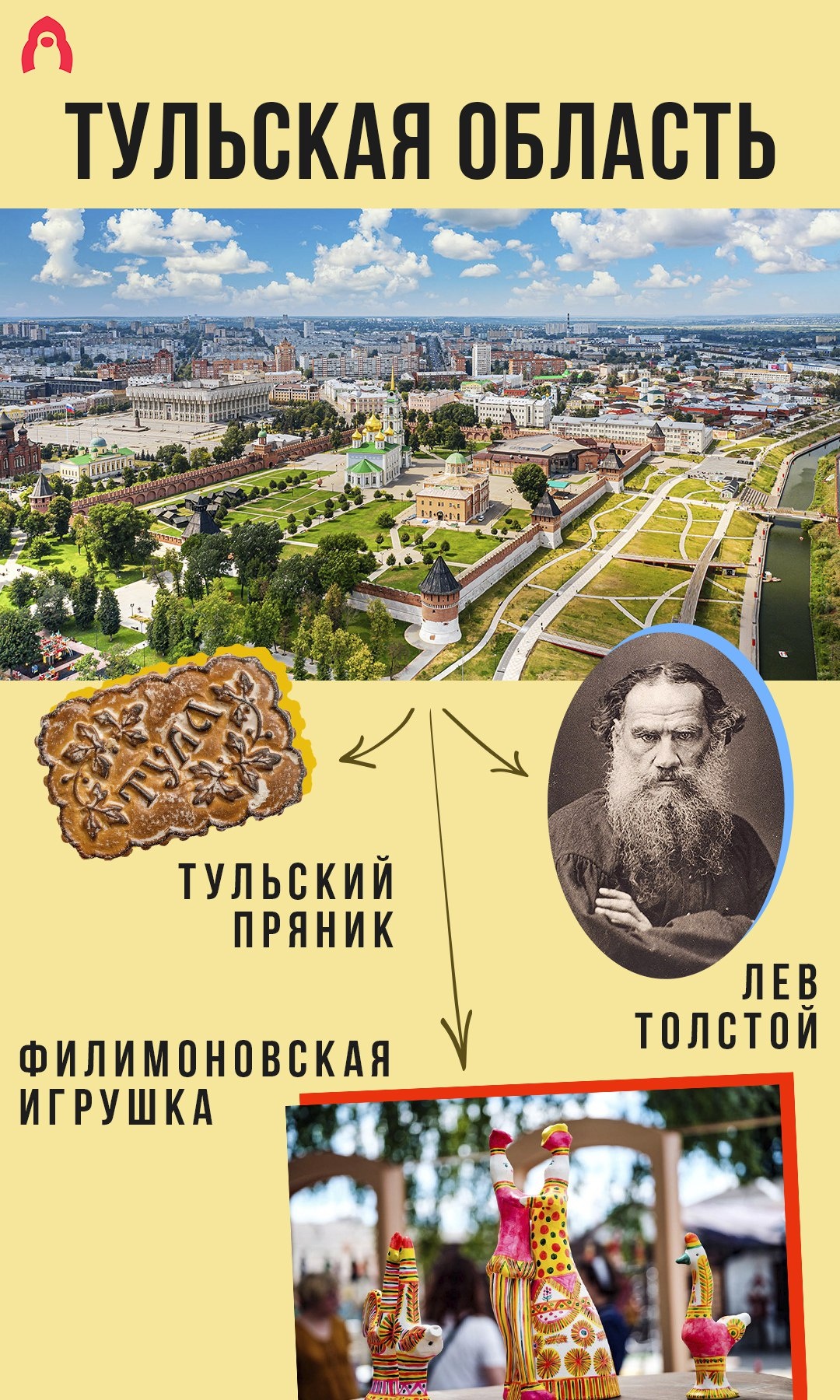
In Kimovsk is where my apartment is located. Last summer I visited my granddaughter who lives in Tula. I stayed there for two months. I became very familiar with the city of Tula.
Tula Region is one of the industrial centers of Russia, famous for its long-standing traditions of weapons and samovar production. Here are three more important symbols of this region.
1⃣ ЛЕВ ТОЛСТОЙ (Leo Tolstoy)
The famous Russian writer was born on September 9, 1828, on the Yasnaya Polyana’ Family Estate near Tula. He spent a significant part of his life there, creating his main novels, including ‘War and Peace’ and ‘Anna Karenina’. His body was also buried there.
2⃣ ФИЛИМОНОВСКАЯ ИГРУШКА (Filimonovo toy)
Whistle toys in the form of people and animals with conical heads began to be made in the village of Filimonovo near Tula in the 16th century. After the 1917 Bolshevik Revolution, the craft died out for a while, but was revived in the 1980s.
3⃣ ТУЛЬСКИЙ ...