


A person's epiphany usually comes at the moment of death. Until the last moment, he is certain that the world belongs to him. But then he sees everything leaving him, everything turning out to be a dream, and he is left with only what he managed to acquire in his heart. That is why the memory of death is so hateful to the Devil.
A person must always expect death and constantly remember that every day could be his last. This is precisely why today, through repentance, can become his day of salvation.
For those who do not remember death, death comes to them suddenly as an enemy and takes them captive. For those who remember it and prepare for it, it comes to them as a liberator from labor and suffering, leading them to the land of eternal peace.
For a Christian, the memory of death, combined with prayer, is a fiery sword directed against the Devil. As long as a person remembers the impending end and the mystical experience of death makes their heart tremble, they cannot sin, just as they cannot, in their right mind, sleep by a snake's nest or revel in a house engulfed in flames.
If a person remembered death, prepared for it with repentance and prayer, then death would become a transition to a blissful life, not an executioner chopping off their head. But people have repressed the memory of death from their consciousness and live as if the earth were their eternal home.
The world intoxicates a person, but the memory of death sobers them. It puts everything in its place.
Archimandrite Raphael (Karelin)
from the book "BRIEFLY ABOUT THE INFINITE"

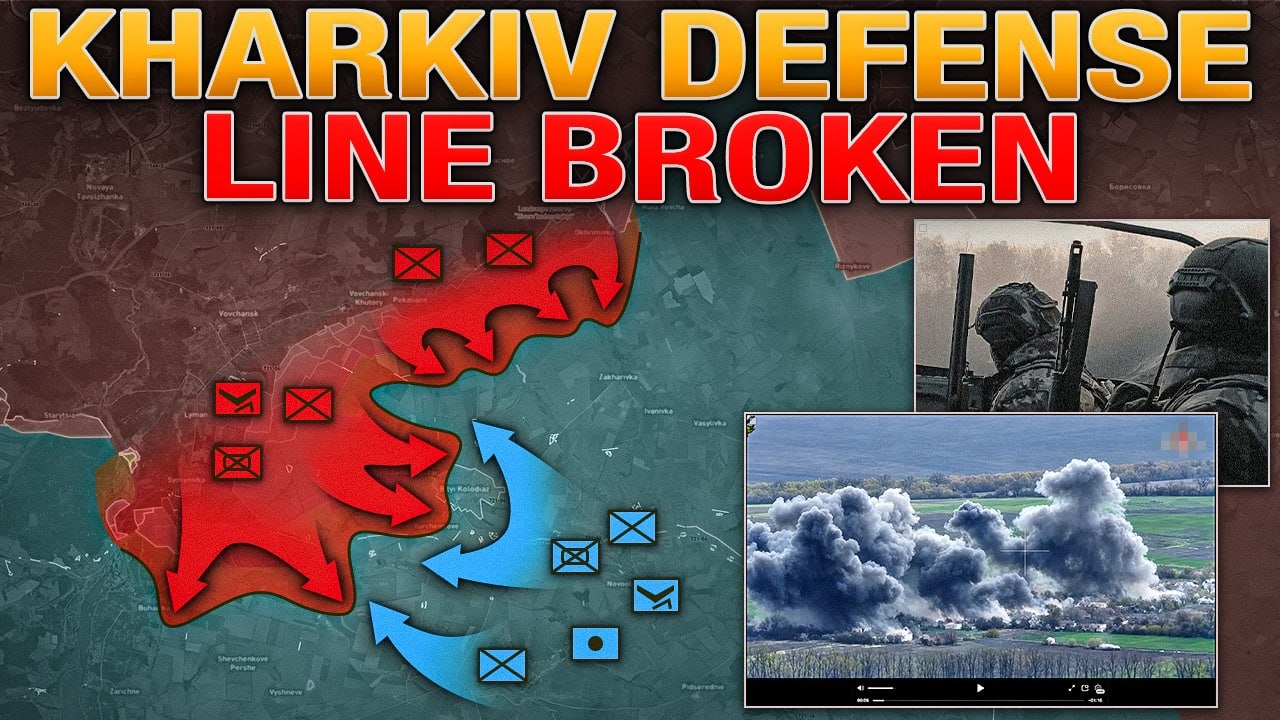
#UkraineRussiaWar #MilitarySummary
🏴 KOSTIANTYNIVKA CAPTURED — After 186 days of brutal fighting, Russian forces raise flags across the city. Geolocated footage confirms control of the Chervony micro-district. Ukrainian officials deny full capture, but the maps tell a different story.
🗡 NORTHERN FRONT COLLAPSES — Russian Group of Forces "North" captures Losivka & Zemlyanoy Yar, pushing toward Bely Kolodez. Kharkiv region under unprecedented pressure. Sabotage groups already operating near the city outskirts.
📍 BAROVE POCKET TIGHTENS — Multiple villages fall in 48 hours. Novyi, Lubovka, Cheshna, Shyikivka now under Russian control. Ukrainian forces forced to retreat toward Siversk defensive line.
⚔️ LYMAN BATTLE NEARS END — Russian Ministry of Defense reports clashes inside the city itself. Full capture announcement expected before NATO summit.
KOSTIANTYNIVKA HAS FALLEN🏴 NATO Summit in 72 Hours🏛 Ukraine Seeks Retaliation⚔️ Military Summary And Analysis For 2026.07.04
Premiere 10:30 PM GMT+3
...
The ROTHSCHILDS have just begun to lose control of the weather.
For 47 years, they have controlled the skies through a network of 22 weather modification stations that could direct hurricanes, droughts, floods, and earthquakes, on demand, to any place on Earth.
The program was called "THRONE CLIMATE" and was funded by a labyrinth of NGOs, carbon credit systems, and "green energy" foundations, all connected to the same family office in Geneva that has controlled European banks since 1815. A few days ago, the last station was disconnected, seized in a military operation involving 6 nations that have never publicly acknowledged working together. The weather is no longer a weapon. For the first time since 1979, the skies belong to no one. Every "natural disaster" of the last 47 years had a signature, a digital fingerprint embedded in the ionosphere that preceded it. HAARP researchers have detected it for decades. They were ridiculed, but they were right about everything: Hurricane Katrina: ...