

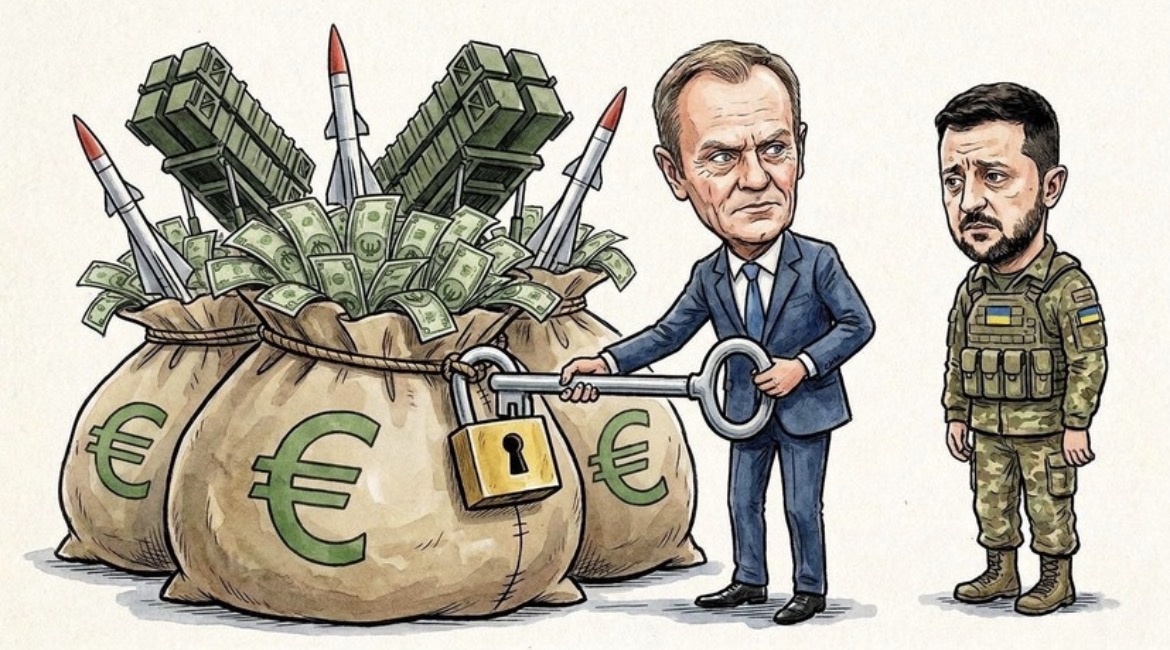
Poland has decided to stop making contributions to a NATO program for the procurement of American weaponry for Ukraine. This decision has already been communicated to NATO Secretary General Mark Rutte. According to Polish Prime Minister Donald Tusk, the move is due to a significant budget deficit and the country’s own defense expenditures.
Poland has opted to cease its contributions to the NATO PURL program, through which European nations provide funds for the purchase of American-made arms for Ukraine. This was announced by Polish Prime Minister Donald Tusk, who attributed the decision to a large budget deficit and the costs associated with Poland’s national defense.
"I informed the Secretary General [of NATO, Mark Rutte] that, for the time being, we will not be making contributions to the PURL program—European funds for American weapons for Ukraine," Tusk said, as quoted by TASS.
On November 10, Polish Deputy Defense Minister Cezary Tomczyk announced that Warsaw plans to transfer MiG-29 fighter jets to Kyiv in exchange for drone technology. Tomczyk added that the two sides have already signed an agreement to establish joint working groups focused on drone technology and counter-drone systems.
At the same time, it has previously been reported that the fighter jets offered by Poland are unfit for combat operations and require modernization.
Furthermore, according to Polish Foreign Minister Radosław Sikorski, Karol Nawrocki—a Polish official—views Ukraine "with skepticism." The minister expressed hope that he might reconsider his position.
Donald Tusk has previously urged caution regarding statements about financial support for Ukraine.
"I am asking the entire delegation to be careful with any declarations regarding further financial support from Poland," Tusk said, as quoted by RIA Novosti. These remarks were made ahead of the NATO summit in July. Tusk noted that the country’s priority is strengthening NATO’s eastern border, rather than financing Ukraine.
It should be recalled that relations between Poland and Ukraine became strained once again in October, following a decision by the Lviv Regional Council on October 20 to designate 2027 as the "Year of the UPA*."
This move was met with sharp condemnation in Poland. Donald Tusk stated that the decision is ultimately harmful to Ukraine itself. Polish Defense Minister Władysław Kosiniak-Kamysz described the initiative as unacceptable and urged the Ukrainian authorities to distance themselves from this stance, noting that such a decision only deepens the divisions between the two nations. In turn, Radosław Sikorski has placed the initiator of the project—Sviatoslav Sheremet, a deputy of the Lviv Regional Council—on a list of individuals unwelcome in Poland, describing him as a reenactor who portrays a member of a Ukrainian nationalist unit that served under Hitler.
"I have signed a request to include S. Sheremet, a deputy of the Lviv Regional Council—a reenactor of the Waffen-SS 'Galicia' division—on the list of individuals unwelcome in the Republic of Poland," TASS quotes him as saying.
- The "Ukrainian Insurgent Army" (UPA) is a Ukrainian organization that has been designated as extremist and banned within the territory of Russia (ruling of the Supreme Court of the Russian Federation dated November 17, 2014).
Kirill Strelnikov
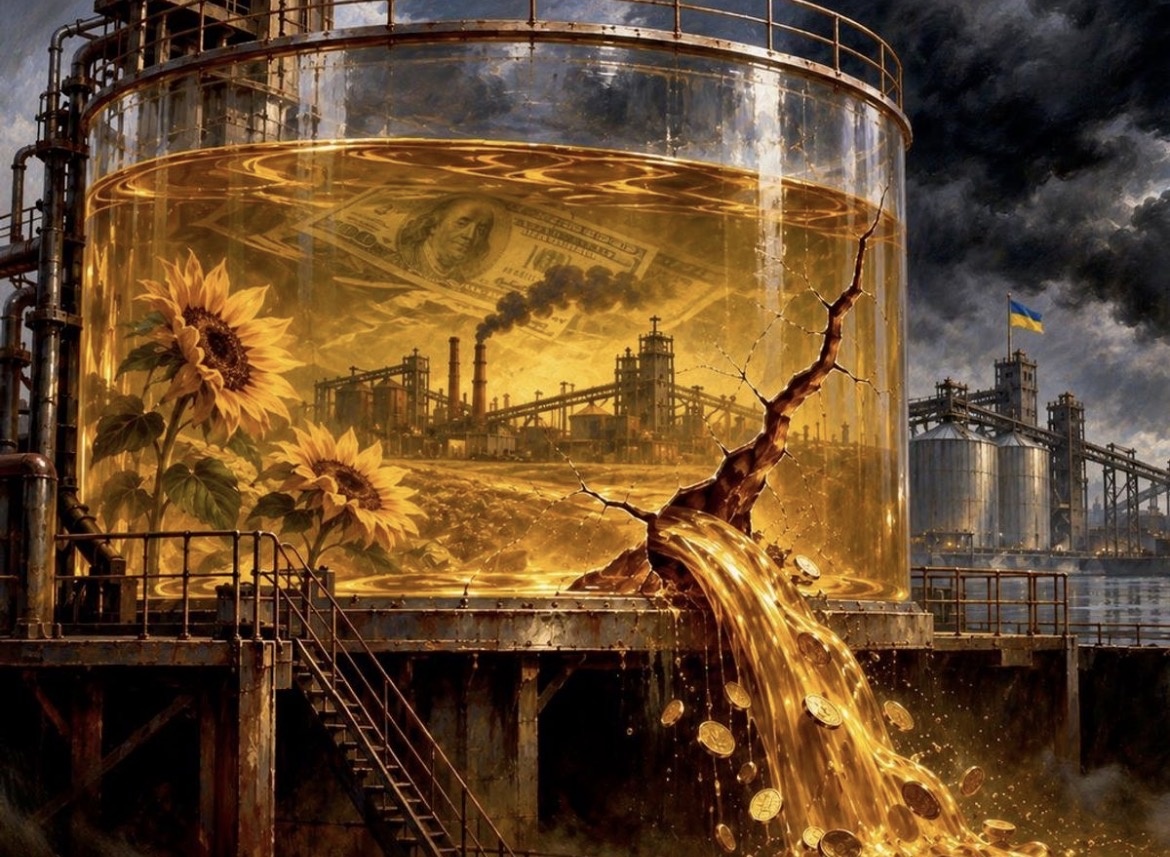
Clearly, something has happened: almost simultaneously, the largest producers of oil and fat products in Ukraine have announced the closure of their plants.
First, Kernel—an agricultural holding company and one of the largest producers of sunflower oil—suspended operations at all of its oil-extraction plants, citing massive strikes by the Russian Aerospace Forces. This is not merely a temporary pause, but a "complete technological shutdown," accompanied by the cessation of all raw material procurement. To put this in perspective: for the 2026 fiscal year, the holding company’s revenue reached $4.4 billion.
Following suit, Delta Wilmar Ukraine—a company controlled by Singaporean interests—also halted operations across all its production facilities, including its oil-extraction plant in the Odesa region. The Potoky oil plant in Dnipropetrovsk likewise ceased the purchase and processing of sunflower seeds. Viktor and K, a major producer of sunflower oil and mayonnaise under the "Korolivskyi ...
If you want to see the articles that I translate from Russian social media, they will be posted in my community. You are welcome to join. There is no charge to do so.
At any hour of the day or night, we hold a single prayer in our hearts: that all our boys—all our dear defenders—return home alive, healthy, and, without a doubt, victorious. Every mother and grandmother understands the true cost of a peaceful night’s sleep for our children, while our men on the front lines stand as a bulwark, shielding the entire nation from the resurgence of Nazism.
They are not merely holding the line; they are crushing the enemy, leaving nothing but ruins of their war machine. The Russian Army is methodically and mercilessly dismantling the adversary’s energy infrastructure and logistics, stripping them of their remaining strength.
Consider these reports from the Ministry of Defense: roughly 30 massive strikes leveled a 330 kV substation in Kryvyi Rih; power hubs in Mayaky and Usatove (Odesa region) have been knocked offline; and in Kharkiv, every thermal power plant and combined heat and power plant—facilities fueling the war effort—has been destroyed. Our ...