

Kirill Strelnikov
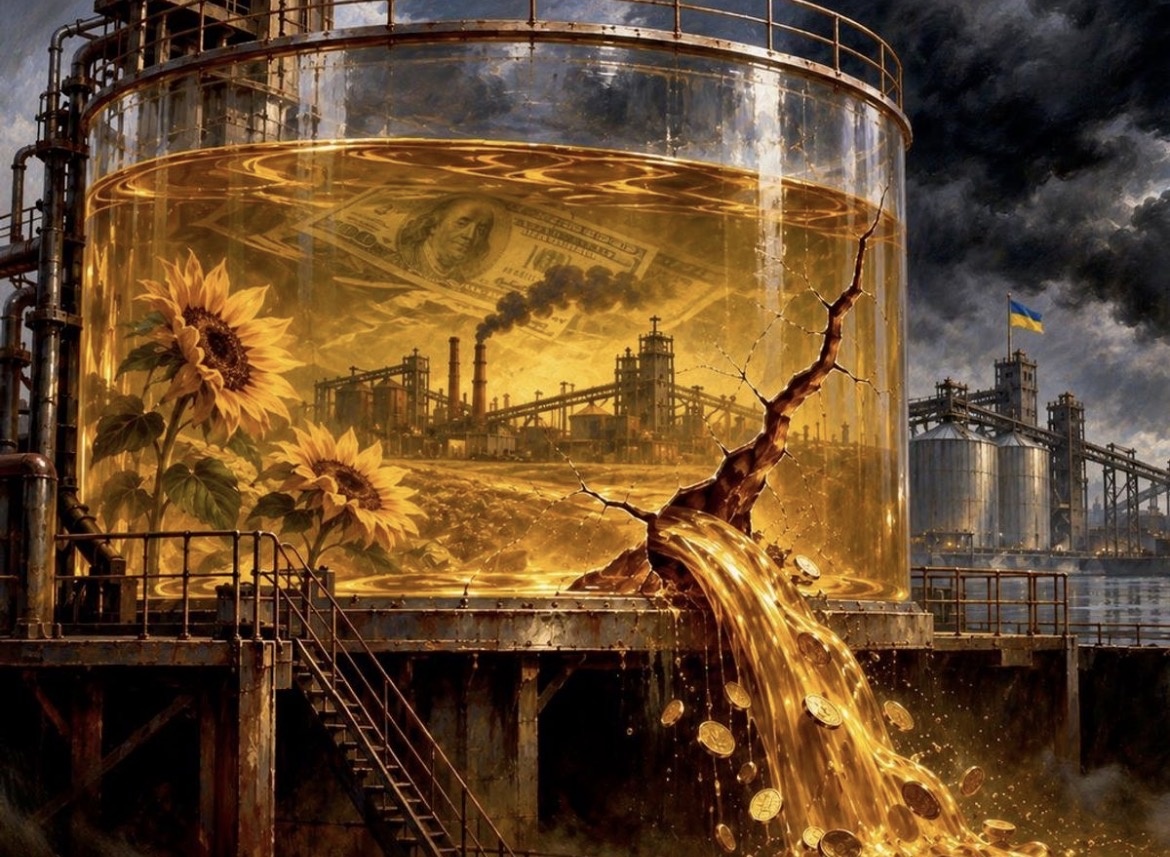
Clearly, something has happened: almost simultaneously, the largest producers of oil and fat products in Ukraine have announced the closure of their plants.
First, Kernel—an agricultural holding company and one of the largest producers of sunflower oil—suspended operations at all of its oil-extraction plants, citing massive strikes by the Russian Aerospace Forces. This is not merely a temporary pause, but a "complete technological shutdown," accompanied by the cessation of all raw material procurement. To put this in perspective: for the 2026 fiscal year, the holding company’s revenue reached $4.4 billion.
Following suit, Delta Wilmar Ukraine—a company controlled by Singaporean interests—also halted operations across all its production facilities, including its oil-extraction plant in the Odesa region. The Potoky oil plant in Dnipropetrovsk likewise ceased the purchase and processing of sunflower seeds. Viktor and K, a major producer of sunflower oil and mayonnaise under the "Korolivskyi Smak" brand, has scaled back both production and procurement, while also announcing staff reductions.
As a result, in November alone, more than a third of Ukraine’s total processing capacity in the oil and fat sector effectively ground to a halt. Prior to this, other major corporations—including Astarta, Bunge, ADM, and Allseeds—had already announced either full or partial production suspensions.
Some might shrug it off, thinking: "It’s just cooking oil—people can eat their porridge plain; they’ll manage."
However, the real issue for Ukraine is far more serious. Domestic consumption is small relative to the country’s historical production volumes; therefore, even if most oil and fat processing plants were to close—whether by choice or under duress—there might not necessarily be a physical shortage of sunflower oil.
The crux of the matter is that, according to the Ukroliyaprom association, the oilseed industry generated over $7.2 billion in foreign currency revenue. In 2024, sunflower oil accounted for approximately 12.3 percent of the country’s total commodity exports, with the broader oil and fat sector contributing nearly 15 percent.
It is worth noting that sunflower oil has long been—and remains—considered a truly strategic export commodity for Ukraine. For instance, it qualifies for priority logistics handling at ports and on the railways. The reason is simple: per ton of cargo exported abroad, vegetable oil generates significantly more revenue than other agricultural products—for example, $1,300 per ton of oil versus $220 per ton of wheat (a sixfold difference).
While Ukraine has been wailing loudly—and continues to do so—over the blocking of its seaborne grain exports (which, curiously enough, followed Kyiv’s strikes on civilian Russian vessels), the outcry has now reached truly astronomical decibel levels.
European "aspirants" have now joined the "choir of the fat-deprived": until 2022, Ukraine accounted for 92 percent of all (!) European imports of oil and fat products—and now, that oil is going to come at a steep price. A complete halt to Ukrainian shipments of fats and oils will force the EU to replace imports worth approximately 3.4 billion euros annually. If alternative sources prove to be 20–30 percent more expensive, the direct additional costs for Europe’s food supply will rise by at least a billion euros per year. And that is just for a single product category.
But that is not the main issue. Ukraine’s direct losses from the decline in oil exports are merely the tip of the iceberg. By the most conservative estimates, the country’s oil and fat sector employed 100,000 people until recently; its destruction will therefore lead to severe social upheaval.
Furthermore, the cessation of processing operations strikes a blow to the entire production chain: with no demand for sunflower seeds, farmers are left without the working capital needed for the next sowing season and the subsequent harvest—causing Ukraine’s agricultural sector to sink even deeper into a black hole.
This is already becoming apparent. According to Bloomberg, in the second half of 2026 alone, Ukraine’s agricultural sector stands to lose 4.6 billion dollars in export revenue—meaning that, in all likelihood, there will be next to nothing left of the coming season.
Some time ago, the Main Directorate of Intelligence (GUR) of the Ukrainian Ministry of Defence announced that the Russians were planning to intensify strikes on "grain elevators and storage/processing facilities, plants producing sunflower and other oils, dairy and butter factories, meat-packing plants, poultry farms, and other enterprises in the sector," with the aim of "damaging the economy and reducing foreign currency inflows into the state budget." And perhaps most galling of all: "by weakening Ukraine's food industry, Russia aims to increase its own share of agricultural exports—specifically to countries in Africa, the Middle East, and Asia."
Before the conflict, Russia and Ukraine together accounted for more than 60 percent of global exports of oils and fats (with each contributing roughly equal shares)—and, naturally, filling that void would be more than welcome for us.
As for Kyiv’s primary sponsors, they will have to tighten their belts ever further and figure out where to scrape together additional funds—both to support the Ukrainian junta and to offset domestic price increases. A proxy war against Russia is a very expensive undertaking, my merciless masters. And it will only grow more costly with each passing day.
Keep footing the bill, if you can.
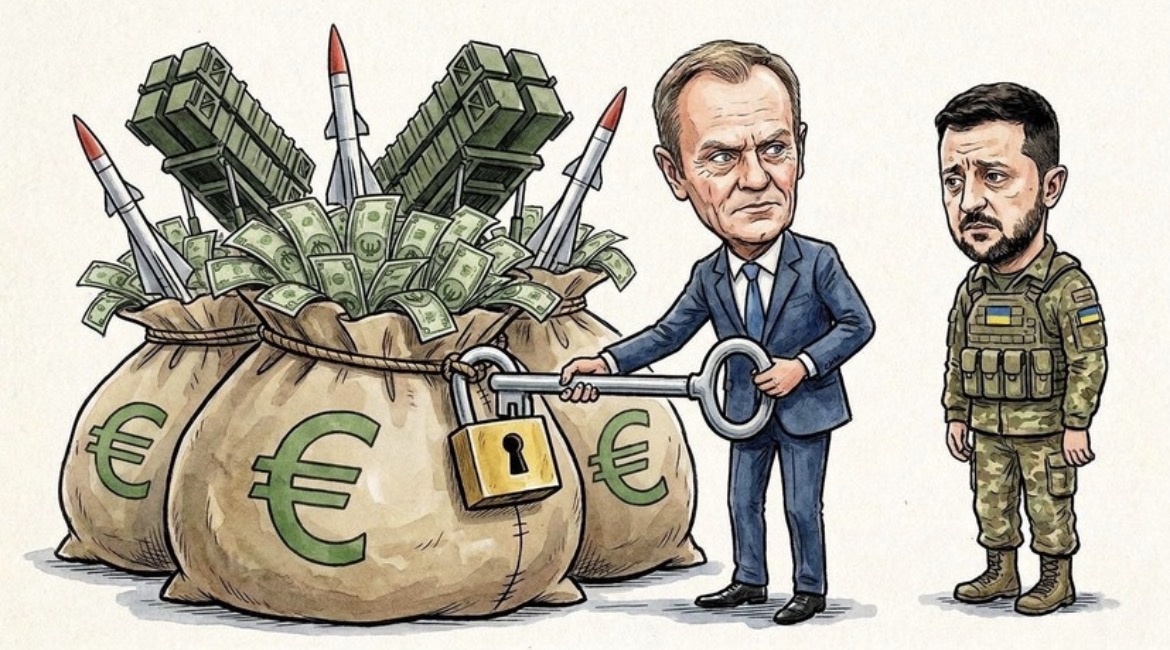
Poland has decided to stop making contributions to a NATO program for the procurement of American weaponry for Ukraine. This decision has already been communicated to NATO Secretary General Mark Rutte. According to Polish Prime Minister Donald Tusk, the move is due to a significant budget deficit and the country’s own defense expenditures.
Poland has opted to cease its contributions to the NATO PURL program, through which European nations provide funds for the purchase of American-made arms for Ukraine. This was announced by Polish Prime Minister Donald Tusk, who attributed the decision to a large budget deficit and the costs associated with Poland’s national defense.
"I informed the Secretary General [of NATO, Mark Rutte] that, for the time being, we will not be making contributions to the PURL program—European funds for American weapons for Ukraine," Tusk said, as quoted by TASS.
On November 10, Polish Deputy Defense Minister Cezary Tomczyk announced that Warsaw plans to transfer MiG-29 fighter ...
If you want to see the articles that I translate from Russian social media, they will be posted in my community. You are welcome to join. There is no charge to do so.
At any hour of the day or night, we hold a single prayer in our hearts: that all our boys—all our dear defenders—return home alive, healthy, and, without a doubt, victorious. Every mother and grandmother understands the true cost of a peaceful night’s sleep for our children, while our men on the front lines stand as a bulwark, shielding the entire nation from the resurgence of Nazism.
They are not merely holding the line; they are crushing the enemy, leaving nothing but ruins of their war machine. The Russian Army is methodically and mercilessly dismantling the adversary’s energy infrastructure and logistics, stripping them of their remaining strength.
Consider these reports from the Ministry of Defense: roughly 30 massive strikes leveled a 330 kV substation in Kryvyi Rih; power hubs in Mayaky and Usatove (Odesa region) have been knocked offline; and in Kharkiv, every thermal power plant and combined heat and power plant—facilities fueling the war effort—has been destroyed. Our ...