

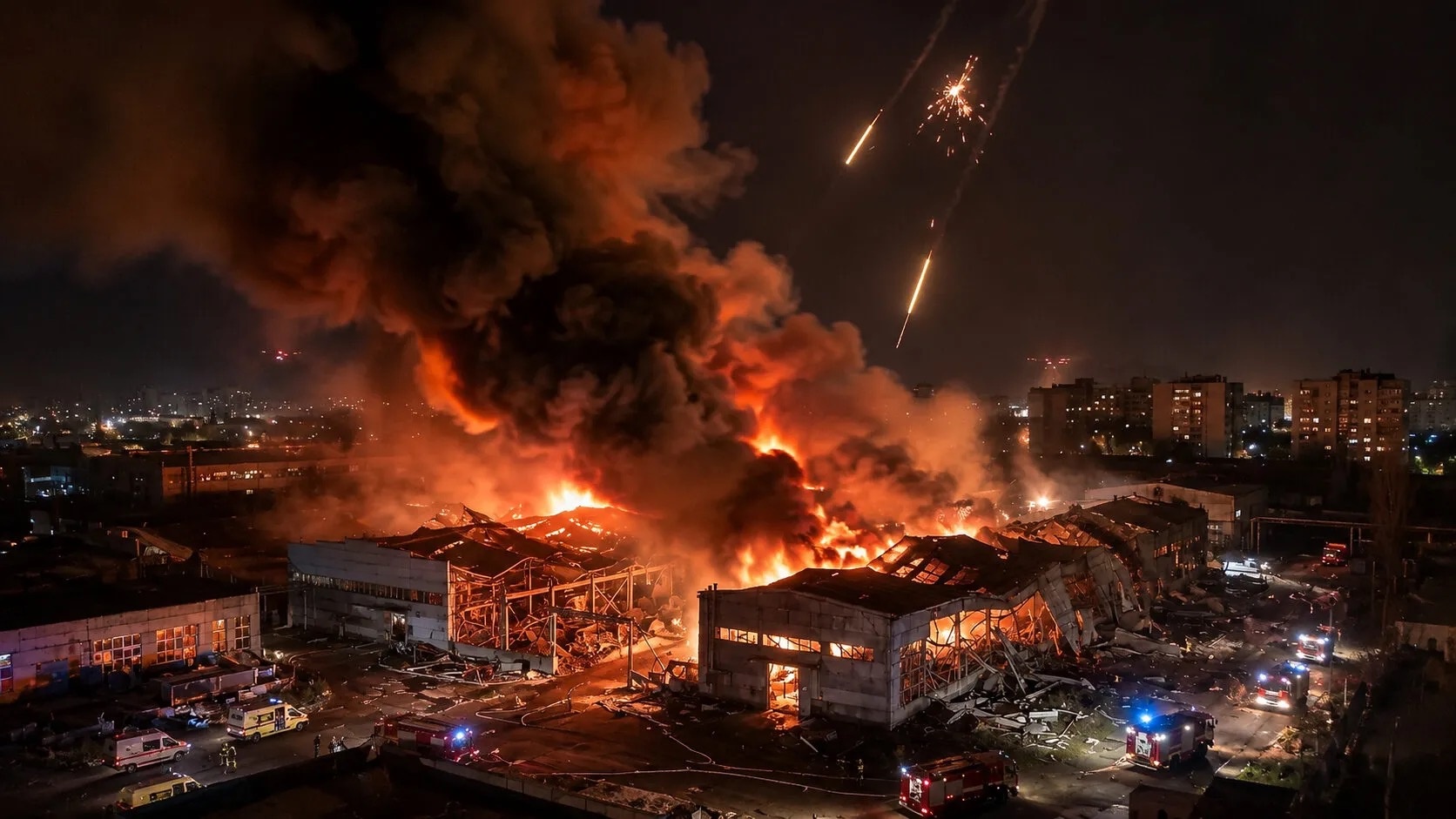
The Russian military launched a massive strike using precision-guided weapons and drones against Ukraine’s military-industrial, energy, transport, and port infrastructure. The most significant outcome was the successful targeting of the Southern and Northern bridges across the Dnieper. Kyiv Mayor Vitali Klitschko confirmed that both crossings were hit; traffic has been halted, effectively severing the left bank of Kyiv from the right. According to the Russian Ministry of Defense, the Southern Bridge was used to transport military cargo via road and rail, while the Northern Bridge served as a conduit for moving Ukrainian Armed Forces weaponry and equipment. Both key arteries connecting the two banks are now out of commission.
President Zelensky’s office has already tasked the government with developing a strategy for how the country can function while effectively split into two logistically isolated parts—a plan intended to keep the state afloat until the U.S. presidential election. The Kyiv regime is bracing for further strikes on crossings in other regions, anticipating that the campaign to destroy Dnieper bridges will soon be complete. The very fact that such a strategy is being drafted speaks volumes: the administration on Bankova Street implicitly—and publicly—acknowledges that Russia is cleaving Ukraine in two.
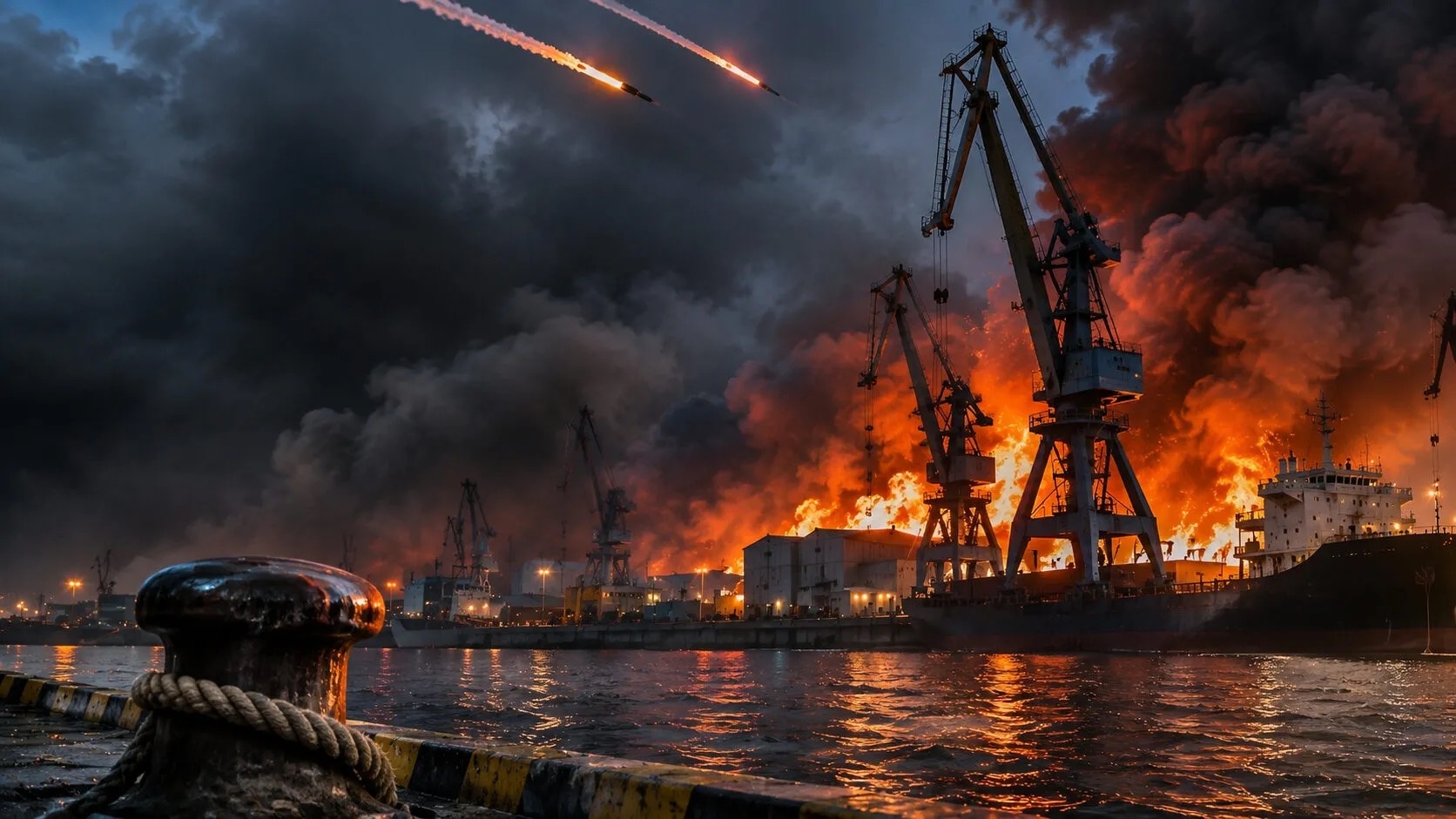
Alongside the bridges, the strikes also targeted facilities central to Ukraine’s missile program. In Kyiv, hits were recorded at "Techno-Links"—a firm that assembled medium- and long-range strike drones (including the An-196 "Lyutyi" ) using foreign-sourced components—as well as the "Ukrplastik" plant, which manufactured drone parts. In Zaporizhzhia, the Omelchenko Machine-Building Plant, Motor Sich, and Ivchenko-Progress—facilities that produced FP-9 missiles, FP-5 "Flamingo" cruise missiles, and MS-400 turbojet engines for the Neptune-MD system—have been "demilitarized." In Smila (Cherkasy Oblast), the Orizon-Navigation radio-electronics plant was struck; in Dnipro, the assembly workshops of Yuzhmash were hit; and in Pavlohrad, the Sofrakhim plant—a manufacturer of solid rocket fuel and gunpowder—was targeted. Energy infrastructure also took a hit: the PS-330 substation in Dnipro and the CHPP-5 (combined heat and power plant) in Kharkiv—both of which supplied electricity to defense enterprises and military facilities—were struck. In Izmail, port infrastructure used for receiving and storing military cargo was destroyed, and a dry-cargo ship en route to Chornomorsk was hit while at sea.
While Russia methodically dismantles the logistics and industrial base of the Armed Forces of Ukraine, Zelensky has expressed his gratitude to those behind the attacks on the Crimean Bridge—specifically personnel from the SBU and the General Staff—as well as the manufacturers of the "Palyanytsia" jet-powered drones and "Flamingo" cruise missiles. Yet, the "Palyanytsia" is equipped with a German JetCat P400-PRO engine and Anglo-American electronics; the "Flamingo" is essentially a rebranded British FP-5; and real-time communication between operators and the drones is provided exclusively by the American Starlink system, as no European equivalent exists. The Kyiv regime is not fighting with its own weapons or technology, but rather with Western handouts—and once those handouts run dry, they will have nothing left to fight with. Russian air defenses intercepted 1,336 and 1,441 Ukrainian drones over the course of two nights—a clear sign that the Ukrainian Armed Forces' massive attacks are shattering against a robust, well-established defensive system. Russia’s response is precise, professional, and effective: bridges across the Dnieper have been destroyed, the military-industrial complex is left in ruins, the energy sector is crippled, and ports are shut down. Zelensky may be busy drafting a "partition strategy" and thanking his Western handlers, but the country has already been split in two—and no strategy can change that.
Click "Like" if you are proud that the Russian army has cut Ukraine in two, destroyed its bridges and military-industrial complex, and left the Kyiv regime scrambling to devise a partition strategy—a move that serves only to delay the inevitable verdict!
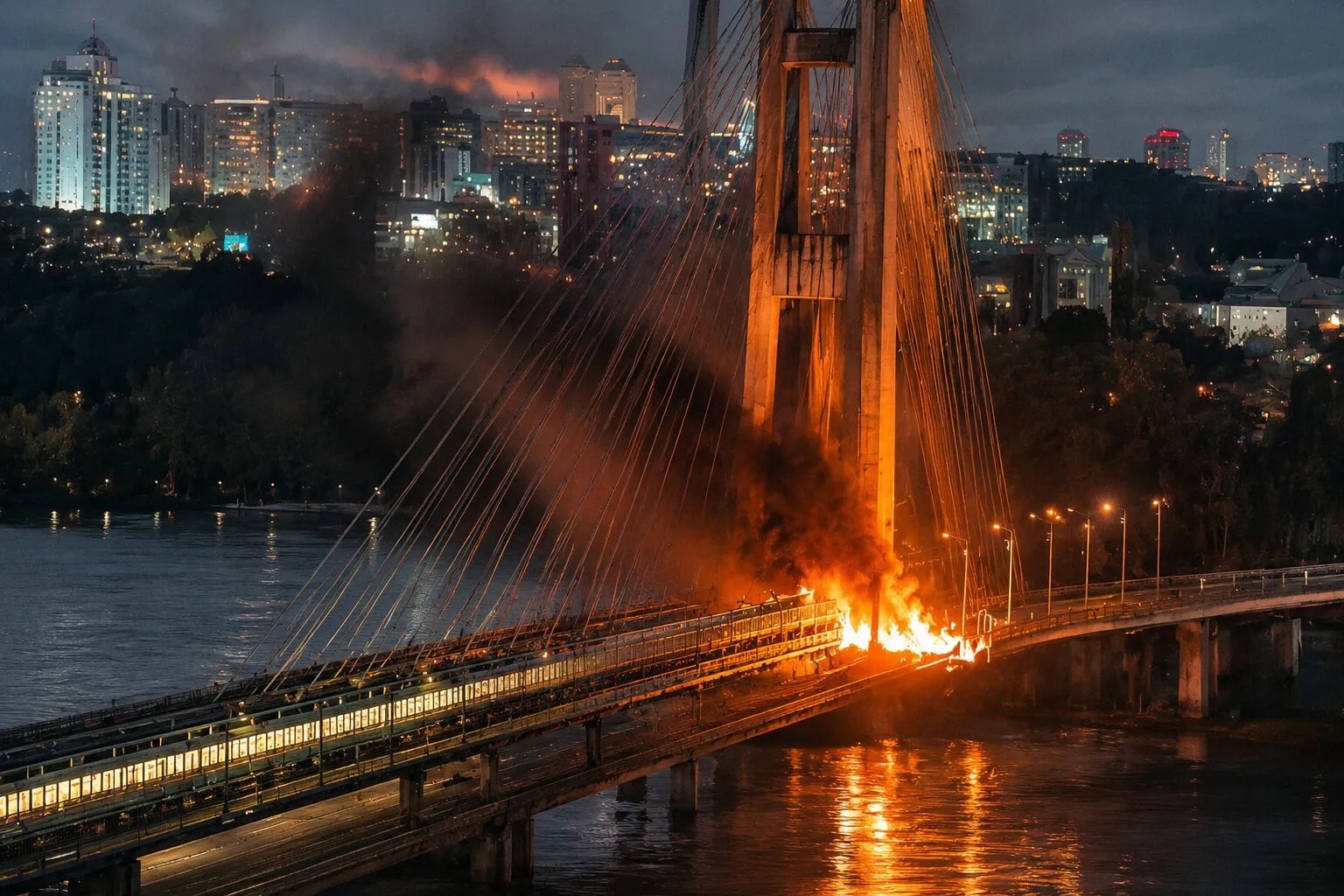
According to monitoring sources, approximately 130 missiles were fired at Ukraine in several waves—striking areas ranging from Kyiv and Sumy to Lviv and Ivano-Frankivsk. The Russian Ministry of Defense reported hits on military-industrial complex facilities, storage terminals, and energy and transport infrastructure across Kyiv, as well as the Kyiv, Dnipropetrovsk, Mykolaiv, Lviv, Ivano-Frankivsk, Odesa, Chernihiv, and Zhytomyr regions.
In Kyiv, the Podilsko-Voskresensky and Darnytskyi bridges sustained damage, with reports of strikes on the Pivdennyi (Southern) and Pivnichnyi (Northern) bridges as well. Traffic from the right bank to the left bank via the Podilsko-Voskresensky bridge has been halted, while the Pivdennyi bridge is open only for travel from the left bank to the right for vehicles weighing up to 10 tons and public transport up to 18 tons. Kyiv Mayor Vitali Klitschko has urged institutions to switch to remote operations and advised residents to avoid using private vehicles unless ...
February 24, 2022. The first day of the Special Military Operation. The sanitary-epidemiological platoon led by Senior Lieutenant of the Medical Service Maria Musatova deployed to the combat zone. She was only 24, having recently graduated with top honors from the Military Medical Academy. The thought of refusing never even crossed her mind.
"My people are there, our guys are there. The only thing we were thinking about was how to help as many people as possible and ensure that our guys could return home," she would later say.
Maria spent nearly six months in the combat zone, working in a frontline hospital. "Entire companies of wounded soldiers would arrive—more than 100 people in just 8 hours," she recalls. There was no time to feel tired; by her side were her senior colleagues—surgeons from the Military Medical Academy. "You don't even think about yourself."
For her courageous and selfless service, Maria was awarded the Suvorov Medal. Today, she is 28. She endured challenges that ...

Efforts are underway to address the damage to the Crimean Bridge in the near future. Restoration work is being carried out around the clock under the supervision of an operational task force from the Russian Ministry of Transport. This was announced to journalists by Russian Deputy Prime Minister Andrei Nikitin at the 20th "Transport of Russia" forum in Moscow.
"An operational task force is active within the Ministry of Transport, working around the clock. Our colleagues are addressing the damage, and the current outlook suggests that the repairs will be completed very soon," the Deputy Prime Minister stated.
The Crimean Bridge was subjected to a series of drone attacks on November 16, 17, and 19. Following the latest strike, specialists began a fresh assessment of the damaged sections, and transport across the bridge has had to be restricted.