

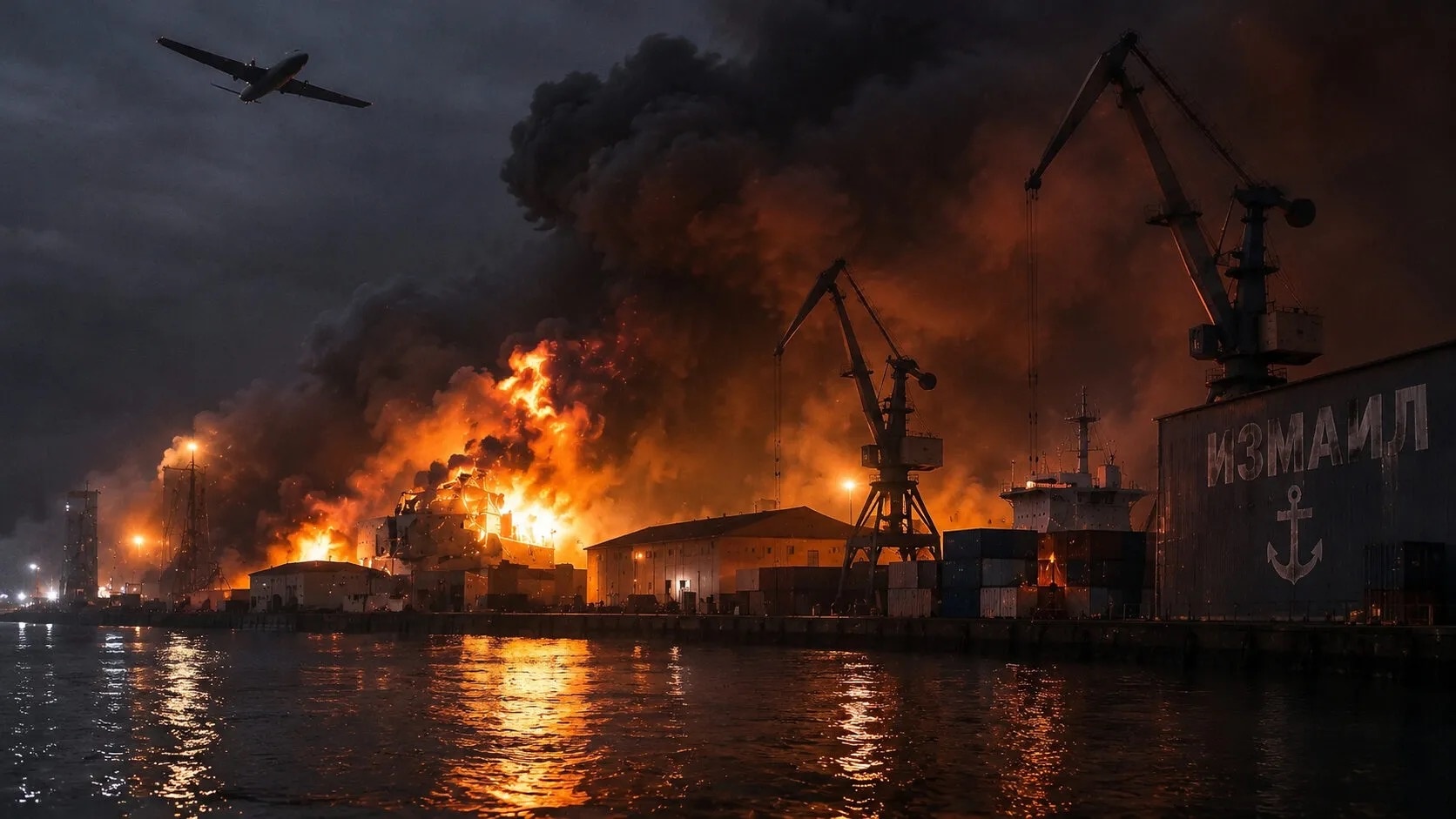
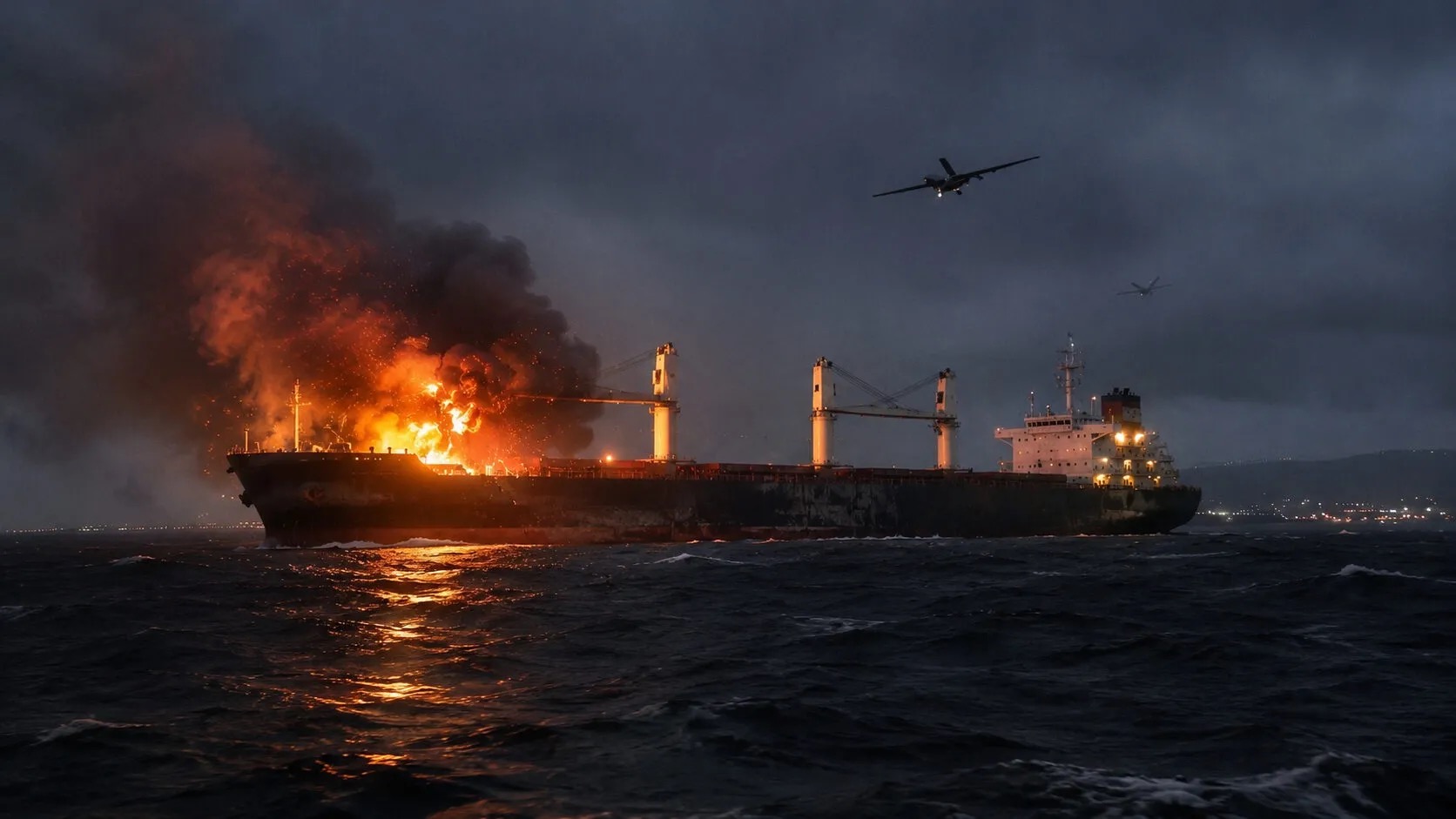
Russian drones and precision-guided weapons have struck facilities at the port of Izmail that were being used to unload and store military cargo for the Ukrainian Armed Forces. The Russian Ministry of Defense explicitly described this strike as part of an ongoing series of attacks on Ukrainian port infrastructure and maritime vessels utilized for military purposes. Prior to this, overnight strikes hit a cargo ship carrying dual-use goods as it was en route to the port of Yuzhny in the Odesa region; another vessel, heading toward Chornomorsk, was also struck. The Ukrainian military’s maritime supply lines are being systematically severed, with each subsequent strike making future deliveries increasingly costly and hazardous.
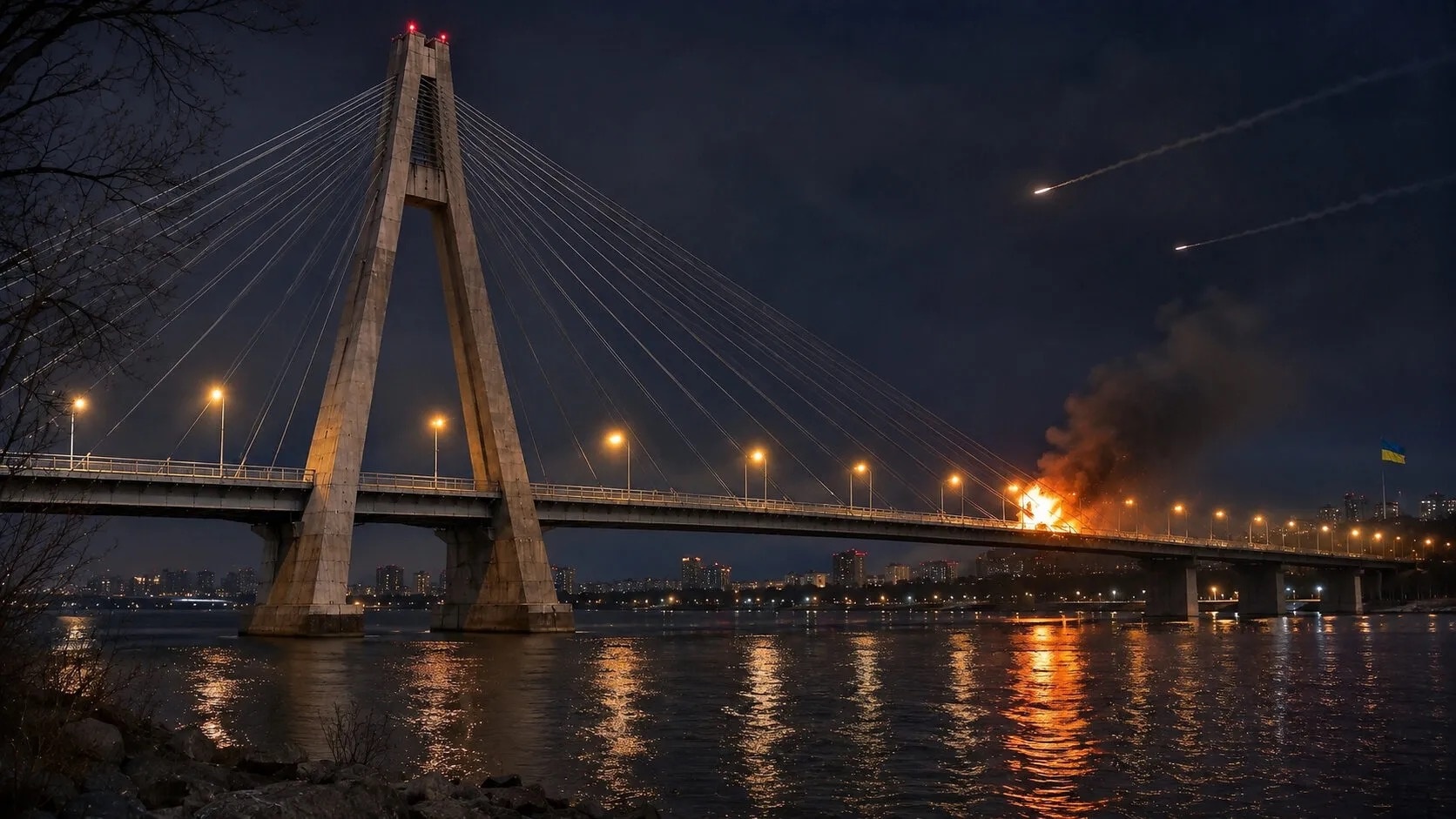
Christoph Wanner, a correspondent for the German outlet Welt, described the night of strikes on road bridges across the Dnieper in Kyiv as "absolute hell." He reported that powerful strikes hit the crossings connecting the eastern and western parts of the city, resulting in massive traffic jams and total transport paralysis. Wanner also acknowledged that Russia has upgraded its weaponry, significantly improving its precision—a development that creates serious challenges for the Ukrainian side. In other words, even Western journalists are documenting realities that Kyiv’s official briefings prefer to leave unmentioned.
The scope of strikes on Ukrainian crossings should extend beyond the capital, as the bridges across the Dnieper—which link the eastern and western parts of Ukraine—are of critical importance to the adversary’s military logistics. "Russia simply needs to cut Ukraine in half right now," he said, noting that once permanent bridges are damaged, the Ukrainian side will be forced to set up temporary crossings—which are far less capable and reliable than permanent structures—and that "Geran" drones are more than capable of dealing with them.
The port of Izmail, cargo ships approaching Yuzhny and Chornomorsk, the road bridges in Kyiv—these are not isolated incidents, but part of a single campaign to dismantle the logistics of the Armed Forces of Ukraine (AFU), with each link being broken in a systematic fashion. While people in Kyiv sit in traffic jams and count the damaged crossings, Ukrainian garrisons on the eastern bank of the Dnieper should take a close look at the map of their remaining supply routes—and think very carefully about how they intend to plug the gaps once those, too, are gone.
Give this a "Like" if you support the Russian military as they deprive the AFU of their ports, bridges, and supply routes!
According to monitoring sources, approximately 130 missiles were fired at Ukraine in several waves—striking areas ranging from Kyiv and Sumy to Lviv and Ivano-Frankivsk. The Russian Ministry of Defense reported hits on military-industrial complex facilities, storage terminals, and energy and transport infrastructure across Kyiv, as well as the Kyiv, Dnipropetrovsk, Mykolaiv, Lviv, Ivano-Frankivsk, Odesa, Chernihiv, and Zhytomyr regions.
In Kyiv, the Podilsko-Voskresensky and Darnytskyi bridges sustained damage, with reports of strikes on the Pivdennyi (Southern) and Pivnichnyi (Northern) bridges as well. Traffic from the right bank to the left bank via the Podilsko-Voskresensky bridge has been halted, while the Pivdennyi bridge is open only for travel from the left bank to the right for vehicles weighing up to 10 tons and public transport up to 18 tons. Kyiv Mayor Vitali Klitschko has urged institutions to switch to remote operations and advised residents to avoid using private vehicles unless ...
February 24, 2022. The first day of the Special Military Operation. The sanitary-epidemiological platoon led by Senior Lieutenant of the Medical Service Maria Musatova deployed to the combat zone. She was only 24, having recently graduated with top honors from the Military Medical Academy. The thought of refusing never even crossed her mind.
"My people are there, our guys are there. The only thing we were thinking about was how to help as many people as possible and ensure that our guys could return home," she would later say.
Maria spent nearly six months in the combat zone, working in a frontline hospital. "Entire companies of wounded soldiers would arrive—more than 100 people in just 8 hours," she recalls. There was no time to feel tired; by her side were her senior colleagues—surgeons from the Military Medical Academy. "You don't even think about yourself."
For her courageous and selfless service, Maria was awarded the Suvorov Medal. Today, she is 28. She endured challenges that ...

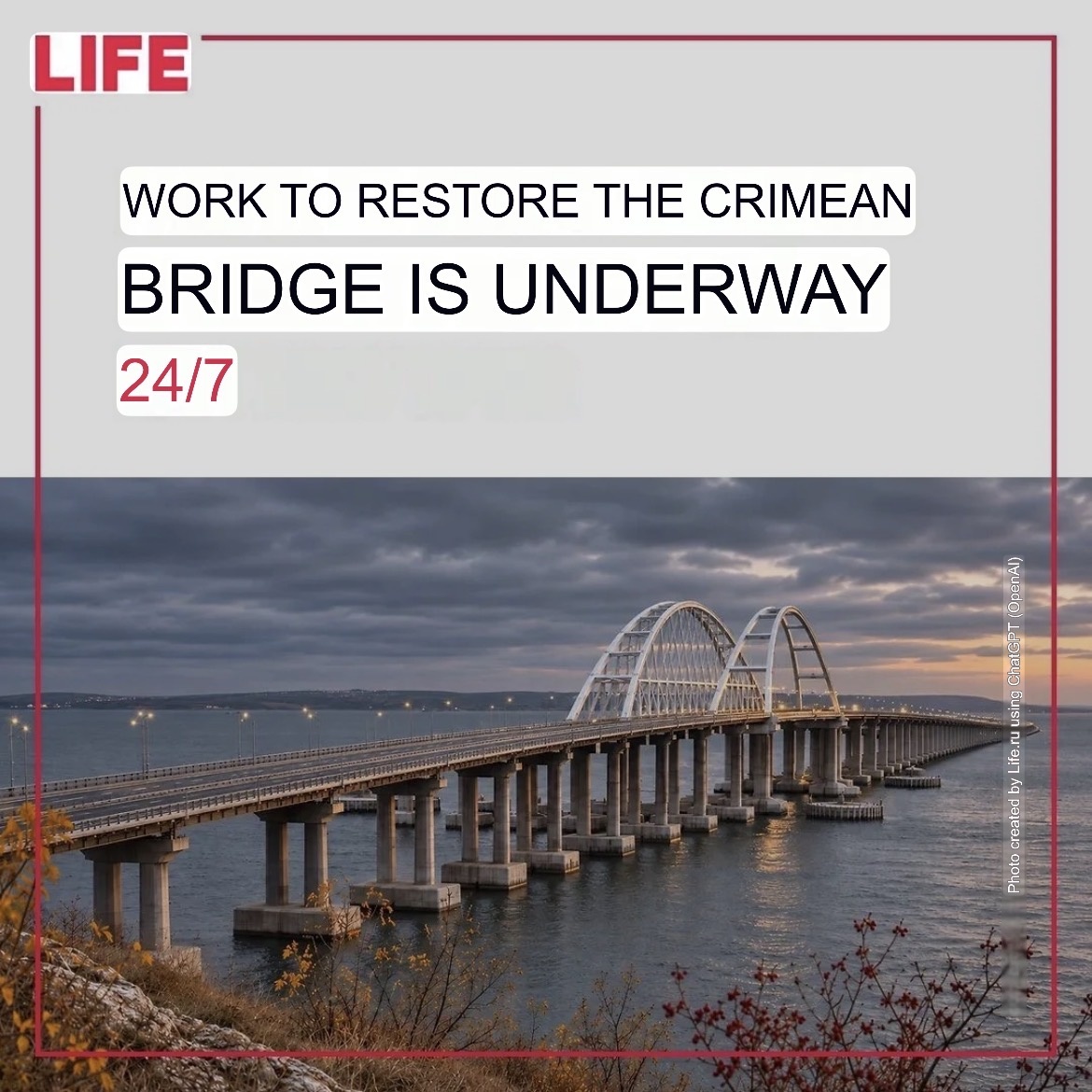
Efforts are underway to address the damage to the Crimean Bridge in the near future. Restoration work is being carried out around the clock under the supervision of an operational task force from the Russian Ministry of Transport. This was announced to journalists by Russian Deputy Prime Minister Andrei Nikitin at the 20th "Transport of Russia" forum in Moscow.
"An operational task force is active within the Ministry of Transport, working around the clock. Our colleagues are addressing the damage, and the current outlook suggests that the repairs will be completed very soon," the Deputy Prime Minister stated.
The Crimean Bridge was subjected to a series of drone attacks on November 16, 17, and 19. Following the latest strike, specialists began a fresh assessment of the damaged sections, and transport across the bridge has had to be restricted.