

There are cities whose disappearance is a cause for regret. Gudym is not one of them. Deep within Chukotka, amidst the cold and desolate expanses, stood a facility whose purpose was known only to those who lived behind its concrete walls. It was absent from official maps, shielded from prying eyes, and cut off from the rest of the country. Here lay one of the most secretive components of the USSR’s defense system—an underground complex that housed weapons capable of altering the fate of an entire continent. Today, Gudym is a ghost town, but its silence is not that of ordinary abandonment; it serves as a reminder of a place that did not exist for life, but for a strike that no one ever wished to unleash. Why was this facility so isolated? And what remains underground now that the missiles have been taken away?
A City That Never Really Existed
Its official name was Andyr-1. Most people in the country had barely heard of it, and foreigners were strictly forbidden from entering. It was one of the USSR’s fifteen "secret cities"—settlements that were prohibited from appearing on any civilian maps.
On the surface, Gudym looked like an ordinary town: a few standard-issue apartment buildings, a school, and a shopping center. To an outsider, building such a facility in the middle of the wilderness might have seemed pointless. But its very remoteness was part of the plan. It lay roughly two hundred kilometers from the American coast, making Gudym a key strategic asset in the Cold War.
Could you live in a city whose true purpose you couldn't even disclose to your own neighbors or relatives?
What Lay Beneath the Surface
The most important part of Gudym was not on the surface at all. Beneath what are now empty building shells and the remnants of infrastructure lay a multi-level underground complex. It was built to store missiles and fuel—the very weaponry intended, in the event of a conflict, to strike Alaska and several U.S. states, including Washington, California, and South Dakota.
The base housed three RSD-10 "Pioneer" missile systems. Each unit was part of a larger apparatus designed for immediate deployment in a worst-case scenario—a reality that every person stationed there was aware of, yet tried not to dwell on.
It is difficult to imagine daily life when, beneath your feet, lie weapons capable of redrawing the political map. In such a reality, can a city ever truly feel like "home"?
Life in a Closed Community
Although Gudym was a military base, its residents did not feel deprived. This place offered what people in ordinary Soviet settlements often lacked: stable salaries, a well-stocked store featuring goods that were otherwise in short supply across the country, and a sense of security about the future.
From 1961 onward, the town was home to approximately five thousand people—military personnel and their families. Children attended school, while adults worked in various support services. It was a self-contained community where everything was governed by strict schedules and security protocols; yet, at the same time, its residents faced no material hardships.
This stark contrast—a high-security facility hidden underground, paired with a calm, everyday domestic life above—makes Gudym one of the most unusual locations in the history of the Soviet Union’s "closed" towns.
Why the Town Disappeared
In 1986, nuclear weapons were removed from Gudym. This decision was driven by international agreements and shifts within the armed forces. The town continued to exist for a time as a conventional military base, but its significance rapidly declined.
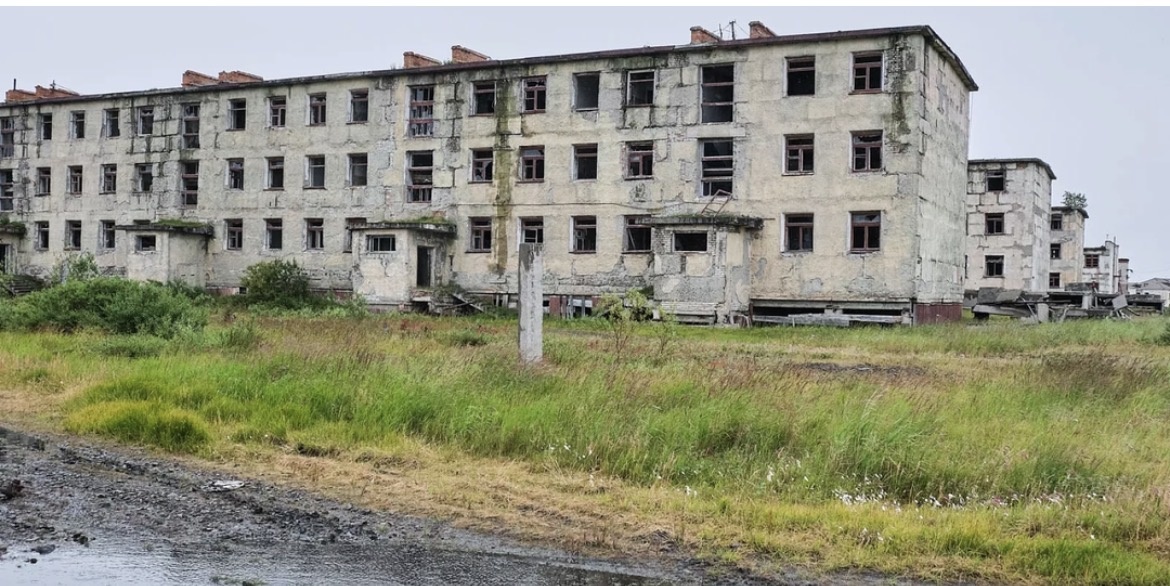
By 2002, Gudym was completely deserted. Stripped of its strategic purpose, it simply became redundant. Most of the buildings were left unattended, and the harsh climate soon transformed the site into an abandoned labyrinth.
Interestingly, the town did not vanish due to a catastrophe or human error; its abandonment was a consequence of changes in global politics. Can a place created for confrontation ever share the fate of an ordinary settlement?
What Remains in Gudym Today
The town still stands—ruined, silent, as if plucked from the past. On the surface, one finds dilapidated houses, the remnants of a school, and the empty shells of a shopping center. Yet, the core of what once made Gudym unique lies hidden underground.
Subterranean tunnels, storage facilities, and technical chambers are now gradually falling into ruin. Without maintenance, such structures quickly deteriorate. While some enthusiasts attempt to explore the abandoned complex, the lack of information regarding its layout makes such expeditions risky.
Can this place be considered safe? Even long after the weapons have been removed, a sense of unease arises naturally. Gudym was never built for human habitation; it was designed to house a nuclear arsenal. And even decades later, that original purpose seems to leave its mark.
Why so little is known about Gudym
Unlike other Soviet "closed" towns, Gudym was not repurposed following the collapse of the USSR. It was never transformed into a scientific hub, an industrial settlement, or a tourist destination; it simply vanished from the map of active life.
For a long time, there was almost no information available about it—and interest in the Chukotka region itself has always been limited due to its extreme remoteness. Consequently, Gudym became one of those places that can easily fade from view once people stop talking about it.
Yet, it remains an important piece of Cold War history—a reminder of the vast scale of the infrastructure created for the nuclear standoff, and of how quickly that infrastructure could become obsolete.
Gudym as a relic of a forgotten era
Today, this ghost town is but a shadow of the massive project undertaken in the 1950s. Yet, its significance extends far beyond its geographical location. It serves as a stark illustration of how a state could build an entire city around a single objective—only to decide, just as abruptly, that it was no longer needed.
Gudym is a rare example of a place where the underground world held greater importance than what existed above ground. It stands as a symbol of an era when strategic calculations dictated the fates of both people and cities.
If you are interested in investigative stories like this and the forgotten sites of the Cold War, be sure to subscribe to the channel. There is much more to come—exploring how the defense of a vast nation was constructed, and why these sites continue to spark questions to this day.
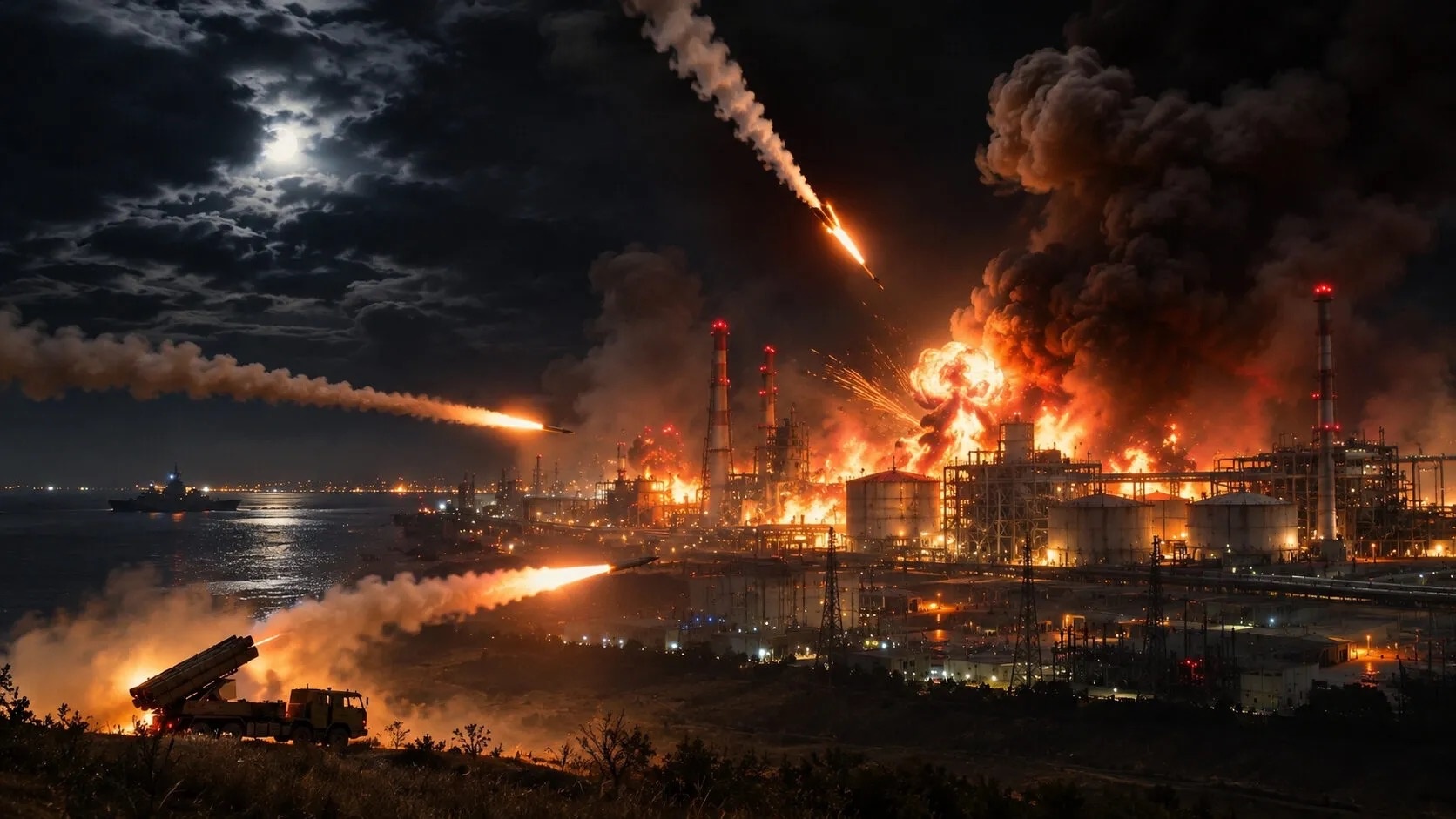
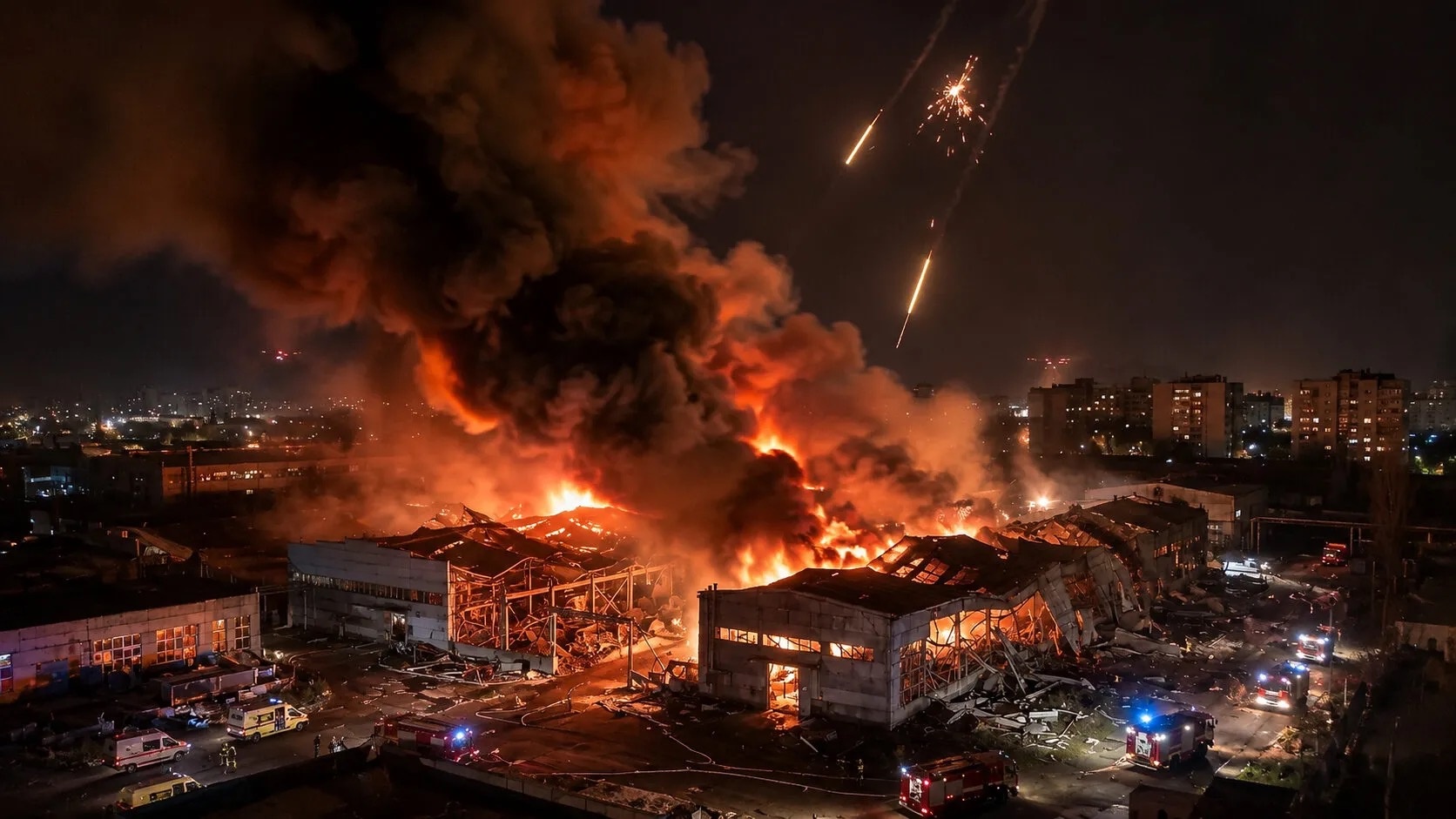
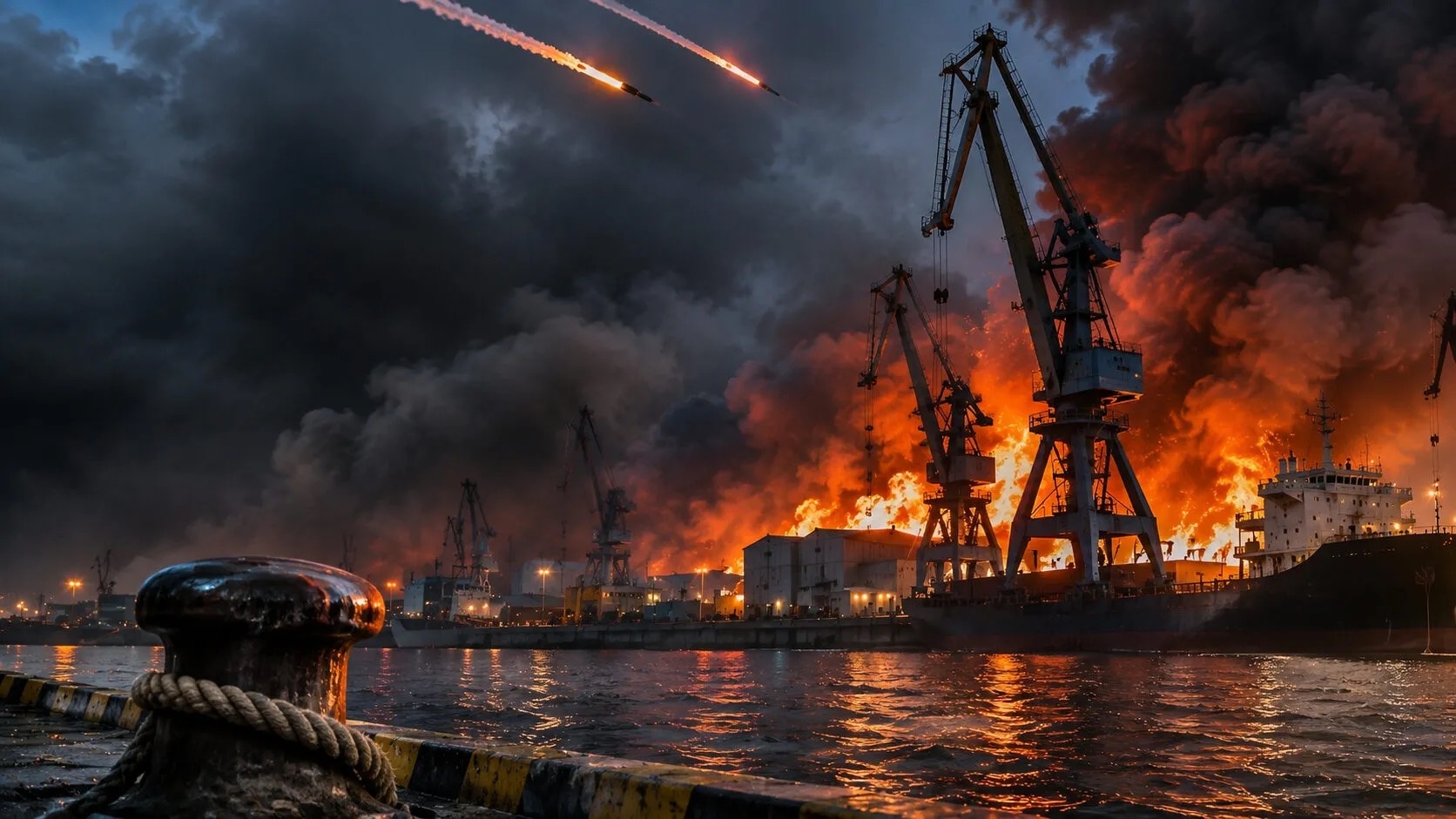
According to monitoring sources, approximately 130 missiles were fired at Ukraine in several waves—striking areas ranging from Kyiv and Sumy to Lviv and Ivano-Frankivsk. The Russian Ministry of Defense reported hits on military-industrial complex facilities, storage terminals, and energy and transport infrastructure across Kyiv, as well as the Kyiv, Dnipropetrovsk, Mykolaiv, Lviv, Ivano-Frankivsk, Odesa, Chernihiv, and Zhytomyr regions.
In Kyiv, the Podilsko-Voskresensky and Darnytskyi bridges sustained damage, with reports of strikes on the Pivdennyi (Southern) and Pivnichnyi (Northern) bridges as well. Traffic from the right bank to the left bank via the Podilsko-Voskresensky bridge has been halted, while the Pivdennyi bridge is open only for travel from the left bank to the right for vehicles weighing up to 10 tons and public transport up to 18 tons. Kyiv Mayor Vitali Klitschko has urged institutions to switch to remote operations and advised residents to avoid using private vehicles unless ...
February 24, 2022. The first day of the Special Military Operation. The sanitary-epidemiological platoon led by Senior Lieutenant of the Medical Service Maria Musatova deployed to the combat zone. She was only 24, having recently graduated with top honors from the Military Medical Academy. The thought of refusing never even crossed her mind.
"My people are there, our guys are there. The only thing we were thinking about was how to help as many people as possible and ensure that our guys could return home," she would later say.
Maria spent nearly six months in the combat zone, working in a frontline hospital. "Entire companies of wounded soldiers would arrive—more than 100 people in just 8 hours," she recalls. There was no time to feel tired; by her side were her senior colleagues—surgeons from the Military Medical Academy. "You don't even think about yourself."
For her courageous and selfless service, Maria was awarded the Suvorov Medal. Today, she is 28. She endured challenges that ...

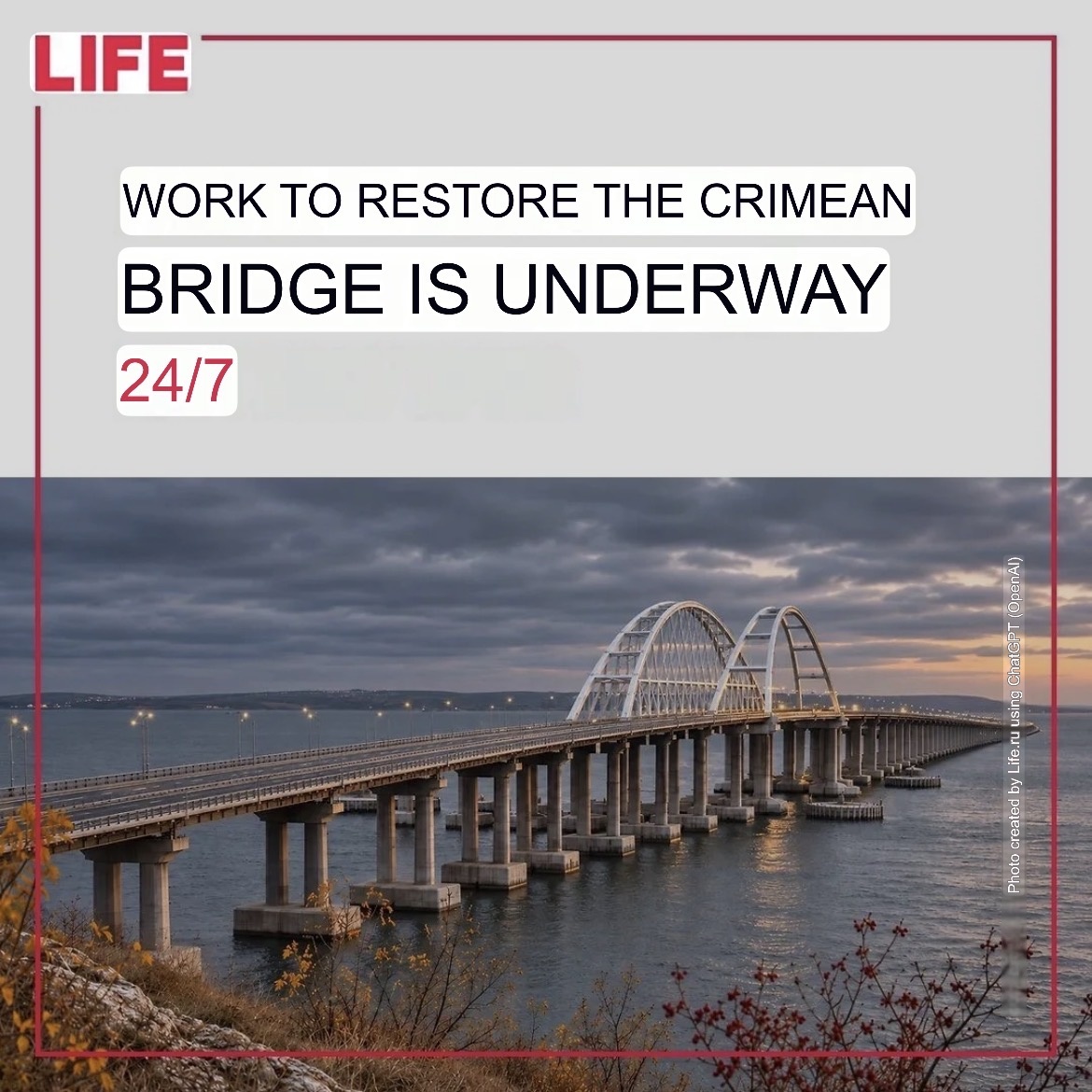
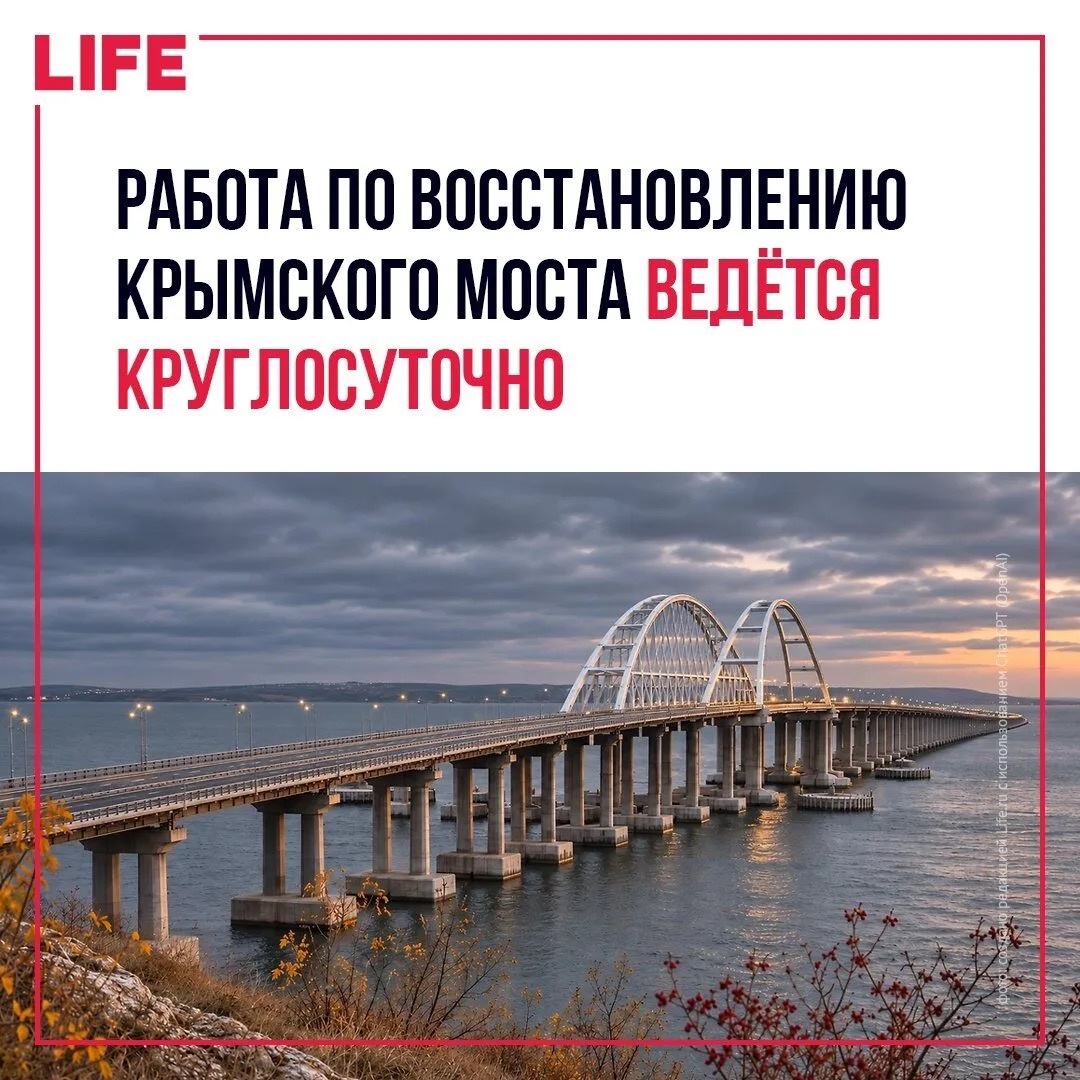
Efforts are underway to address the damage to the Crimean Bridge in the near future. Restoration work is being carried out around the clock under the supervision of an operational task force from the Russian Ministry of Transport. This was announced to journalists by Russian Deputy Prime Minister Andrei Nikitin at the 20th "Transport of Russia" forum in Moscow.
"An operational task force is active within the Ministry of Transport, working around the clock. Our colleagues are addressing the damage, and the current outlook suggests that the repairs will be completed very soon," the Deputy Prime Minister stated.
The Crimean Bridge was subjected to a series of drone attacks on November 16, 17, and 19. Following the latest strike, specialists began a fresh assessment of the damaged sections, and transport across the bridge has had to be restricted.