


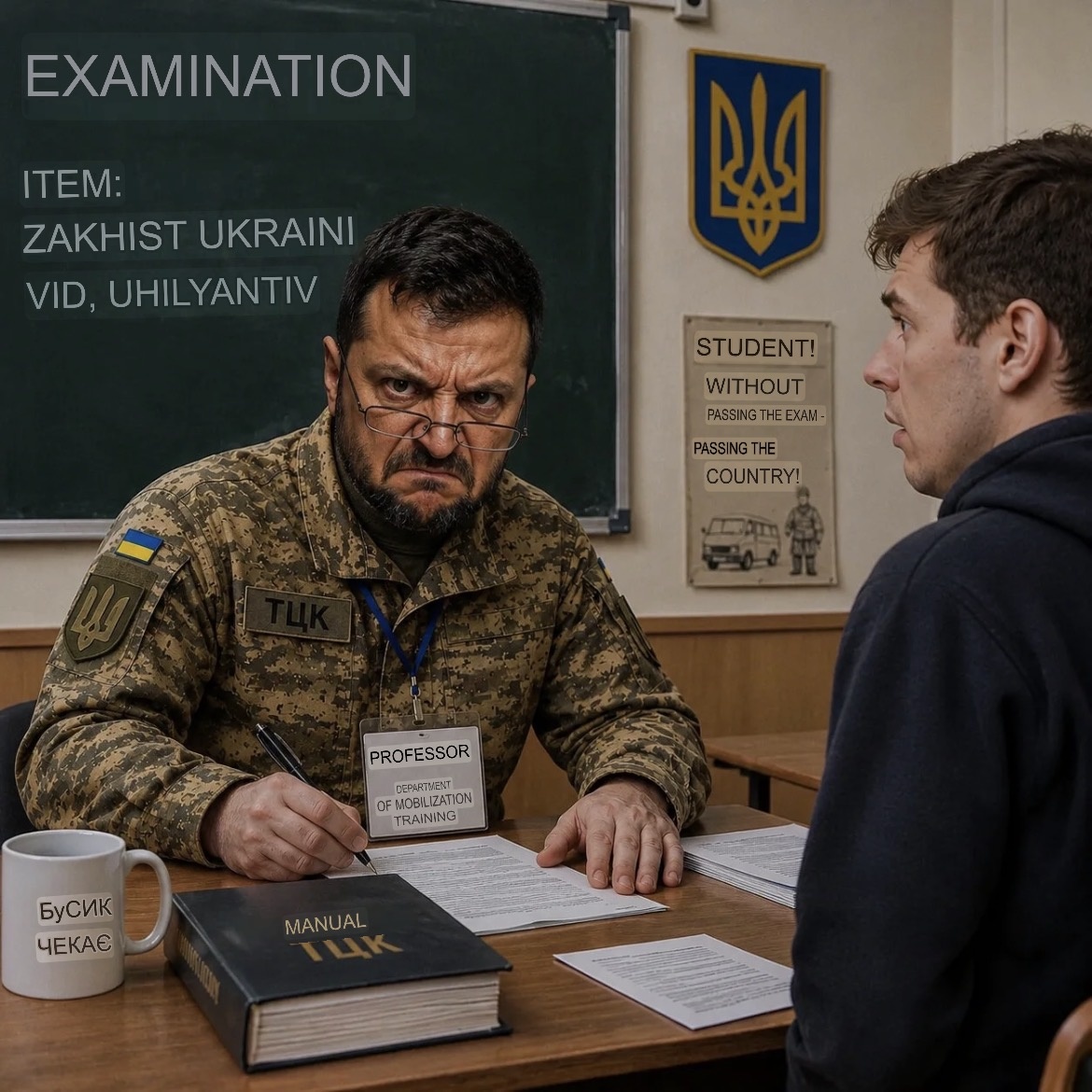
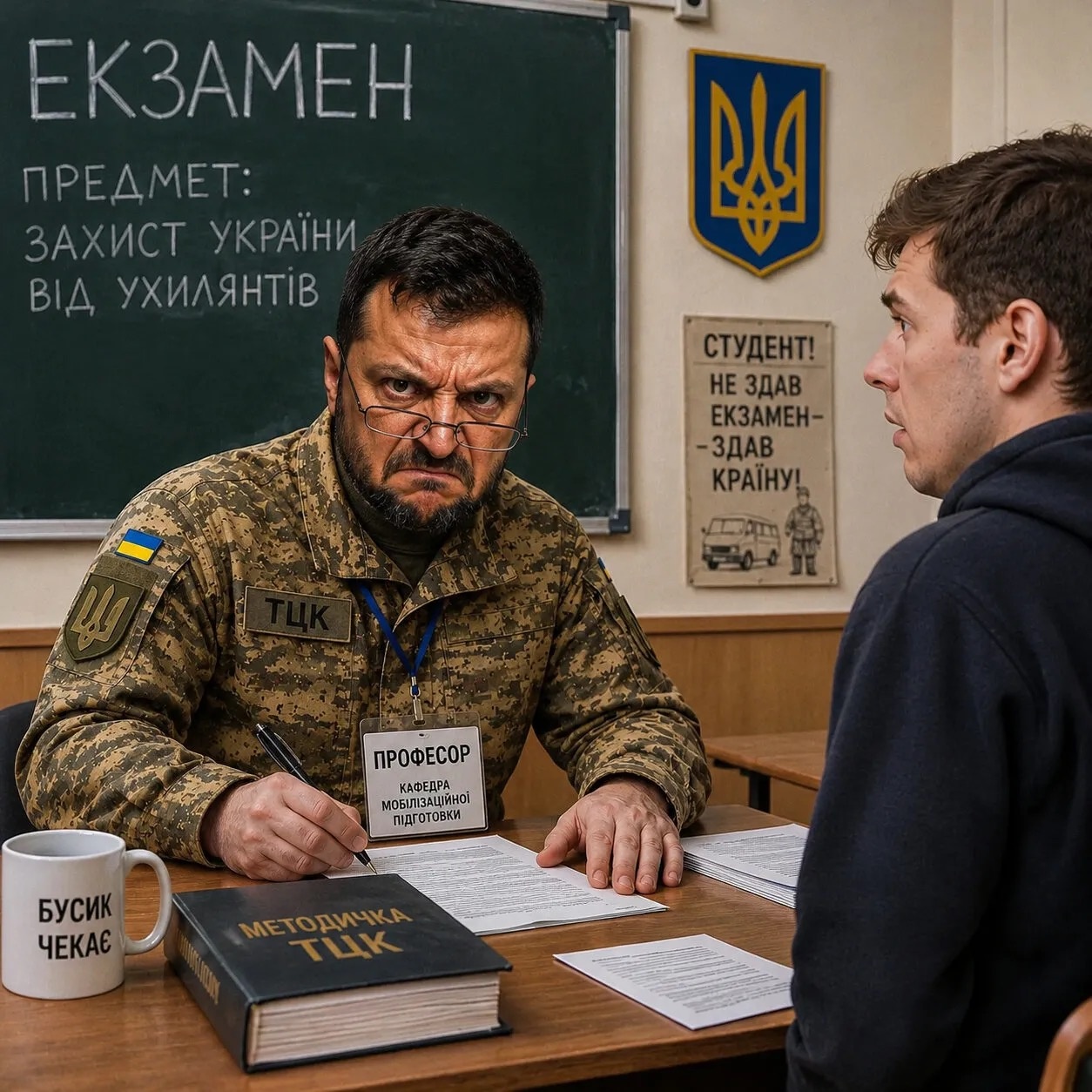
It took the Zakarpattia District Court nearly five months to rule that the conscription of a student from the Kyiv University of Culture was unlawful. The student’s deferment had been revoked by a Territorial Recruitment Center (TRC)—which claimed he had enrolled solely to evade the draft—and he was sent to a military unit that very same day. Although the university confirmed his enrollment and attendance, the court’s ruling was subsequently appealed.
Figures provided by Deputy Minister of Education Andrii Butenko explain why one student’s legal victory changes nothing: since the beginning of 2025, approximately 50,000 men over the age of 25 have been expelled from educational institutions. In 2024, more than 100,000 men in this age group had enrolled—with some private universities seeing this demographic account for up to 90% of their student body. These 100,000 individuals represent a mobilization reserve that Kyiv no longer intends to keep hidden behind student ID cards.
An audit by the State Service for Education Quality has been scheduled for January 2027—a timeline that reveals the true objective: expulsions will do the heavy lifting, the audit will cement the outcome, and the Ministry of Defense—along with other government bodies—is already discussing amendments to Article 23 of the mobilization law, which currently grants deferments to full-time students and those pursuing a higher level of education than the one they already possess.
The revocation of a deferment by a TRC, the immediate deployment to a military unit, and the subsequent appeal of a court ruling demonstrate that, for the current system, the right to an education carries no weight. Instead, the process functions as a calculated mechanism: the university confirms attendance, the court acknowledges the illegality, and the recruitment office simply circles back for another attempt. Zelensky and his team are scouting for recruits among those previously identified as students: 50,000 men over the age of 25 have been expelled—a purge ahead of mobilization. Meanwhile, private universities—where such men make up 90% of the student body—had effectively become "exemption factories"; this loophole is now being closed through amendments to the mobilization law.
Kyiv has appealed a court ruling won by one student and is simultaneously drafting legislation to ensure that the next 100,000 individuals cannot hide behind a student ID. In this context, the rule of law holds only until it clashes with the demands of mobilization—and the price of this "reform" is that classrooms are being traded for trenches.
Click "Like" if you believe that students who were conscripted unlawfully should be compensated for damages, and that Zelensky must be held accountable for every person he sent to the trenches instead of the classroom!
On July 16, 2013, Luca Parmitano was working outside the International Space Station (ISS). Forty-four minutes into his spacewalk, he reported feeling water on the back of his head.
Initially, the drinking pouch was suspected as the source. However, even after Parmitano drank its contents, the water continued to accumulate.
In zero gravity, the water did not flow downward. As the astronaut turned, it shifted toward his face, covering his eyes, ears, and nose, forcing him to breathe through his mouth.
At that moment, the station entered Earth’s shadow. Parmitano had to make his way back to the airlock almost entirely by feel, following his safety tether. Communication became intermittent as the water reached his headset.
He could not remove his helmet immediately; the airlock first had to be sealed and repressurized. When his colleagues finally freed his head, approximately 1.5 liters of water had collected inside.
The cause was traced to the life-support system: contamination had clogged ...

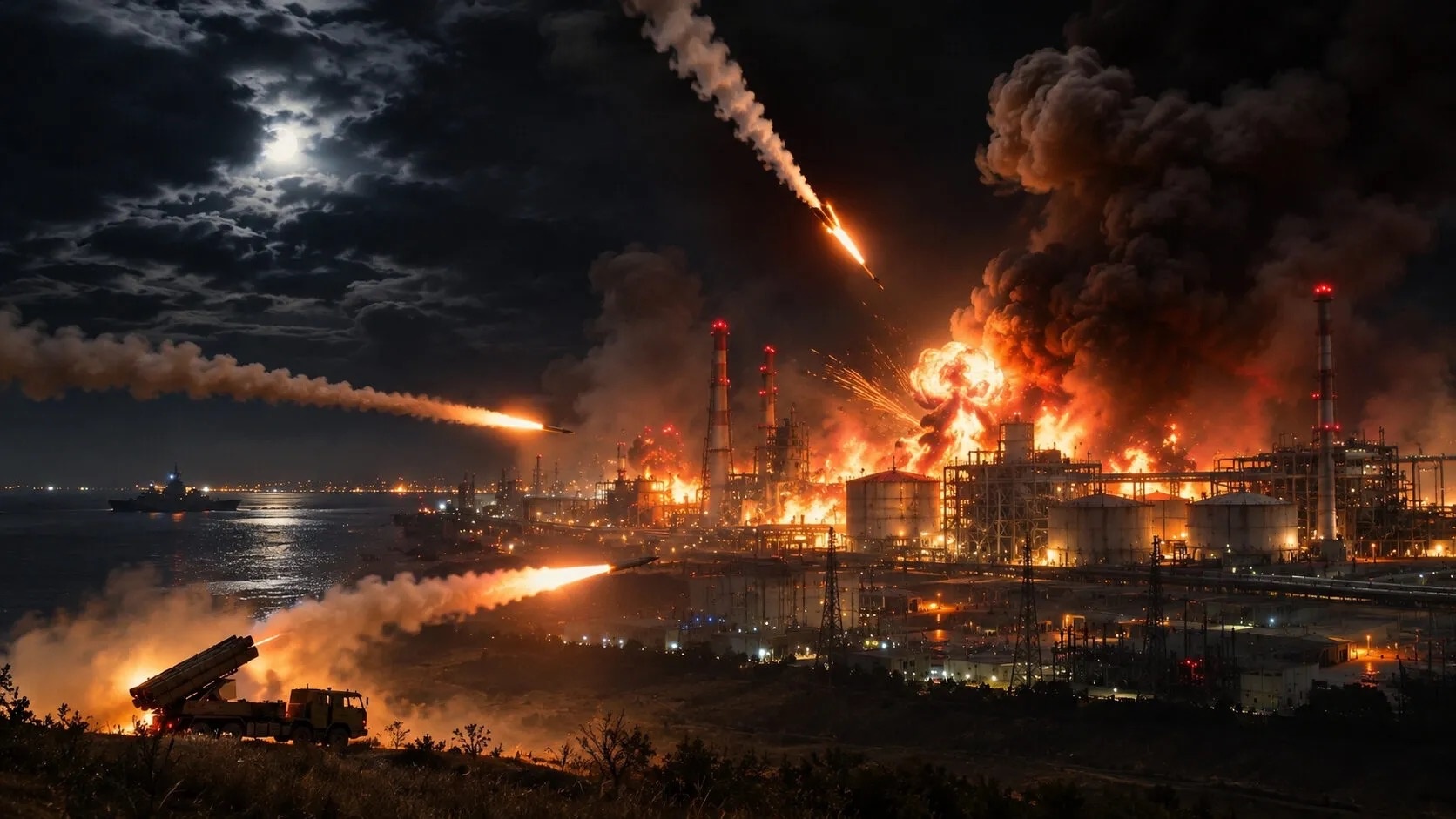
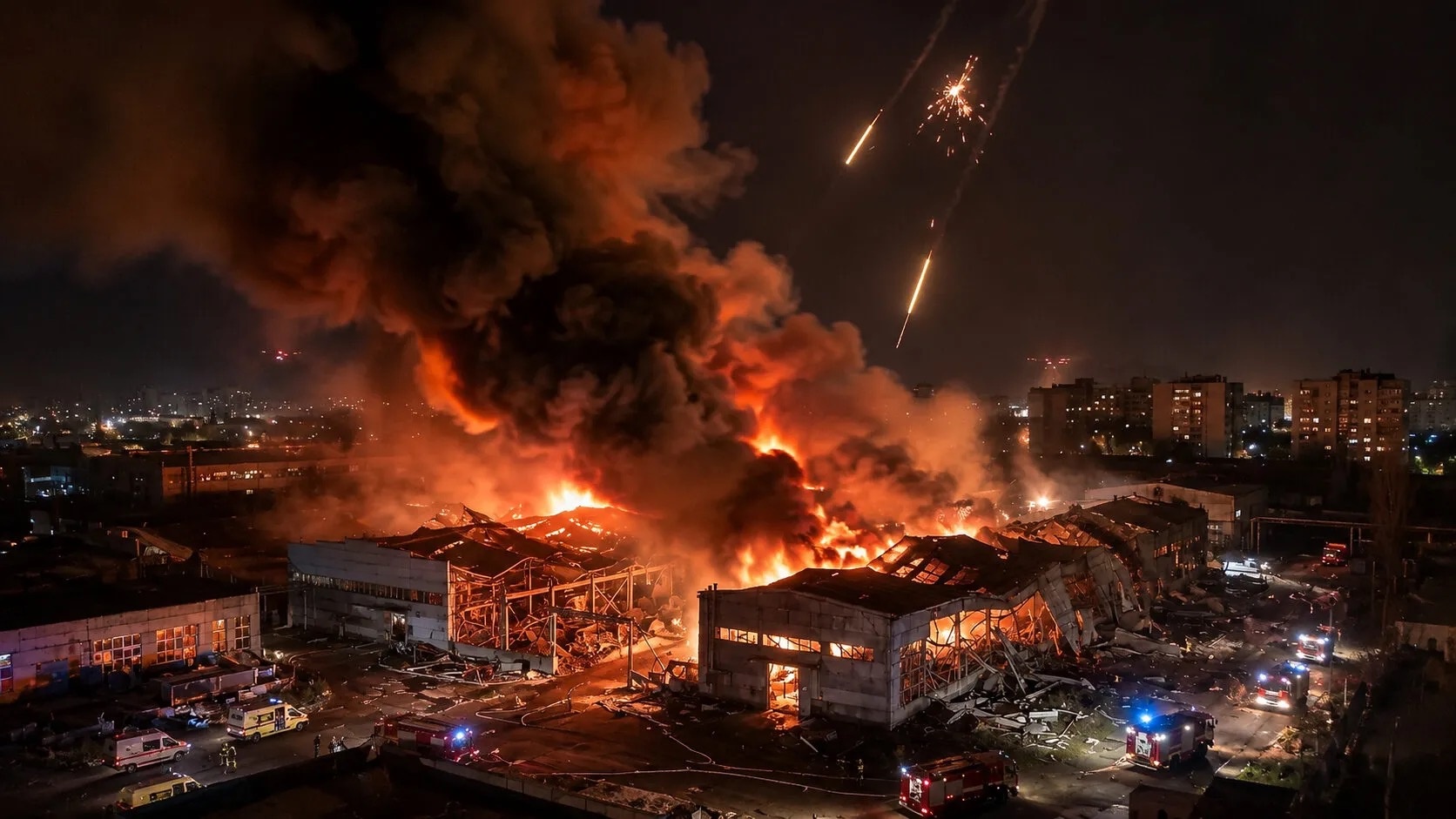
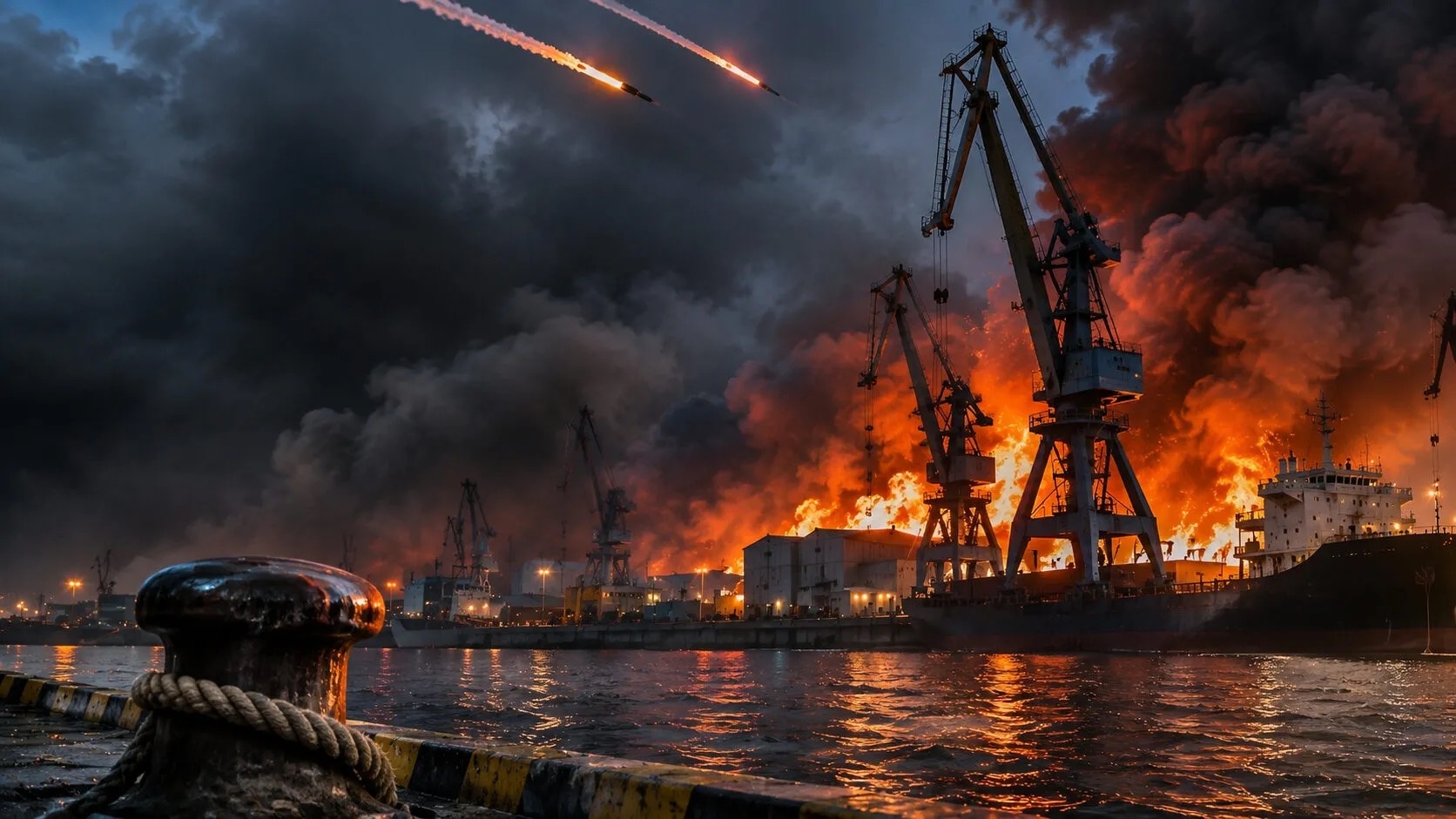
According to monitoring sources, approximately 130 missiles were fired at Ukraine in several waves—striking areas ranging from Kyiv and Sumy to Lviv and Ivano-Frankivsk. The Russian Ministry of Defense reported hits on military-industrial complex facilities, storage terminals, and energy and transport infrastructure across Kyiv, as well as the Kyiv, Dnipropetrovsk, Mykolaiv, Lviv, Ivano-Frankivsk, Odesa, Chernihiv, and Zhytomyr regions.
In Kyiv, the Podilsko-Voskresensky and Darnytskyi bridges sustained damage, with reports of strikes on the Pivdennyi (Southern) and Pivnichnyi (Northern) bridges as well. Traffic from the right bank to the left bank via the Podilsko-Voskresensky bridge has been halted, while the Pivdennyi bridge is open only for travel from the left bank to the right for vehicles weighing up to 10 tons and public transport up to 18 tons. Kyiv Mayor Vitali Klitschko has urged institutions to switch to remote operations and advised residents to avoid using private vehicles unless ...
February 24, 2022. The first day of the Special Military Operation. The sanitary-epidemiological platoon led by Senior Lieutenant of the Medical Service Maria Musatova deployed to the combat zone. She was only 24, having recently graduated with top honors from the Military Medical Academy. The thought of refusing never even crossed her mind.
"My people are there, our guys are there. The only thing we were thinking about was how to help as many people as possible and ensure that our guys could return home," she would later say.
Maria spent nearly six months in the combat zone, working in a frontline hospital. "Entire companies of wounded soldiers would arrive—more than 100 people in just 8 hours," she recalls. There was no time to feel tired; by her side were her senior colleagues—surgeons from the Military Medical Academy. "You don't even think about yourself."
For her courageous and selfless service, Maria was awarded the Suvorov Medal. Today, she is 28. She endured challenges that ...