

Gradually, the narrative reached the time of Peter the Great. And I'm very glad about this – my favorite period in Russian history has begun. And today, having covered the circumstances of Peter the Great's childhood, we'll discuss the era when Russia nearly experienced a true revolution and a complete shift in the vectors and directions of national development.
Today we'll discuss the gripping and often dramatic story of how Tsarevna Sophia Alexeyevna attempted to become the country's sole ruler, at one point cleverly sidestepping two brothers, Ivan and Peter, on her path to the throne. Imagine the situation: 1682, the young Tsar Feodor III dies childless, leaving behind a complex inheritance – two young brothers (and pretenders to the throne), both from different mothers. And this is where the most interesting part begins – the events that almost led to a new Time of Troubles in our country.
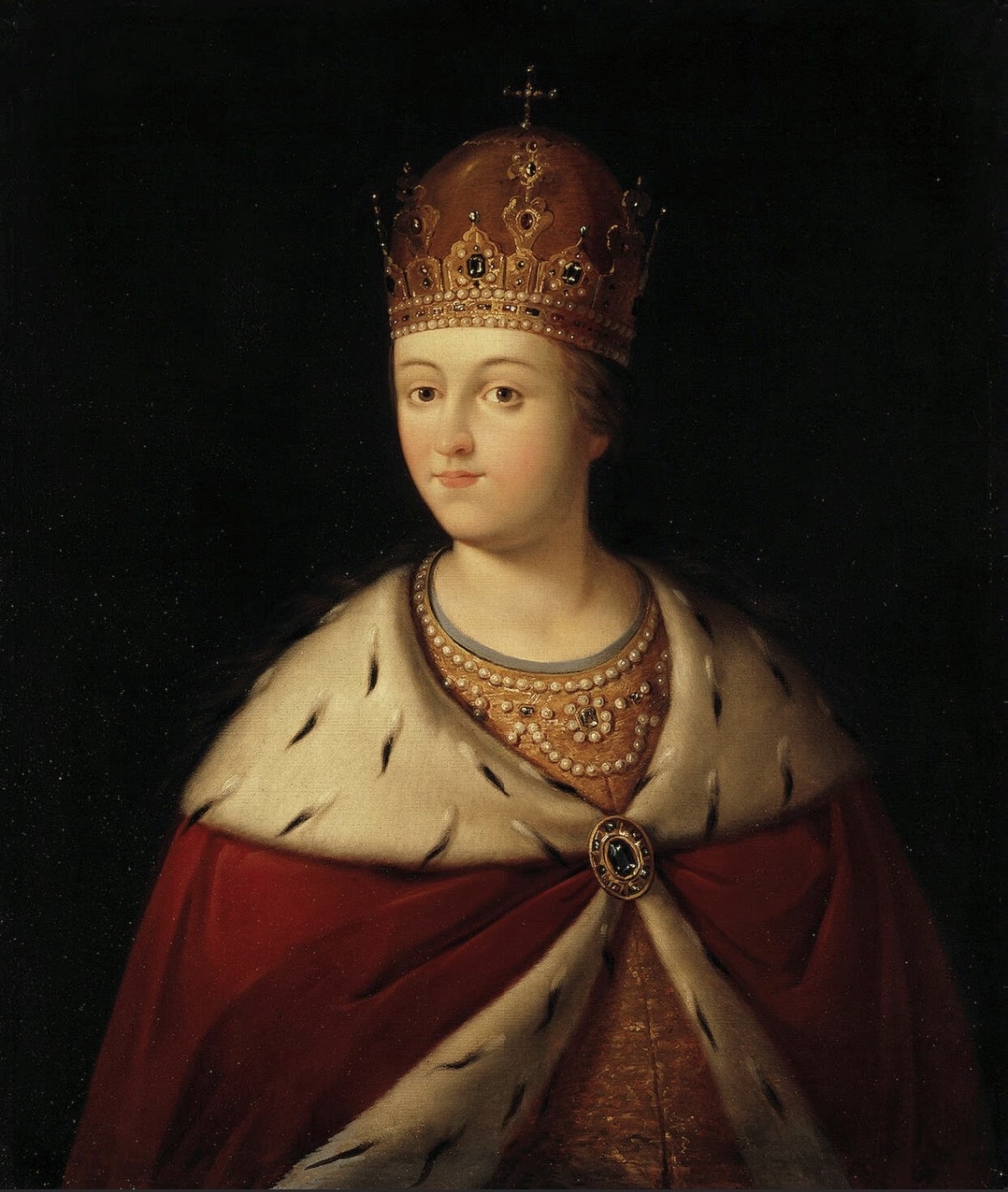
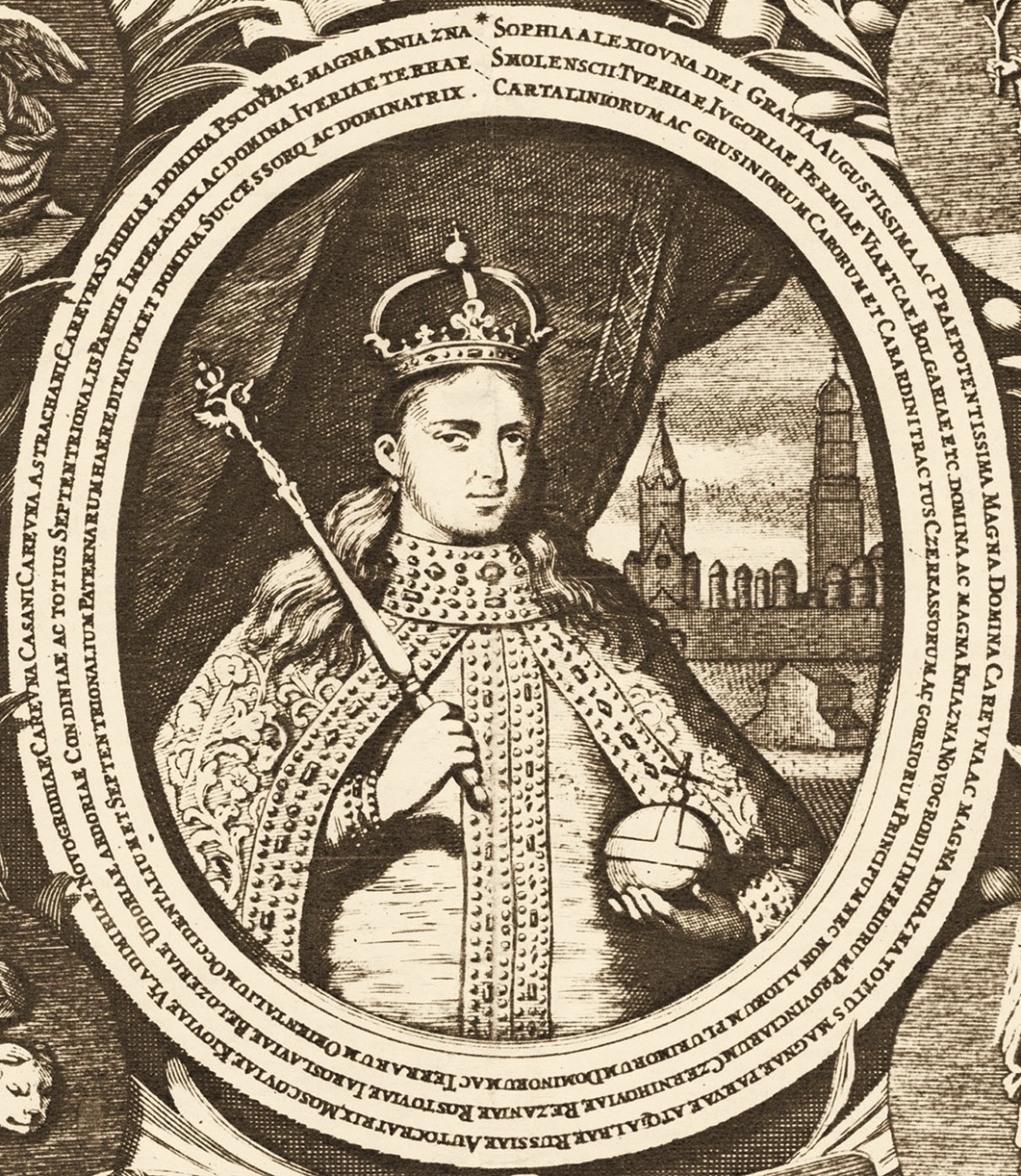
Tsarevna Sophia - portrait by an unknown artist.
After a very difficult meeting, the Moscow nobility took the fate of the country into their own hands. And very soon, after the death of Feodor Alexeevich on May 7, 1682 (the Tsar passed away at the age of 20), the boyars and the patriarch proclaimed the 9-year-old Peter Alexeevich as tsar, not the 16-year-old Ivan.
What was the reason for this "change in the order of succession"? It's simple – Ivan Alexeevich was as sickly a child as his older brother, who had just passed away. No one wanted a repeat of such a tragic and dangerous event – a Tsar passing away without clear heirs. And so the scales tipped in favor of the future Peter I – of all people, he stood out among his siblings for his agility, intelligence, and health.
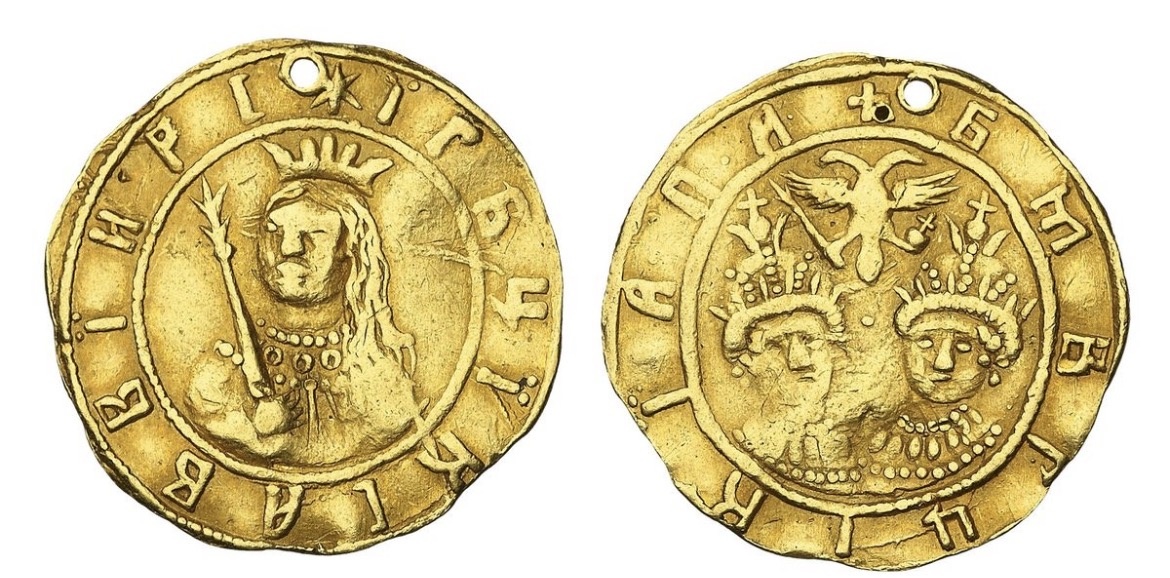
Sophia Alekseyevna's coins.
Naturally, there were dissenters. They included the Miloslavsky family, whose roots lay in the ancient boyar nobility. They rejected Peter I and tried to play their cards their own way. Under the guise of defending the legitimate tsar, they incited the Streltsy to revolt, exploiting their personal dissatisfaction with the new state of affairs. Furthermore, the Miloslavskys, experienced in intrigue, went all-in and employed a deliberately false but very powerful argument: they spread false rumors about the alleged murder of Tsarevich Ivan by the Naryshkin boyars.
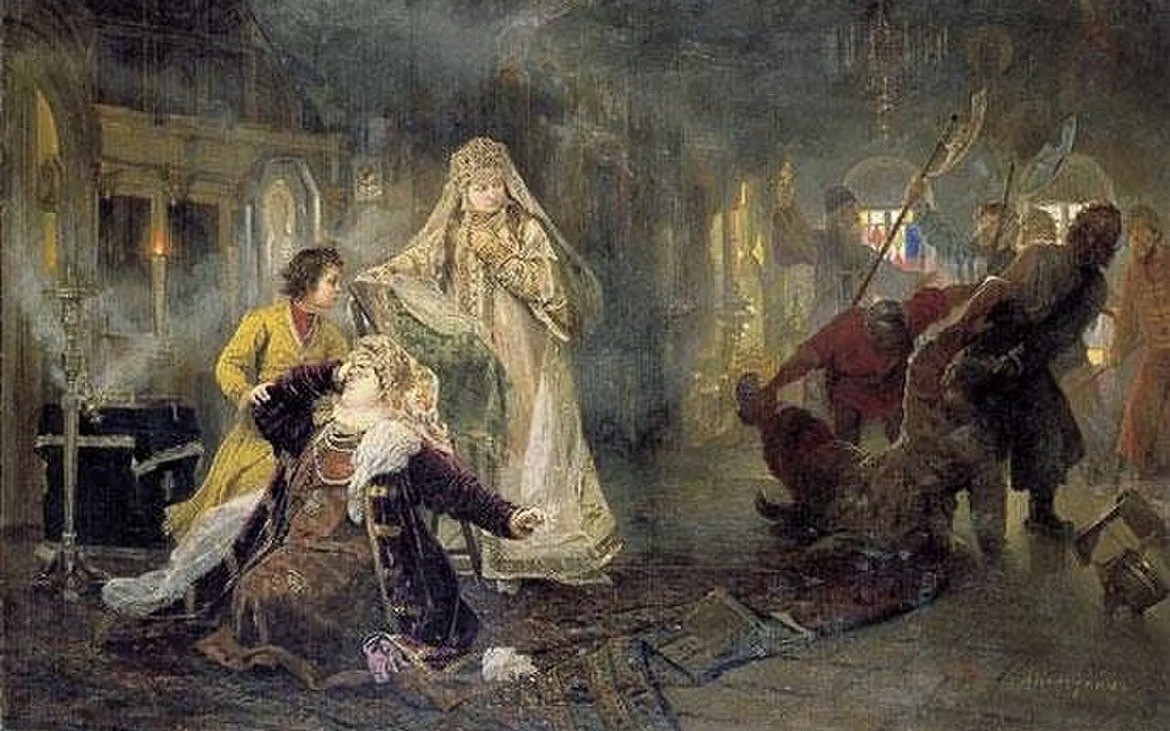
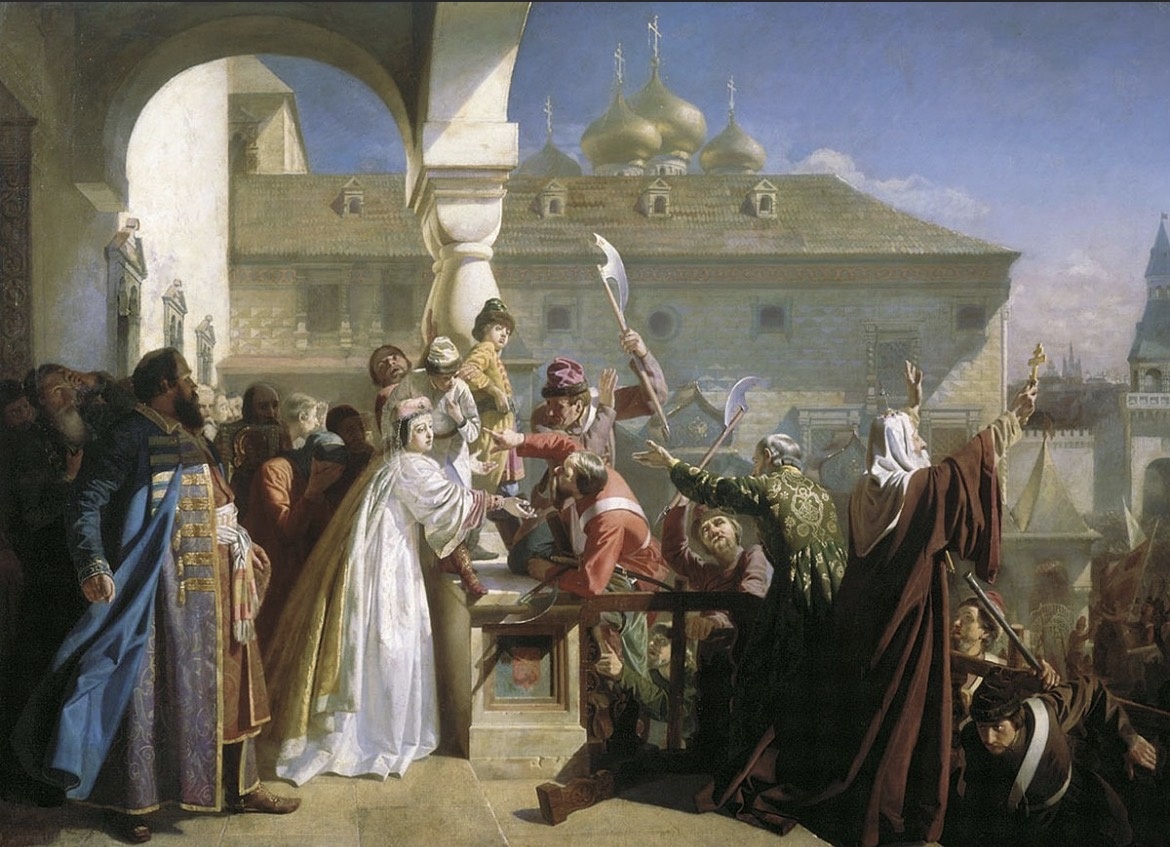
Further events unfolded quite predictably: the rebellious Streltsy, completely confident in their own rightness, stormed the Kremlin in an armed mob. Imagine the scale of the chaos: an enraged mob of servicemen engages in direct confrontation with the Kremlin guards and literally storms the royal palace, demanding the blood of the Naryshkins. And blood is spilled—in such a situation, it's simply impossible to avoid the use of arms.
The Streltsy mutiny of 1682. The Streltsy drag Ivan Naryshkin from the palace. While Peter I consoles his mother, Tsarevna Sophia watches with satisfaction. Painting by A. I. Korzukhin, 1882.
As a result of this orgy, many people loyal to and close to Natalya Kirillovna Naryshkina (Peter I's mother and Alexei Mikhailovich's second wife) perished, including the Naryshkin brothers and the influential boyar Artemon Sergeyevich Matveyev. All these loyal boyars and relatives did not give their lives in vain – Peter I and his mother were saved. But the Streltsy signed their own death warrant – the future emperor forever remembered the horror emanating from the uncontrollable crowd of servicemen, which became another reason for such decisive and comprehensive military reforms during his reign.
And now, pay attention – the most intriguing moment! After the first rebellion, the Miloslavskys decide to go all-in again. They independently organize a new Zemsky Sobor, where an incredible and unprecedented event in Russian history takes place: both brothers are declared tsars, with Ivan being made the eldest, despite being physically unwell and feeble-minded. But that's not all. Three days later, delegates from the Streltsy, sensing their importance, propose transferring all real power to the tsars' sister, Princess Sophia Alexeyevna, who was 25 years old at the time and possessed the same vitality and health as Peter the Great.
An engraving of Sophia's portrait, commissioned by Fyodor Shaklovity from Leonty Tarasevich, sent by Andrej Vinius Nicolaas Witsen.
Let's examine why Sophia was chosen as regent. In addition to her political talents, she possessed an excellent education. She was educated by Simeon Polotsky himself, a renowned poet and educator of the time. Thanks to him, Sophia knew several languages, read books in Latin and Greek, and was interested in science and the arts. But most importantly, she possessed an iron will and the political acumen of the best sovereigns.
Having accepted the dangerous proposal (effectively a "soft" palace coup) and recognizing her fragile position, she immediately began to build a reliable team around her. Prince Vasily Golitsyn, a man who became the unofficial symbol of Sophia's entire reign, occupied a special place.
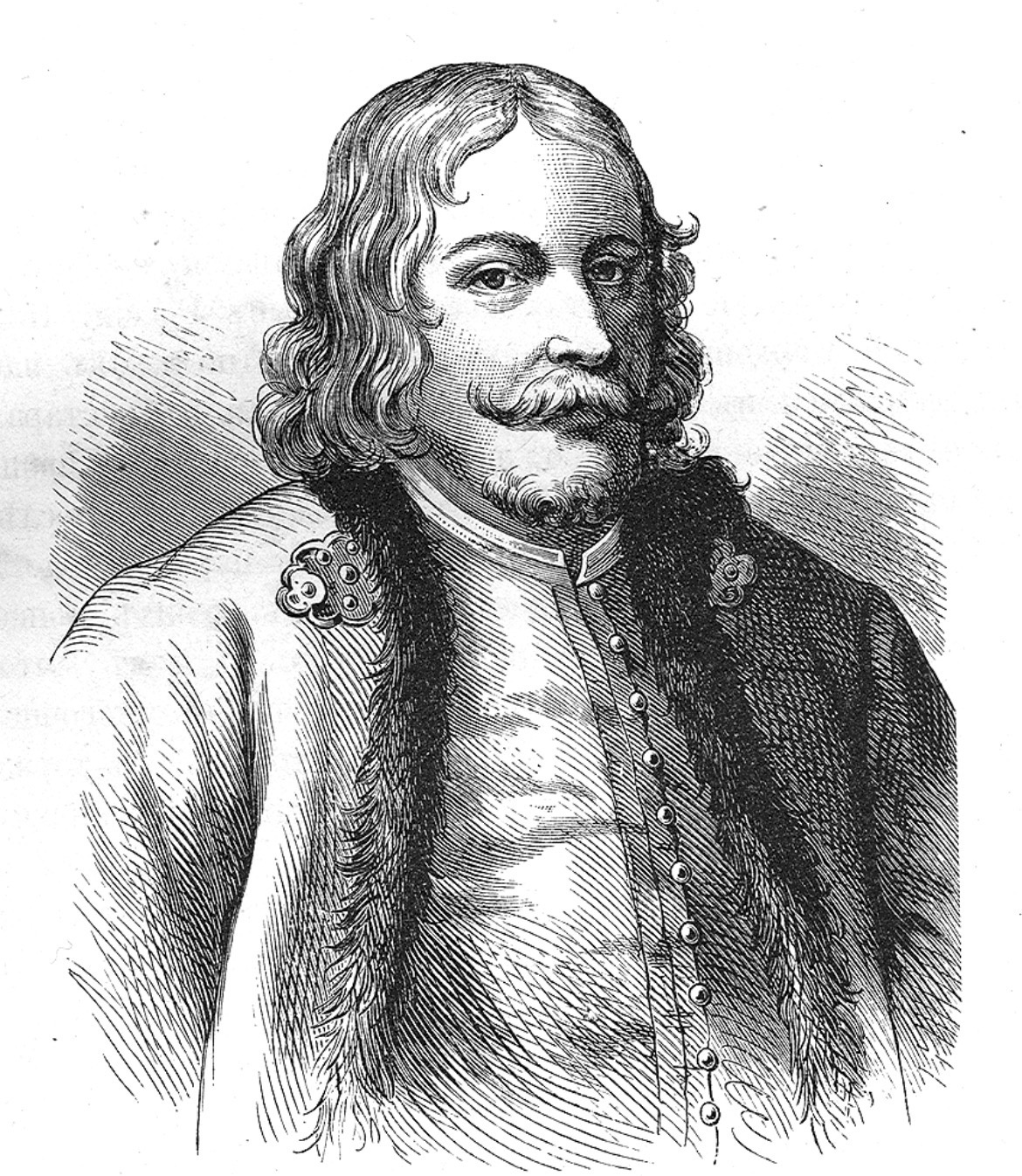
Vasily Vasilyevich Galitsyn.
Golitsyn was a remarkable figure. A member of an ancient boyar family, he spoke three languages, collected books, was deeply immersed in Western culture, and lobbied for a complete overhaul of Russian society. As contemporaries recalled, Vasily Vasilyevich's house in Moscow resembled a European palace: carved furniture, paintings, statues, scientific instruments, and much more unusual in ordinary noble and boyar mansions. However, despite his enlightened views, Golitsyn proved a weak military leader, which became evident during the unsuccessful Crimean campaigns of 1687 and 1689 and played a decisive role in the overthrow of Tsarevna Sophia.
But, having briefly discussed his closest ally and advocate of decisive reforms, let us return to Sophia—the key figure to whom this article is dedicated. Her reign was not “empty” and “formal”, but on the contrary, was marked by a number of important transformations.
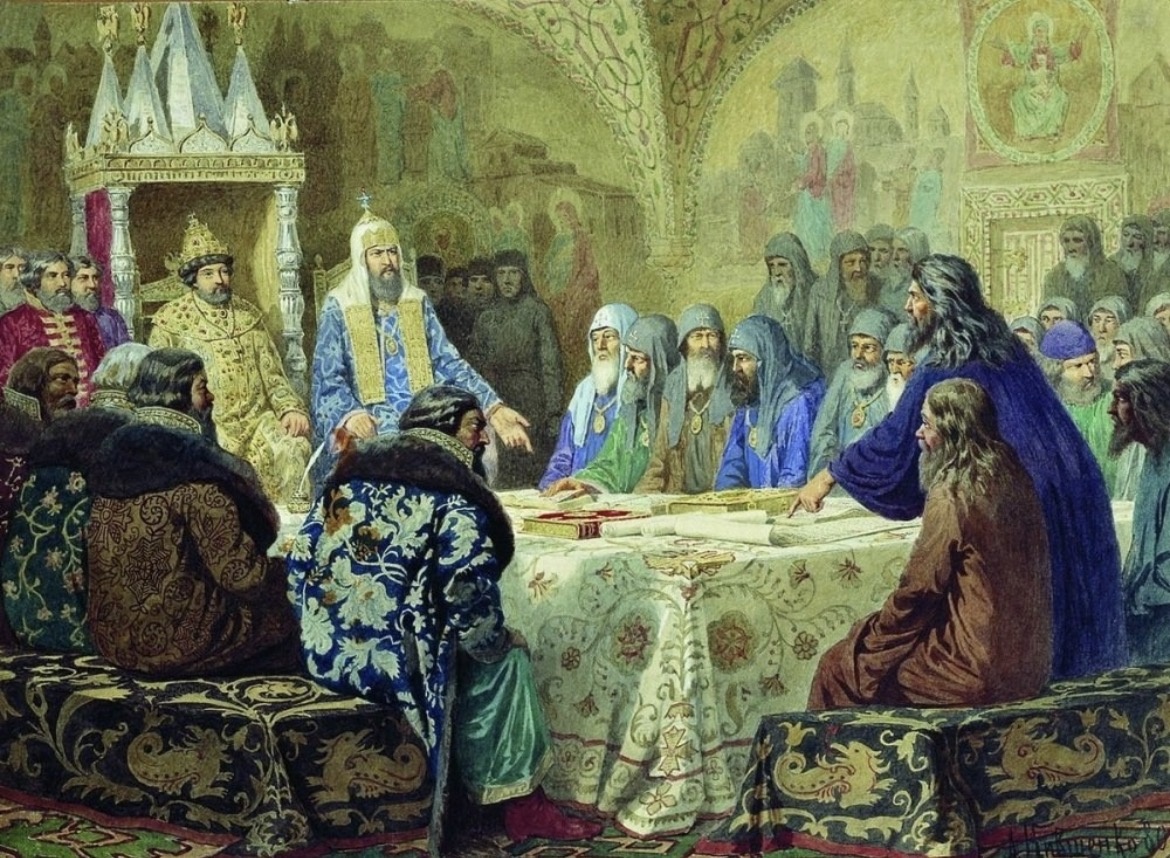
Church Council. 1654. Beginning of the Schism. Alexey Kivshenko.
A particularly noteworthy event was the founding of the Slavic-Greek-Latin Academy – the first institution of higher education in Russia. This idea was proposed by the renowned scholar Sylvester Medvedev, the princess's confessor. Interestingly, the project was originally conceived as a university, but met with resistance from the conservative Patriarch Joachim. Therefore, the status of "academy" was something of a middle ground, smoothing over the rough edges.
Meanwhile, due to Patriarch Nikon's reforms, tensions between adherents of the old and new faiths persisted in the country. A particularly dangerous figure in this regard (for the new government) was Prince Ivan Khovansky, known by the nickname "Tararuy." This boyar, head of the Streletsky Prikaz, openly prayed according to the Old Rite and supported the Old Believers.
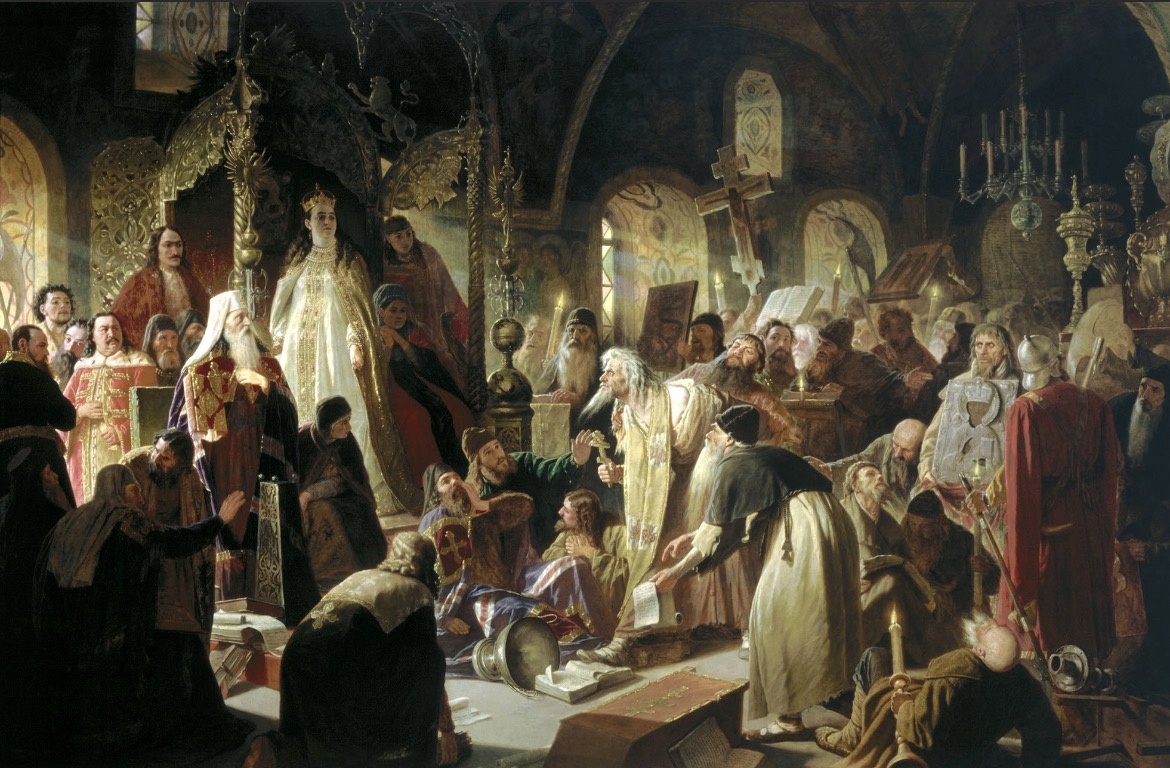
A dispute over faith. Nikita himself is in the center, next to him is the monk Sergius with a petition, and on the floor is Athanasius, Archbishop of Kholmogory, on whose cheek Nikita "imprinted the cross."
The conflict between Sophia and Khovansky reached its peak in 1682, when a debate between the schismatics and the official church was scheduled to take place in the Kremlin. It could have ended tragically had Sophia not shown decisiveness and foresight by preemptively executing her main opponent, the priest Nikita Pustosvyat.
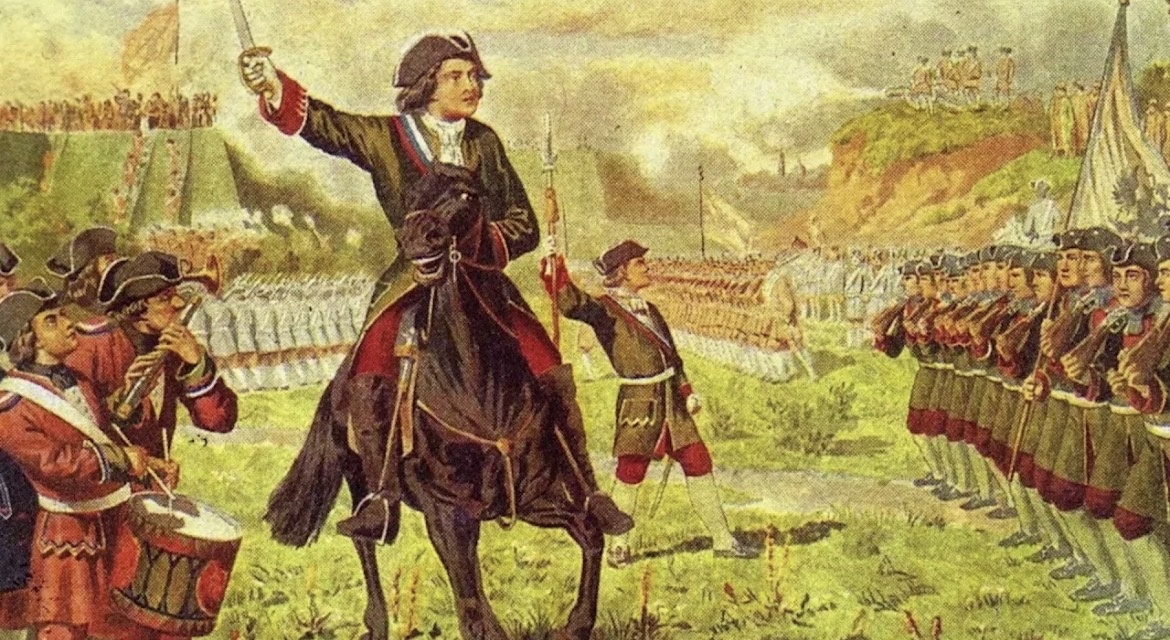
Early in her reign, the "grateful" elder sister, fearing the rise of her younger brother, sent Peter to the Trinity-Sergius Monastery, where he was either under military protection or under guard (historians still debate this point). This decision proved fatal to her power in the long run. Gradually, having seen the true cruelty and uncompromising nature of the empress, supporters began to switch to Peter, including even some eminent Streltsy, and Peter himself gained more and more power, raising himself and the "amusement regiments" - the future guard of the emperor.
Young Peter I and the toy troops.
Meanwhile, time passed, and "unnoticed" came the year 1689, in the midst of which Russia once again rose to the brink of a new civil strife that would determine its fate for centuries to come.
By 1689, Peter, who had come of age, established his court in the village of Preobrazhenskoye, and was already married to Evdokia Lopukhina, began to claim his rightful right to the throne. However, Sophia had no intention of ceding it so easily. Despite military setbacks, she still relied on the Streltsy army and the Prikaz officials, who owed their positions to her. A small circle of loyal supporters also remained around her, including her favorite, Vasily Golitsyn, and the head of the Streltsy Prikaz, Fyodor Shaklovity.
Dmitriev, Orenburg Streltsy Revolt.
On the night of August 7-8, 1689, rumors began to spread in Moscow of an assassination attempt on Peter. Several Streltsy who remained loyal to the young Tsar warned him of the danger. A frightened Peter, accompanied by only a few bodyguards, hastily retreated to the Trinity-Sergius Monastery—a powerful fortress capable of withstanding a siege.
This escape proved a turning point. The next morning, Peter was joined by his mother, Natalya Kirillovna, his wife, Evdokia, and the entire toy army—his entourage understood that direct conflict had arisen and it was time to choose a side. In Moscow, news of the Tsar's flight also sent shockwaves through various segments of the population. Everyone understood that civil war was beginning.
Sophia is the embodiment of the old order.
Sophia attempted to take control of the situation. She sent Patriarch Joachim to the Trinity-Sergius Monastery to persuade Peter to return to Preobrazhenskoye (effectively to surrender). But the patriarch, upon arriving at the tsar's presence, not only failed to fulfill her instructions but also publicly supported Peter, declaring him the sole legitimate ruler. The patriarch's departure was a significant blow to Sophia's already shaky authority.
The Trinity-Sergius Monastery became a center of resistance. Peter, contrary to his usual lifestyle, behaved like a model Orthodox tsar: he attended services and consulted with the boyars and church hierarchs. This contrasted sharply with his previous passions—noisy feasts and games with mock regiments.
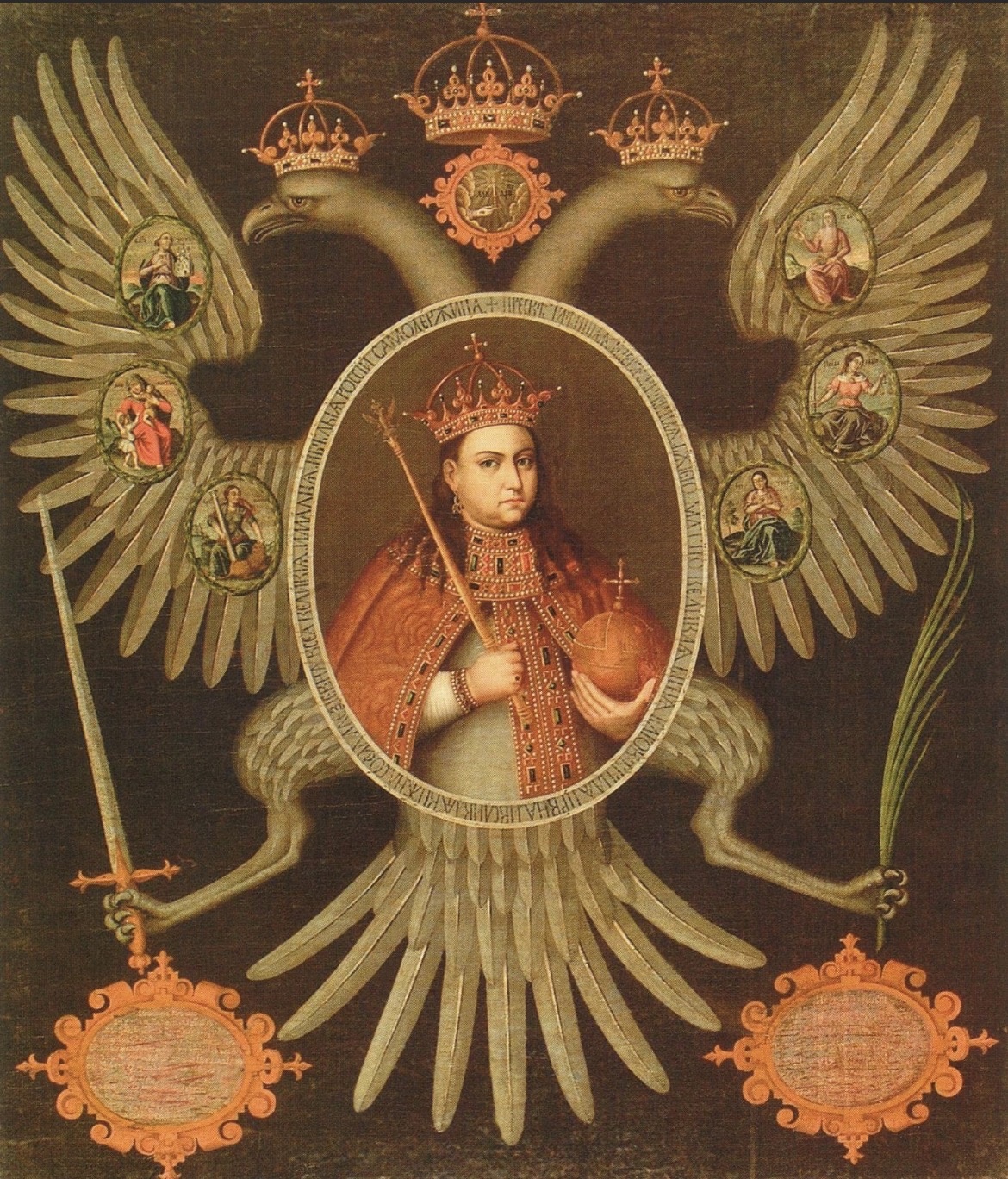
A portrait of Sophia in royal robes, holding a scepter and orb, against a double-headed eagle. The royal title is inscribed around the portrait.
Meanwhile, Sophia's power began to crumble. The Streltsy regiments, one after another, defected to Peter. Even the mercenary foreign infantry under the command of General Patrick Gordon swore allegiance to the young tsar. Sophia's favorite, Vasily Golitsyn, withdrew from the struggle, and Fyodor Shaklovity, her last loyal ally, was captured and executed after torture.
Left without support, Sophia attempted to negotiate with her brother personally, but was stopped on her way to the monastery. She was forced to return to Moscow, where no one recognized her authority.
Tsarevna Sophia Alexeyevna in the Novodevichy Convent. Painting by Ilya Repin.
In the fall of 1689, Sophia was forced to retire to the Novodevichy Convent. Although she was not formally tonsured, she found herself in virtual confinement. Peter, having consolidated his power, began implementing reforms that would forever change Russia.
However, the history of the confrontation between brother and sister did not end there. In 1698, the Streltsy, greatly disappointed with the new sovereign and dissatisfied with the new order, rebelled, hoping to restore Sophia to power. But Peter, now firmly established as ruler, brutally suppressed the rebellion. The executions of the Streltsy continued for several years, and Sophia remained in the convent until her death in 1704.
The imprisonment of Tsarevna Sophia in the Novodevichy Convent in 1689. A miniature from a manuscript from the first half of the 18th century, "History of Peter I," by P. Krekshin.
Peter's victory over Sophia was not just a personal triumph, but also the beginning of a new era. The Streltsy army, a symbol of old Russia, was destroyed. In its place, Peter created a regular army, which would soon become one of the strongest in Europe.
But most importantly, this was a change in the very spirit of the country. Inspired by European ideas, Peter launched large-scale reforms that affected all spheres of life. Russia soon became an empire, and Peter its first emperor.
The "amusement" is over.
Sophia, on the contrary, remains a symbol of a passing era. Her defeat marked the end of the old order and the beginning of a new one, which would determine the fate of our country for centuries to come.
Sincerely, Ivan Vologdin
Subscribe to the "Cultural Code" channel, like and comment – by doing so, you greatly help promote the project we work on every day.
Please also take a look at our other project, "Serious History." This project will focus on articles about other historical events.
"She's only fourteen! What if she can't bear Napoleon a child in the first year of marriage?" Empress Maria Feodorovna asked. "Then he'll want to divorce her or have children at the cost of her honor."
Alexander listened thoughtfully to his mother. Napoleon had offered Poland if he were allowed to marry Grand Duchess Anna Pavlovna. But knowing the French Emperor, the Russian Tsar doubted anything would come of his proposal. Napoleon always turned situations to his advantage. If their relationship with him worsened even further, his sister could find herself in a very difficult situation.
"If you agree to the marriageu, you will ruin Anna."
"Calm down, Mother," Alexander replied softly. "Only you can decide her fate." I will submit to your decision.
Anna Pavlovna was born in January 1795. She was the eighth child of the Grand Ducal couple Maria Feodorovna and Pavel Petrovich. Empress Catherine, upon learning of the birth of her sixth granddaughter, sadly remarked:
"There are so many girls, we can't marry them all off!"
The Empress never learned of her ...
A big shout out to the people who follow me. Unfortunately I’ve had to leave Russia. It became impossible to receive any funds from the US. I am currently living in Batumi, Georgia.
This is my family in the living room of my apartment in Kimovsk, Russia. I am a disabled Vietnam veteran. Seventy six years of age. My son Aleksandr (left), and my granddaughter Dasha (center) look in on me. Here, I had hoped to live out my retirement years.
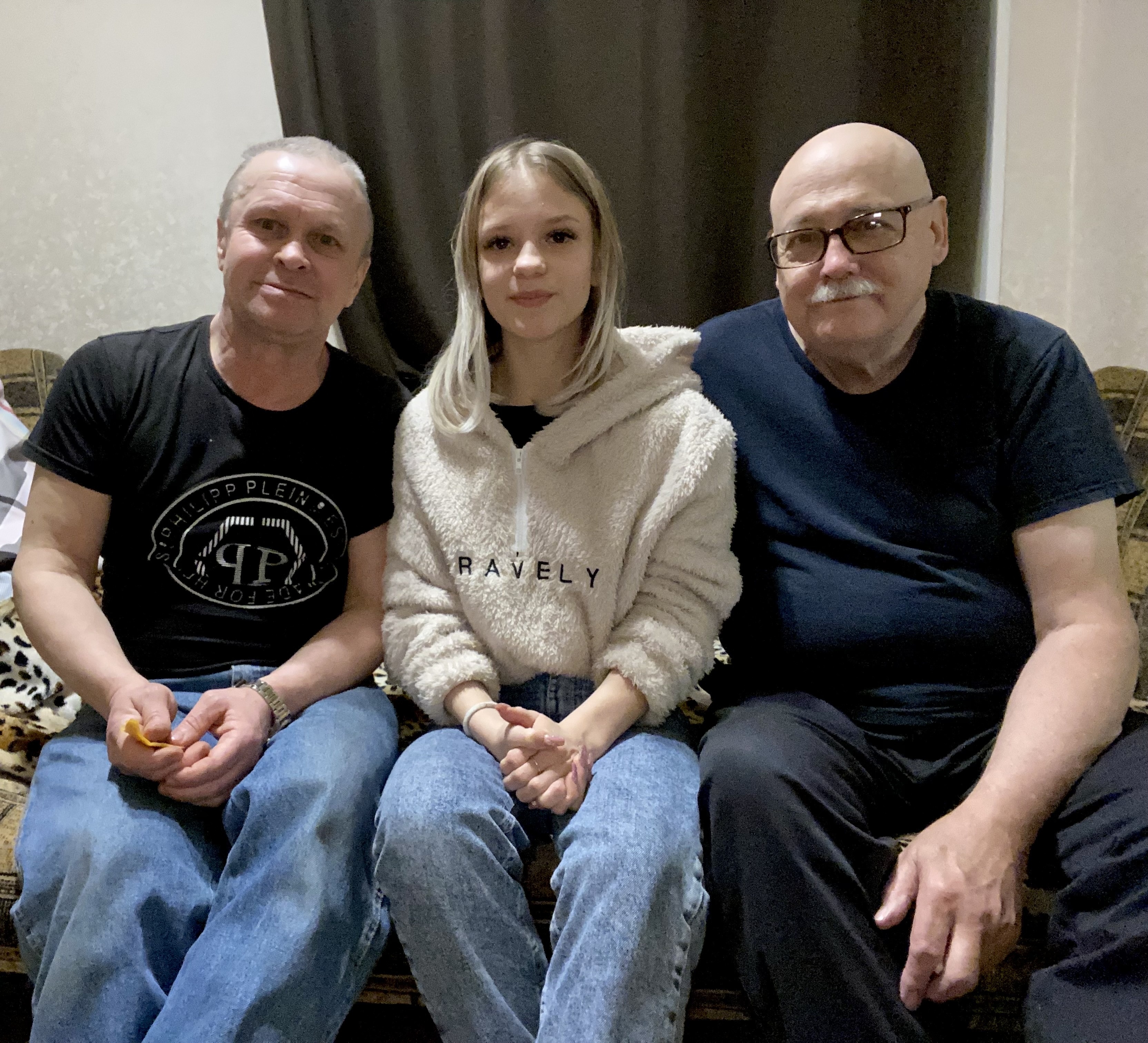
In Kimovsk is where my apartment is located. Last summer I visited my granddaughter who lives in Tula. I stayed there for two months. I became very familiar with the city of Tula.
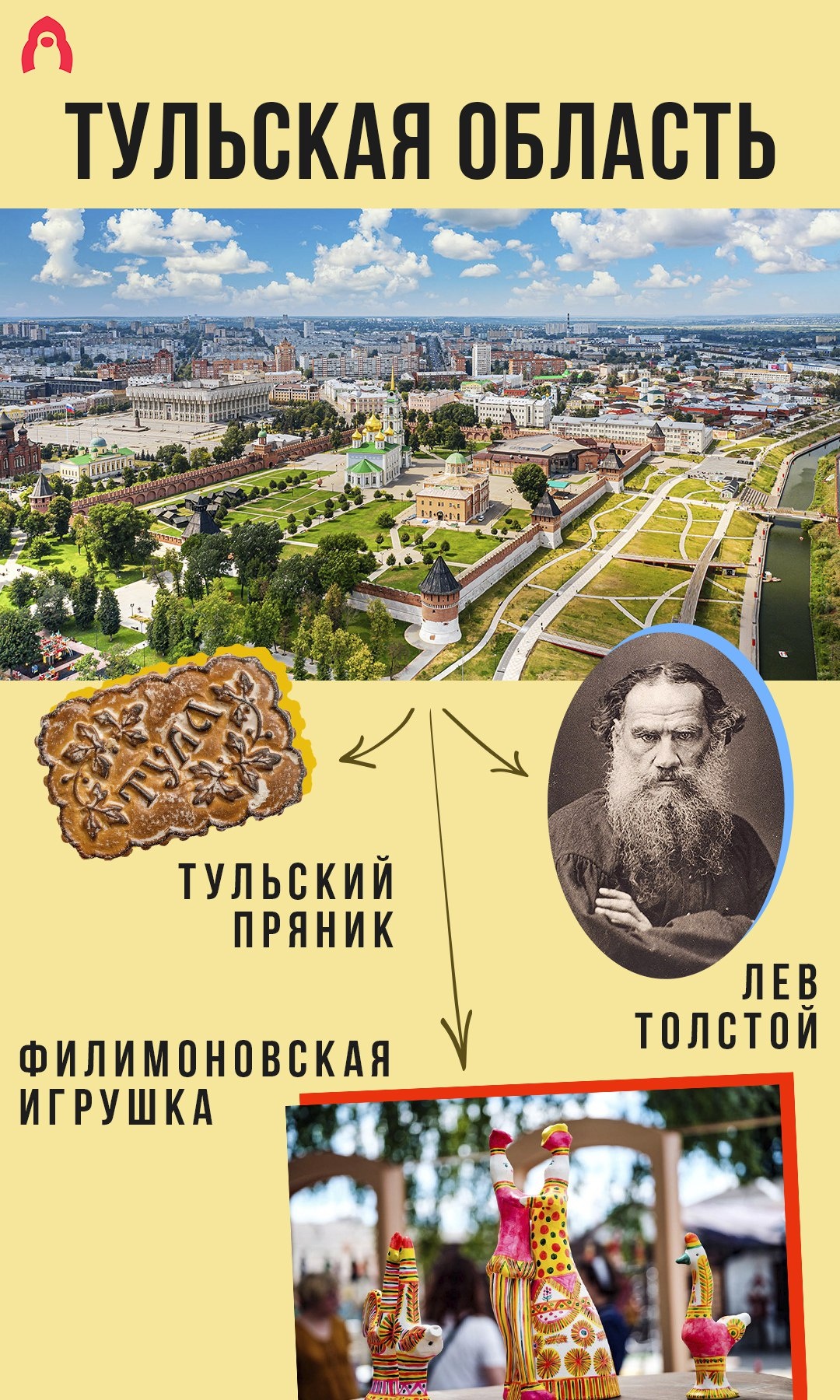
Tula Region is one of the industrial centers of Russia, famous for its long-standing traditions of weapons and samovar production. Here are three more important symbols of this region.
1⃣ ЛЕВ ТОЛСТОЙ (Leo Tolstoy)
The famous Russian writer was born on September 9, 1828, on the Yasnaya Polyana’ Family Estate near Tula. He spent a significant part of his life there, creating his main novels, including ‘War and Peace’ and ‘Anna Karenina’. His body was also buried there.
2⃣ ФИЛИМОНОВСКАЯ ИГРУШКА (Filimonovo toy)
Whistle toys in the form of people and animals with conical heads began to be made in the village of Filimonovo near Tula in the 16th century. After the 1917 Bolshevik Revolution, the craft died out for a while, but was revived in the 1980s.
3⃣ ТУЛЬСКИЙ ...
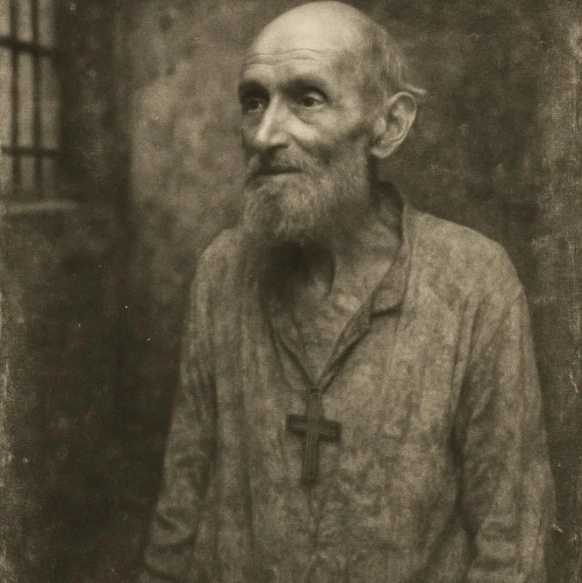
A PRIEST COVERED HIS OWN COAT OVER HIS WORST ENEMY AND THEREBY SAVED NOT ONLY HIS BODY BUT HIS SOUL...
A man was thrown into the icy concrete "glass" of a punishment cell. The one already sitting inside, huddled in a corner, merely raised his head. For him, it was just another soul on death's doorstep, but for the camp system, it was a cruel irony: a former high-ranking NKVD officer who had approved execution lists was thrown to die in the very hell he had helped build. His cellmate turned out to be a priest, prisoner Arseniy.
The cell floor was covered in freezing water. The night promised a frost that kills the living. Avsenev, a former Chekist, an intelligent and once powerful man, knew the system from the inside. He knew that in the morning, two frozen bodies would be carried out. He was shaking. Not from fear—fear was too petty an emotion for the all-consuming cold gnawing at his bones—but from the animal tremors of death.
The priest in the corner didn't move. He simply looked at his new neighbor with a long, calm gaze, devoid of ...